Text Margaret Zainey Roux
Photography courtesy of Jan Showers, Weston Table, and Sandra Bradley/INVISION
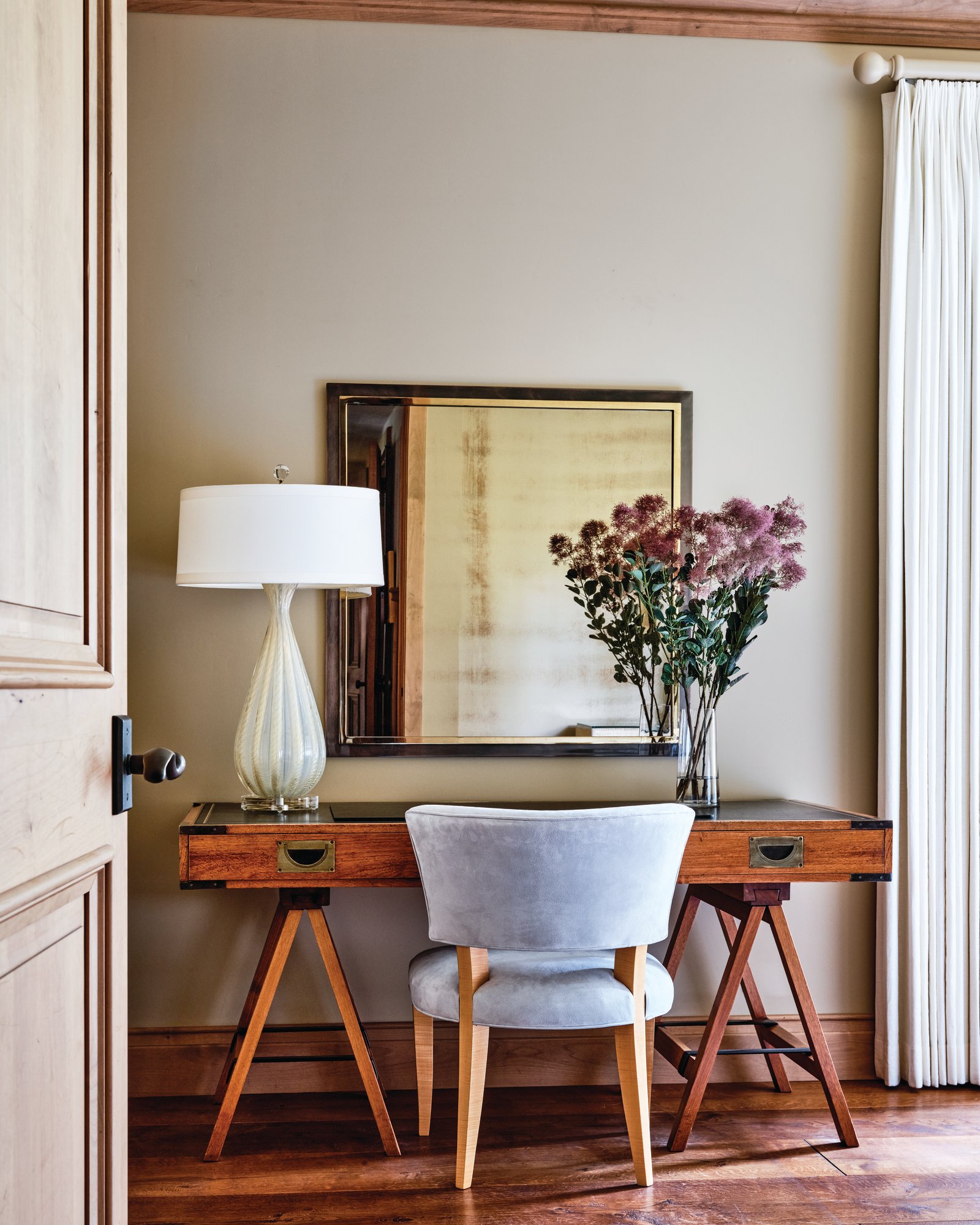
Portable, practical, and handsome, campaign furniture has defined luxury in its simplest form since the Georgian and Victorian eras.
Long before futons, pop-up tables, and modular furniture made their mark, there was campaign furniture. The origins of the style can be traced back to the 1700s, when British military forces established outposts in India, Egypt, South Africa, and other far-flung locales on behalf of their country’s ever-expanding empire.
Comforts of Home, Built for the Road
Having spent years on tour, British Army officers craved the comforts of home and looked for ways to transform their tents into temporary havens. Many of the officers, particularly those with high rankings, sought to enhance their environment by commissioning local cabinetmakers to build attractive, high-quality furnishings that rival those they left behind in their stately family homes. To suit the officers’ transient lifestyles, these specialized pieces—collapsible chairs, beds, tables, and case pieces—were designed with versatility and durability in mind. Unlike their older, stationary counterparts, they were not fragile or bulky but rather strong, compact, and easy to break down and reassemble upon arrival at the next stop. Although simple by design, these pieces were innovative for their time. Folding desks had secret compartments with complex locking systems to keep important documents secure, and storage chests had clever organizational features. The chest, perhaps the most widely known of all the campaign pieces, consisted of individual units that could be stacked to comprise a full-sized chest of drawers.
Teak, Mahogany, and Brass
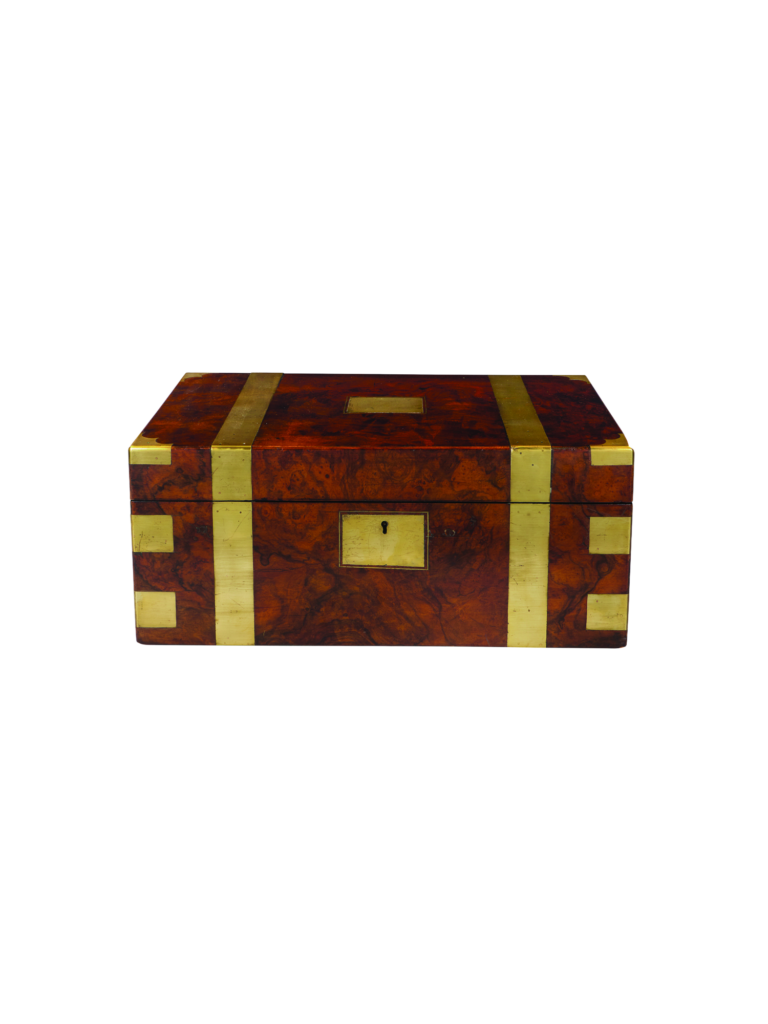
The furniture was crafted by hand using indigenous techniques and native materials such as teak and mahogany. Strong joinery ensured that it could withstand harsh climates and rough handling during travel, while solid brass corner fittings and recessed handles prevented damage. The ability to survive even the most treacherous of treks contributed to the popularity and desirability of campaign furniture, especially as the trade routes expanded. However, in the late 1800s, transportation improved and colonial military campaigns drastically declined and, as a result, reduced the demand. Authentic, antique campaign furniture continues to compel renewed collectors and art historians, particularly those rare examples with documented military provenance.
Why Designers Still Love Campaign Furniture
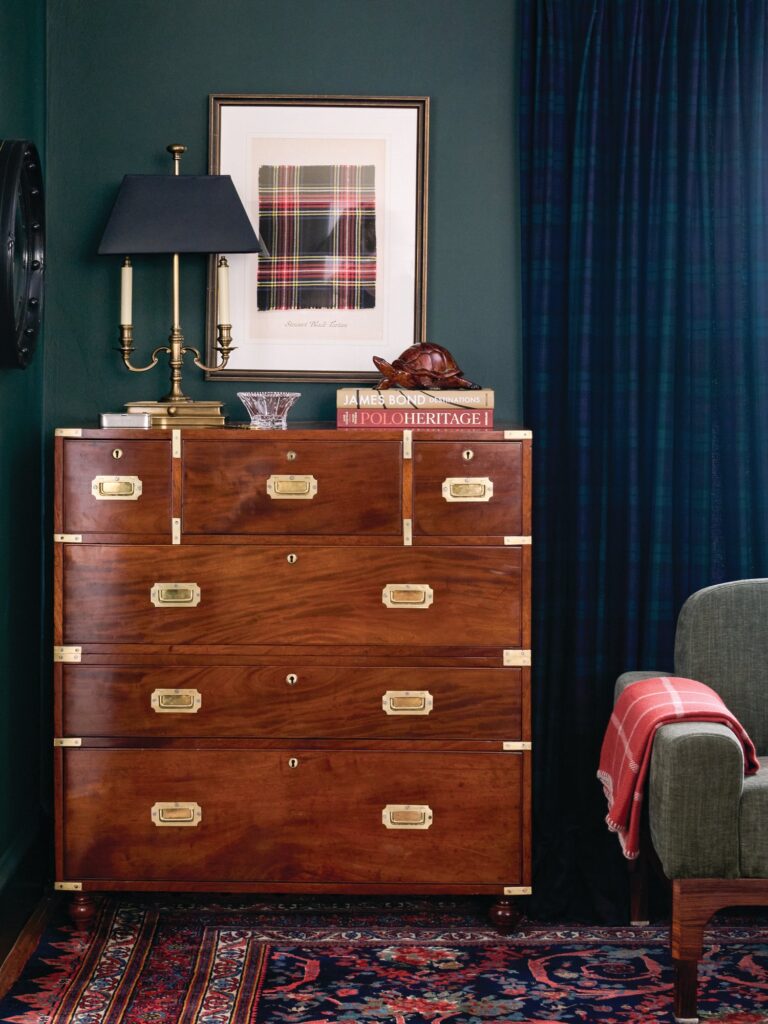
Today, the design principles that made campaign furniture attractive during their eighteenth-century debut continue to influence furniture makers and interior designers, who largely consider pieces as functional, adaptable, and efficient works of art. From an aesthetic perspective, they revere the style’s clean lines and streamlined forms that allow them to fold seamlessly into classic and contemporary spaces.
Need to Know
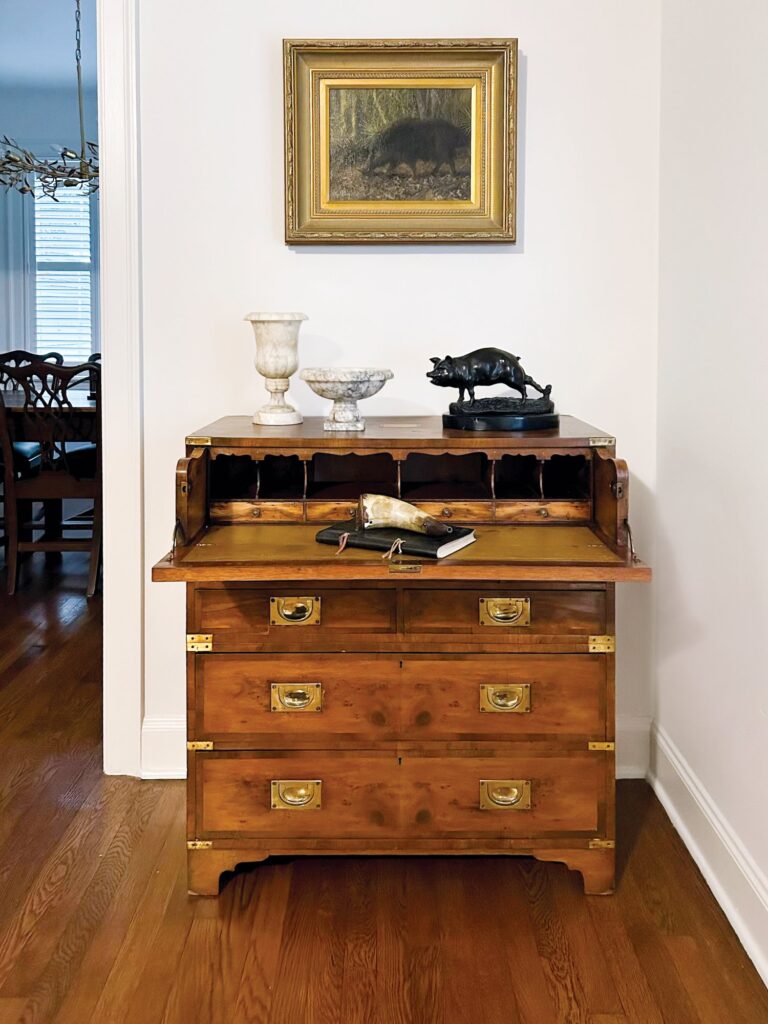
- Check for original hardware and joinery: Genuine campaign pieces have brass corner guards, recessed handles, and mechanisms built for real disassembly.
- Confirm it still comes apart as intended: A major part of the value and function is that these pieces fold, stack, or disassemble; test drawers, hinges, and locking mechanisms before buying to make sure they still work as designed.
- Factor in scarcity and provenance: Well-documented pieces from known makers (such as Ross & Company or Army Navy stores) or with traceable military history tend to hold value better than unmarked or generic examples, so ask about origin before you buy.