
For centuries, the humble andiron has held a place of quiet prominence at the heart of the home. Long before central heating or gas logs, these paired fire dogs, set at the base of a hearth to support burning wood, played an essential role in both the function and the ritual of fire-making. Their history spans civilizations and continents, yet their purpose has remained elegantly constant: to elevate logs for cleaner, more efficient burning while lending structure and beauty to the fireplace itself.
The earliest known andirons date to ancient Greece and Rome, where they were crafted from bronze or wrought iron and often adorned with animal motifs, a nod to the fire’s symbolic power. Through the Middle Ages and well into the Renaissance, andirons became more ornate, evolving from simple utilitarian supports into proud expressions of craftsmanship. Wealthy households commissioned pieces in brass or cast iron, their forms embellished with heraldic crests, sculpted figures, and intricate scrollwork. Flames might have warmed the room, but andirons bold and architectural anchored the hearth as a visual centerpiece.
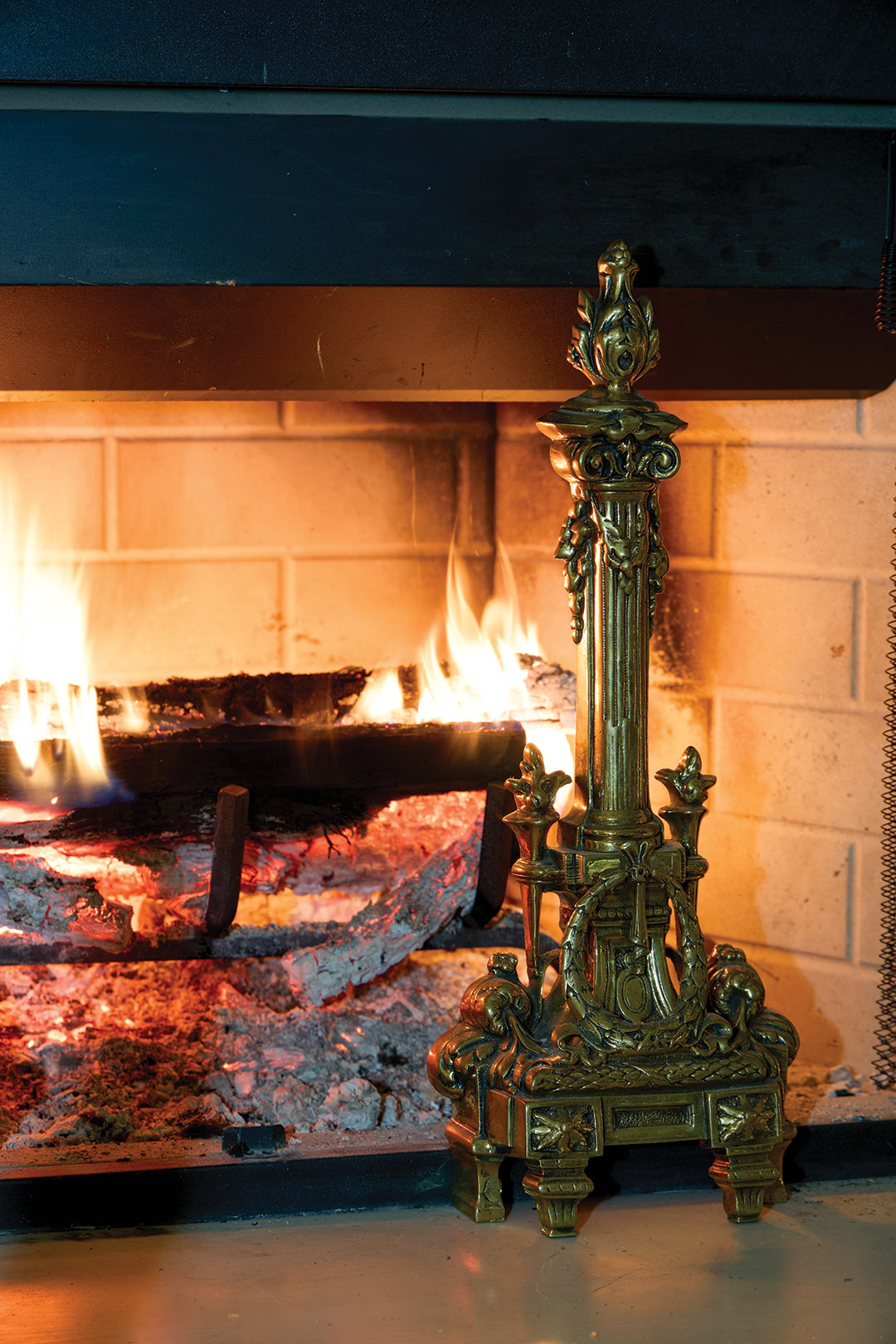
By the 17th and 18th centuries, styles reflected shifting tastes across Europe and America. In France, tall, refined chenets in gleaming bronze echoed the formality of Louis XIV interiors. In England and the colonies, brass andirons with ball finials and spurred legs signaled both practicality and polished elegance. As domestic life evolved, so too did the materials; iron remained a staple, but brass, steel, and even silvered finishes appeared in homes eager to balance durability with decorative grace. By the 18th and 19th centuries, andirons had evolved into carefully proportioned designs that balanced symmetry and ornamentation, frequently paired with fireplace mantels as an integral element of interior architecture.
Today, andirons endure less out of necessity than out of appreciation for their sculptural presence. Designers and homeowners favor them for the way they lend scale, symmetry, and historical resonance to a fireplace, whether sleek and modern or richly traditional. Their silhouettes, from minimalist forms to classical interpretations, continue to elevate the hearth as a place of gathering and comfort.
In a world increasingly shaped by technology, andirons remain a quiet testament to the enduring allure of fire and the artistry that has long surrounded it—a reminder that even the most functional objects can carry centuries of beauty and meaning within their form.
 Need to KNOW
According to Dykes Culp, General Manager of Christopher Collection, buyers should consider the following when purchasing andirons:
• Function Comes First
Andirons are engineered to lift logs for better airflow, resulting in a cleaner, hotter, and more efficient burn. Buyers should confi rm that the pair is properly weighted and designed for real use if they intend more than display.
• Material Matters
Cast iron remains the gold standard for durability and heat resistance, while brass, bronze, and steel offer decorative appeal. Many contemporary designs combine materials, but solid construction is key to longevity.
• Scale Is Essential
Proportion is crucial. Oversized andirons can overwhelm a modest fi rebox; pieces that are too small will appear visually insignificant and may fail functionally. Measure the height, depth, and width of your fireplace before purchasing.
• Styles Span Centuries
Understanding your home’s architectural language will help you choose a style that complements the space.
• Aged vs. New—Both Have Merit
Antique andirons offer patina and provenance, but they may require restoration. Newer models deliver crisp lines, updated metals, and the reliability of contemporary fabrication.