Text: Margaret Zainey Roux
Throughout history, the French have been lauded for their innate ability to turn the mundane into masterpieces. This is particularly true for the craftsmen of the seventeenth and eighteenth centuries who took great pride in transforming utilitarian furnishings and housewares into symbols of status and style for their royal and aristocratic patrons.
In addition to making their mark as leaders in the world of art and design, the French established themselves in the culinary arts. Many bakers in the nineteenth century specialized in the art of pastry making and, as such, many of their bakeries evolved into patisseries offering fresh, fragrant delicacies such as macarons, petit fours, fruit tarts, and mille-feuille. As these sweet treats became more complex and visually pleasing, so did the tables upon which they were prepared. Patisserie owners and chefs began commissioning ironworkers to design their workstations in a fashion that was both pretty and practical.
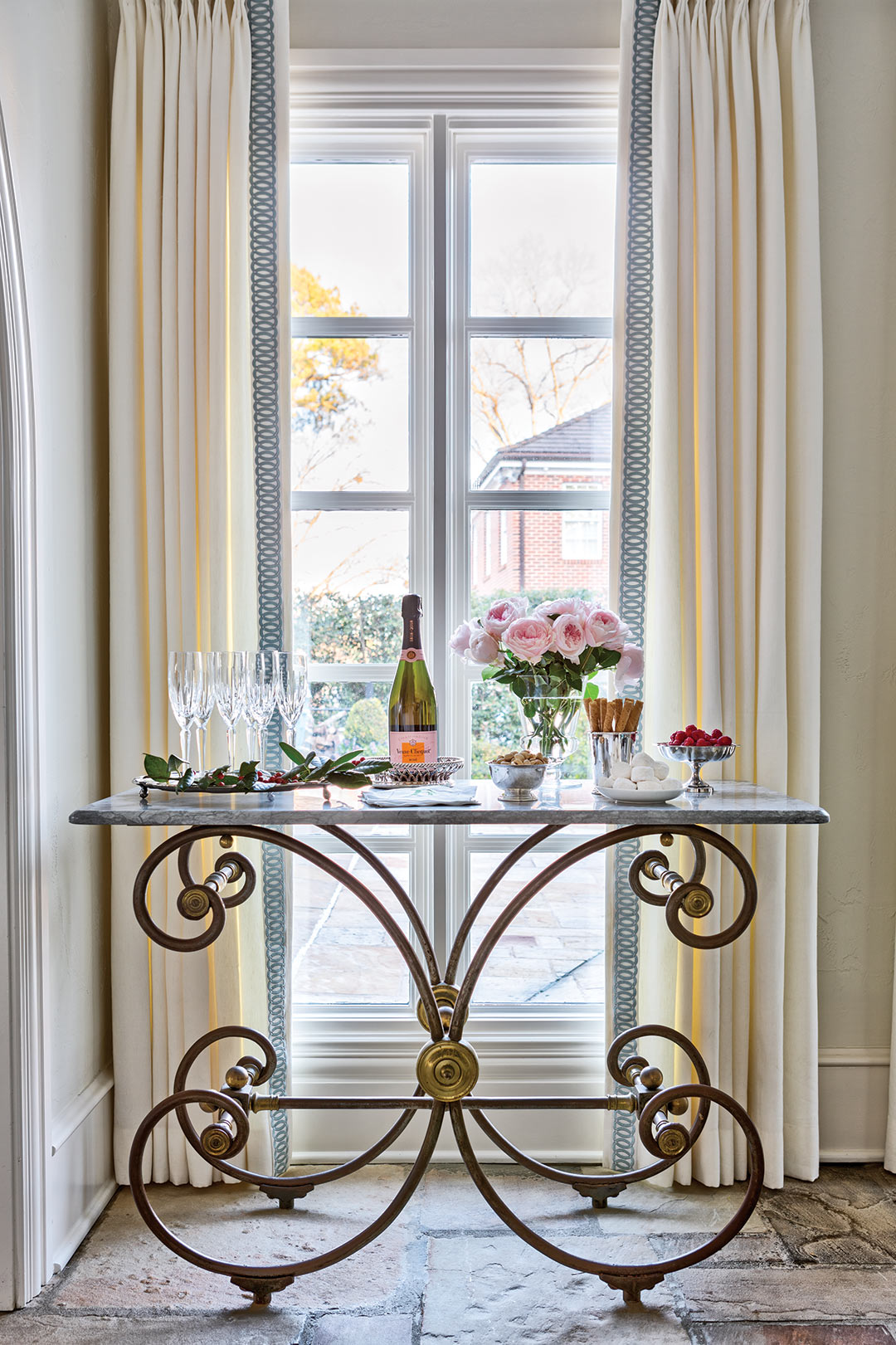
Legs and stretchers that were formerly simple and straight were embellished with intricate details such as scrolls, curves, and fluting. Some were even outfitted with casters and drawers for storing rolling pins, molds, and other tools. Elegant and efficient, iron bases were then topped with marble or slate chosen for their naturally cool surfaces. Before refrigeration, the stone was an essential element in keeping the butter from melting and the dough from hardening. Often, a plinth of solid wood was set beneath the slab to provide extra support during vigorous rolling and kneading. Their beauty and high-quality construction quickly made pastry tables popular and coveted centerpieces in many of the finest kitchens in France at the time.
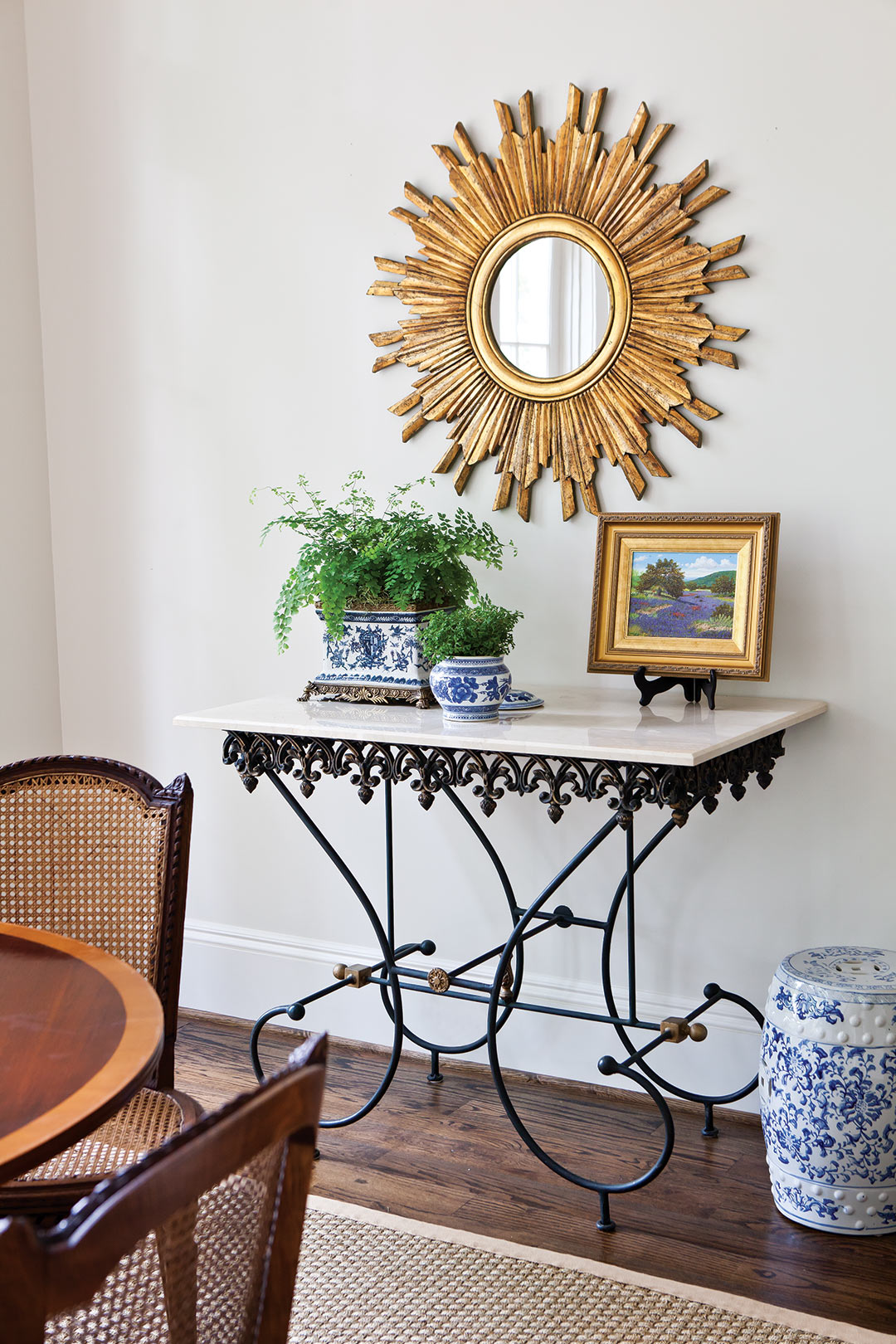 By the midtwentieth century, pastry tables had caught the eye of American interior designers and collectors who revered them for their individuality and versatility. Like many antiques, the precious pieces made their way into the most exquisite modern interiors, particularly in the South, where heritage and hospitality are honored and appreciated. The patina of their softened marble, worn edges, and aged iron add a layer of authenticity that au courant appointments cannot replicate, just as their timeless charm offers a welcome counterpoint to the clean lines and contemporary finishes of today’s homes.
Soon, the tables were no longer relegated to the kitchen but became integrated into a variety of spaces and used for multiple purposes. In fact, today, it is more likely to find a pastry table being used for anything other than pastries—a console in an entryway, a server in a dining room, or a sofa table in a living room. But no matter where it stands, the pastry table stands strong and proud in the sweetest spot of the house.
 Need to Know:
Leigh Ann Harris, Director of Products and Procurement for Christopher Collection, gives us the skinny on these slender stone-topped tables.
• The more weathered the better! Look for tables in their original condition—including peeling paint, oxidized metal, and well-worn stone surfaces—for maximum patina and charm.
• Take it outside! Although pastry tables are elegant enough for an entryway or dining room, they are durable enough for outdoor use topped with potted plants or hurricane lanterns.
• A table’s price tag is largely determined by its uniqueness. Expect to pay anywhere from a few hundred dollars for just a base to $5,000 for those bearing a maker’s mark or a craftsman’s signature.