Text: Tiffany Adams
Photos: Dustin Peck
“It has good bones.” It’s a phrase Realtors®, designers, and even homeowners often throw around when considering a structure. However, it was not the case for the house this family purchased upon moving to Columbia, South Carolina. Built in 2000, the home was true to its era but lacked the character they desired. “I like to say that a house has osteoporosis when we walk in and can see it needs some attention in terms of interest or character,” interior designer Edith-Anne Duncan says with a smile. Duncan, who is based in Blacksburg, Virginia, and is a friend of the family, was excited to help the home’s new owners personalize the spaces for their next chapter.
A Dated Columbia, South Carolina Home Gets a Timeless Makeover by Designer Edith-Anne Duncan

A Dated Columbia, South Carolina Home Gets a Timeless Makeover by Designer Edith-Anne Duncan

A Dated Columbia, South Carolina Home Gets a Timeless Makeover by Designer Edith-Anne Duncan
A Dated Columbia, South Carolina Home Gets a Timeless Makeover by Designer Edith-Anne Duncan
A Dated Columbia, South Carolina Home Gets a Timeless Makeover by Designer Edith-Anne Duncan

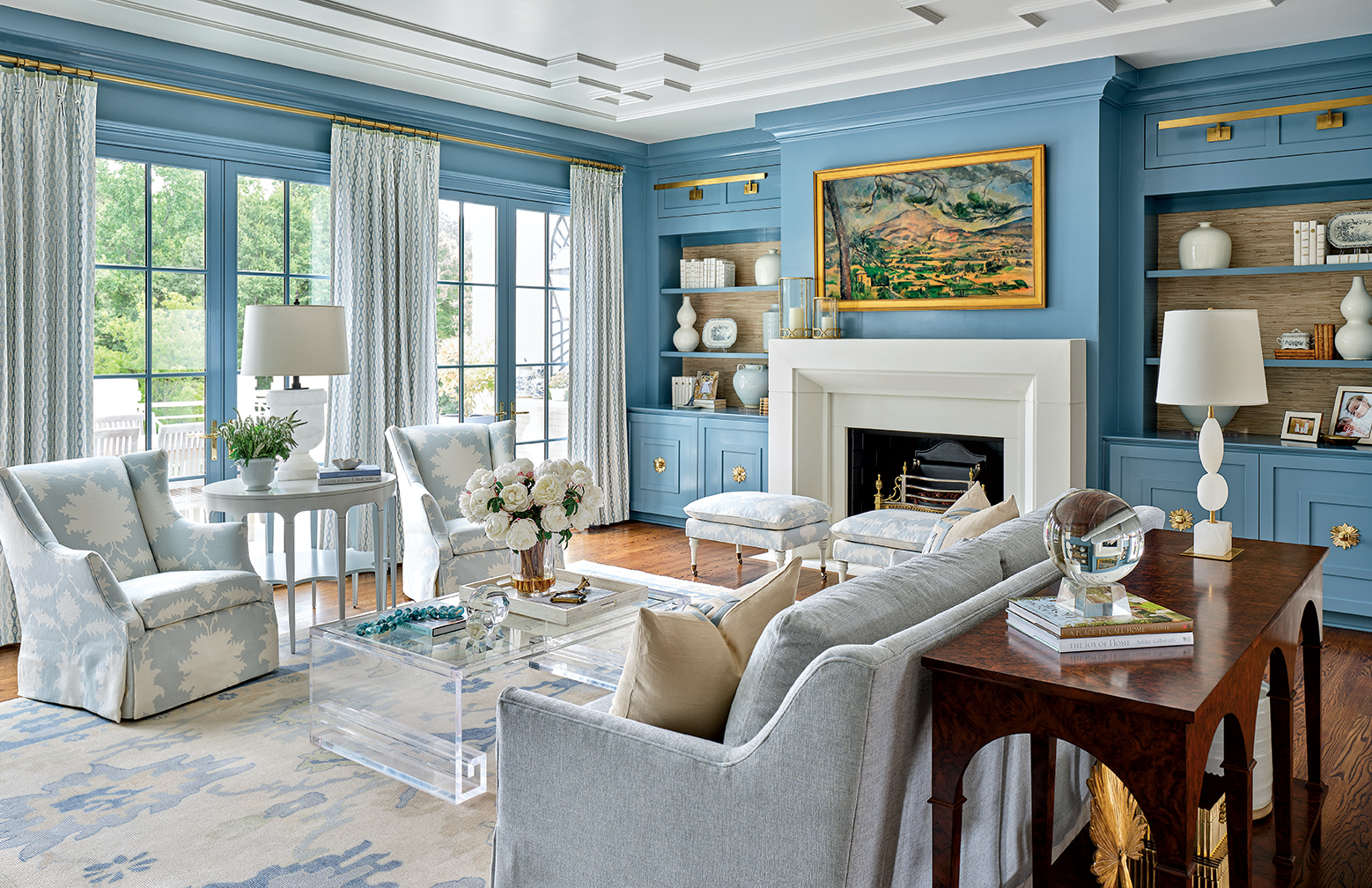
Wanting to make a completely fresh start with both the interior and exterior, they tasked the designer with renovating the home while infusing a refined, gracious feel that would be as comfortable and welcoming for their immediate family, which includes three teenage children, as it would be when they hosted guests. Known for her deft use of color and ability to mix new with old, Duncan rose to the challenge by reworking rooms and bringing in classic details to remove any date stamps and convey a sense of timelessness.
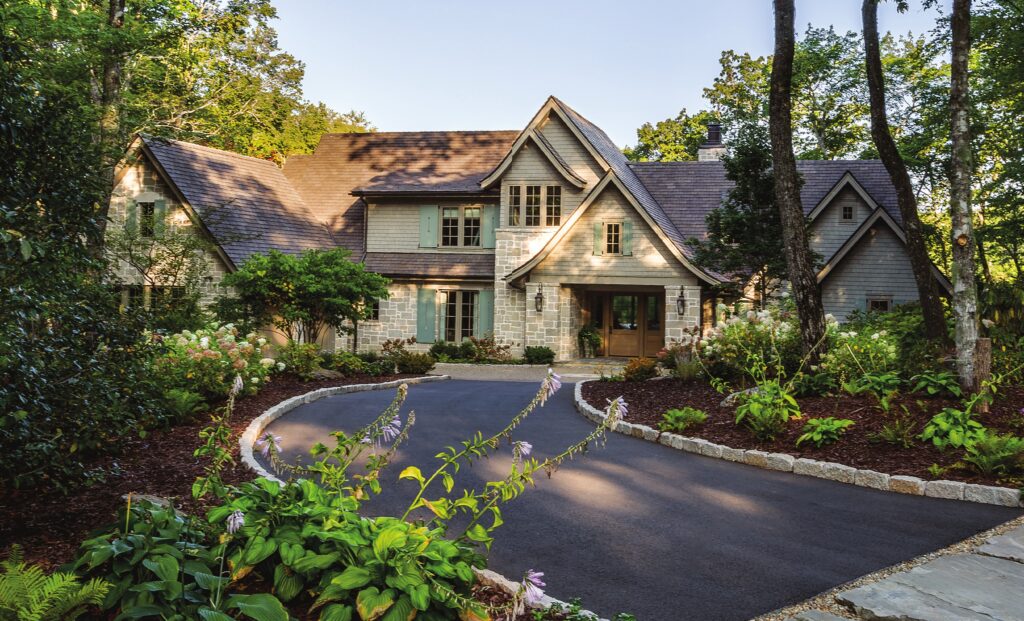
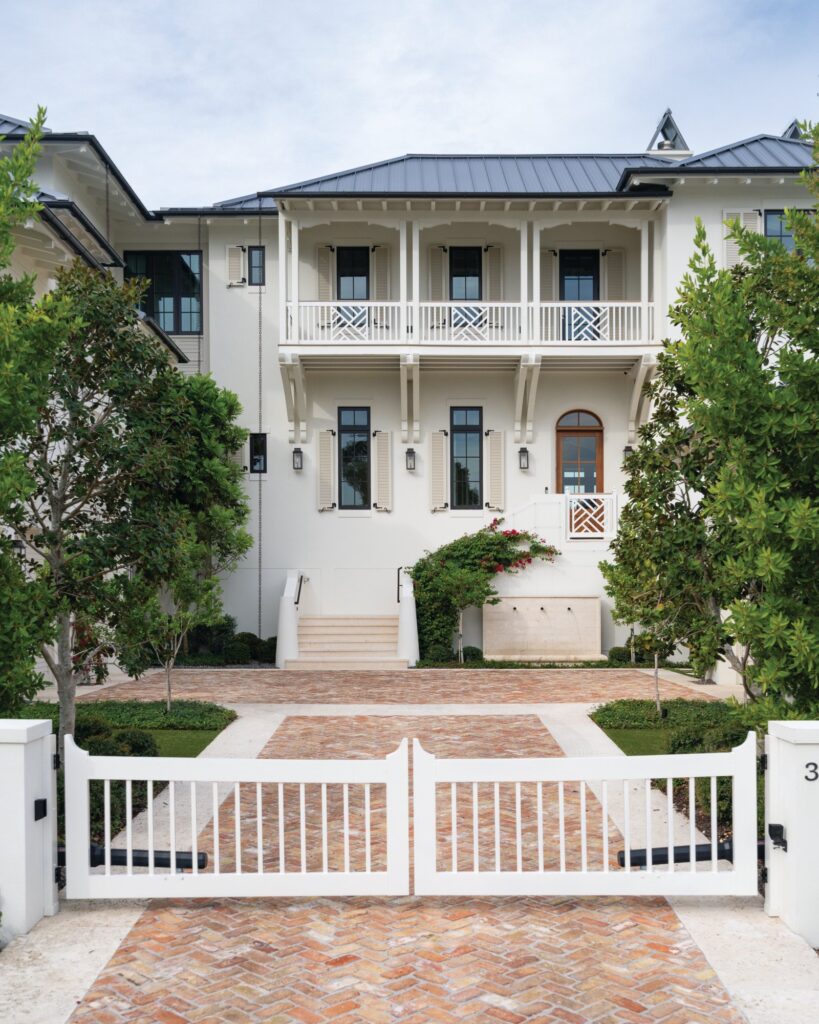
The home’s original architect, J. Timothy Hance, returned to the project some 20 years later, working alongside fellow architect Beau Clowney in the reinvention of the front elevation. Namely, large Grecian columns were traded for a streamlined portico at the front entry, and red brick was covered with a cream paint. Duncan also introduced blue—a prominent color throughout the home’s interiors—at the front door and on the planters, thus alluding to what’s to come across the threshold.
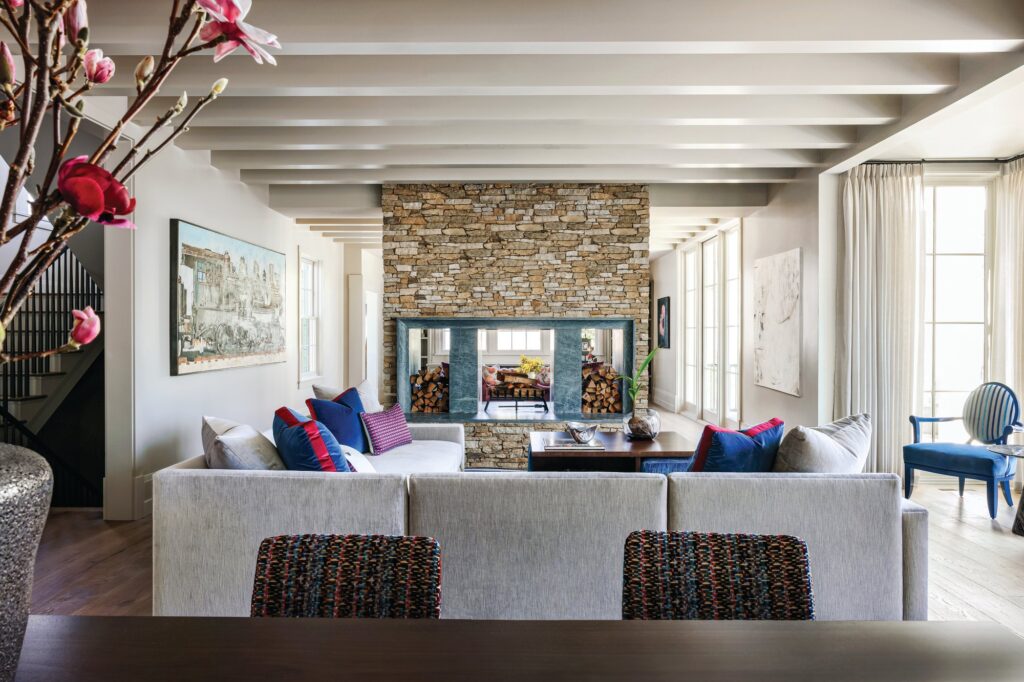
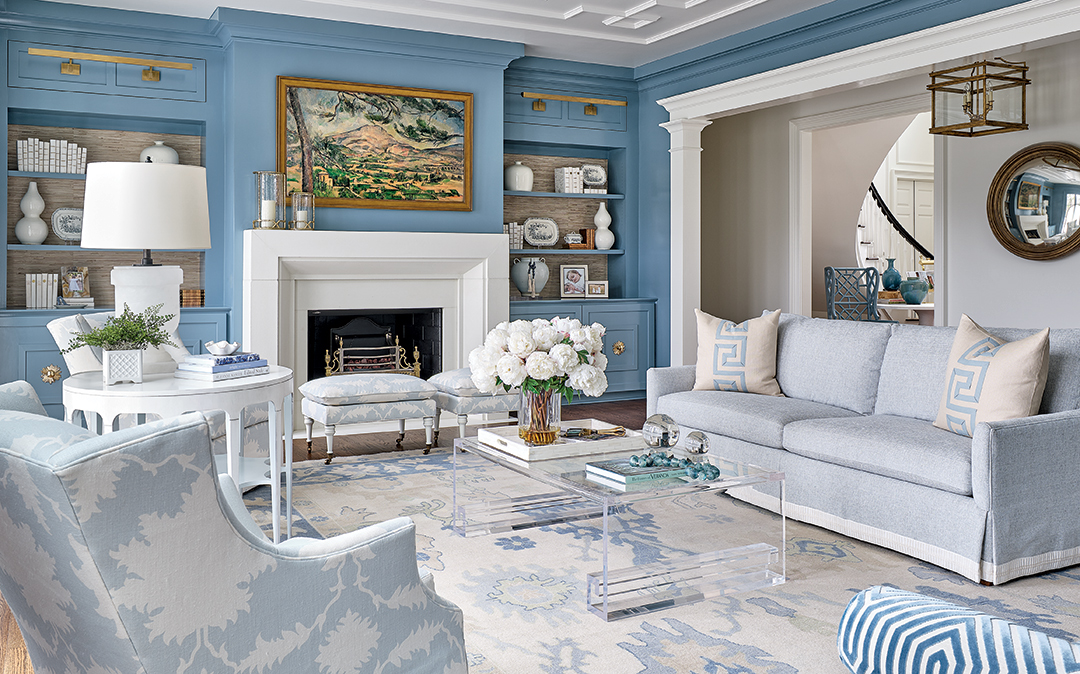
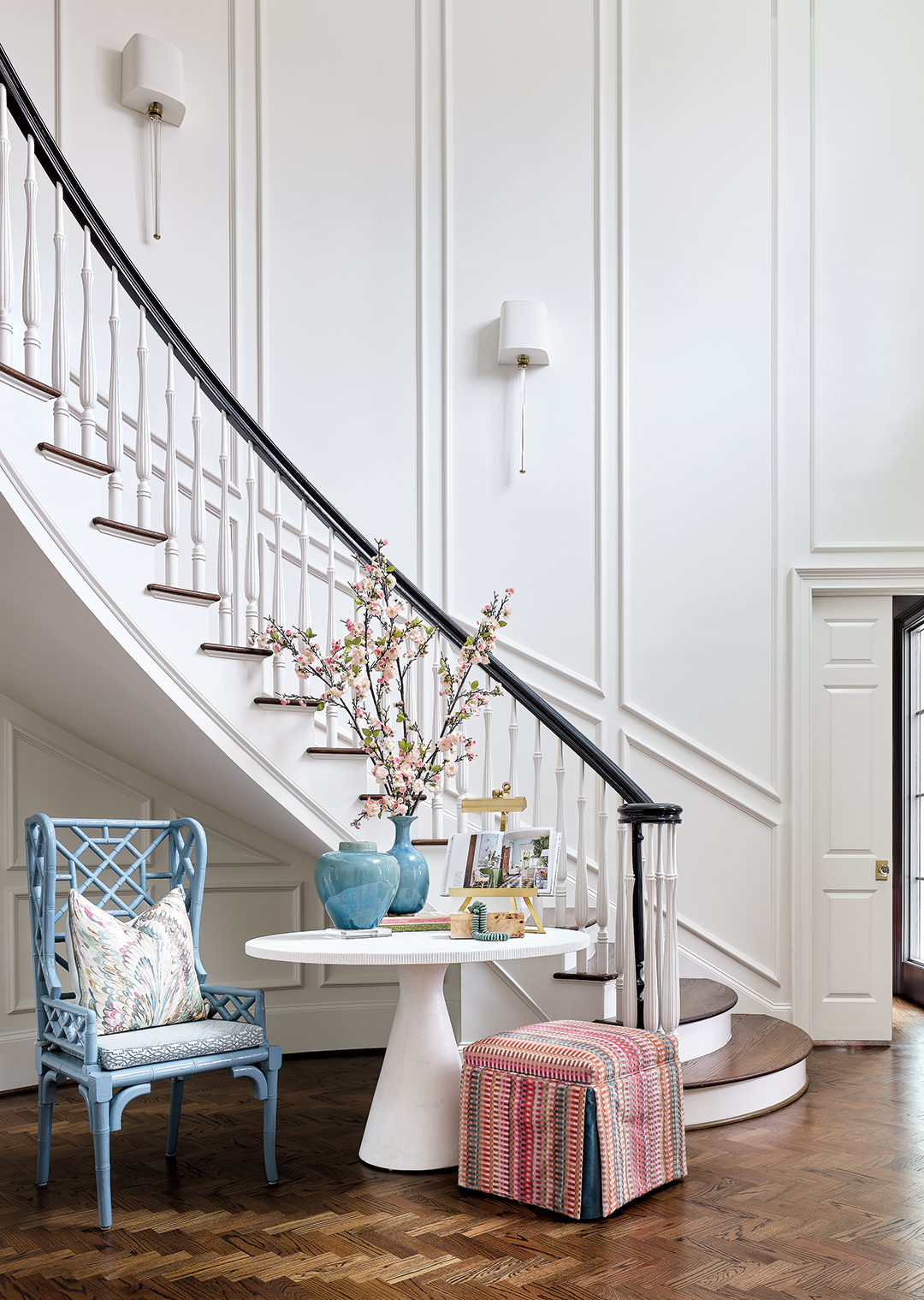
Some interior changes also played into the elevation updates. Like many homes built in that time period, the great room was originally two stories high. To create a sense of coziness, Duncan brought the room’s scale down by lowering the ceiling, allowing for the creation of a bunkroom upstairs and transforming a former catwalk into a true hallway. The newly installed ceiling was treated with a Chippendale-style molding treatment that lends architectural character. “I wanted to give it some patina and bring interest,” Duncan says. Paneling was also applied to walls of the stairwell in the adjacent front entry, updating the previously flat space into one with interest and dimension.
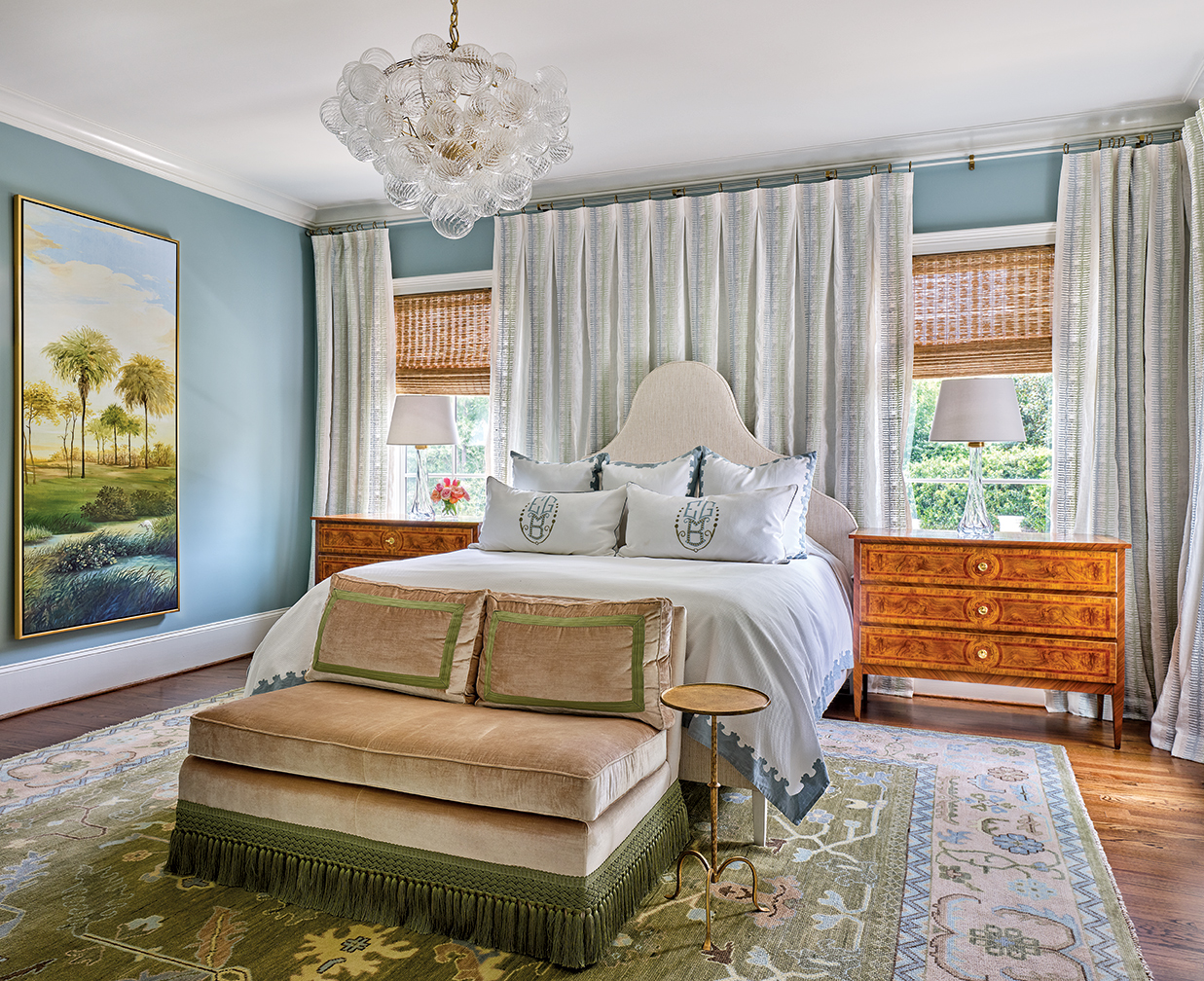
While the entire home came down to its studs, the primary bath is another space that received special attention. Here, Duncan flanked the sides of the vanity with concealed storage in a hue pulled from the couple’s bedroom. Rather than traditional door fronts under the sinks, natural, woven baskets were brought in for texture as well as place for towel or laundry storage. Hammered stainless steel sinks and the mirror detail on the wall add a level of sophistication.
The home’s refined hues also speak to the sense of elegance they wanted to convey in its redesign. “The inspiration for the entire color palette began with the stunning scenic paper, Madame De Pompadour by Schumacher,” Duncan says, pointing to the panels that cover the dining room walls. “The homeowner was drawn to neutrals, but I really pushed her to embrace color.” A blush color pulled from the paper covers the ceiling in a high-gloss finish, while its accent shades of blue and green are found throughout the house. For example, Duncan notes the paper’s slate blue was the reference point for the color drenching on the living room walls and the aforementioned entry door.
Although the couple didn’t come to the home with heirlooms, they were eager to start and build collections of their own. Duncan juxtaposed newly acquired vintage and antique finds with durable, contemporary furnishings to create an evolving yet current feel. “We wanted to select pieces that would give the house some soul and age,” the designer notes. For example, a china collection and French chandelier are paired with a more modern dining table and acrylic drapery rods in the dining room. Commissioned artwork, including pieces of their favorite getaway, Kiawah Island, and generational portraits of the owner with his father and later with his son also add character and personalization, creating a home that is not only storied but reflective of its inhabitants.