
Text by Lydia Somerville
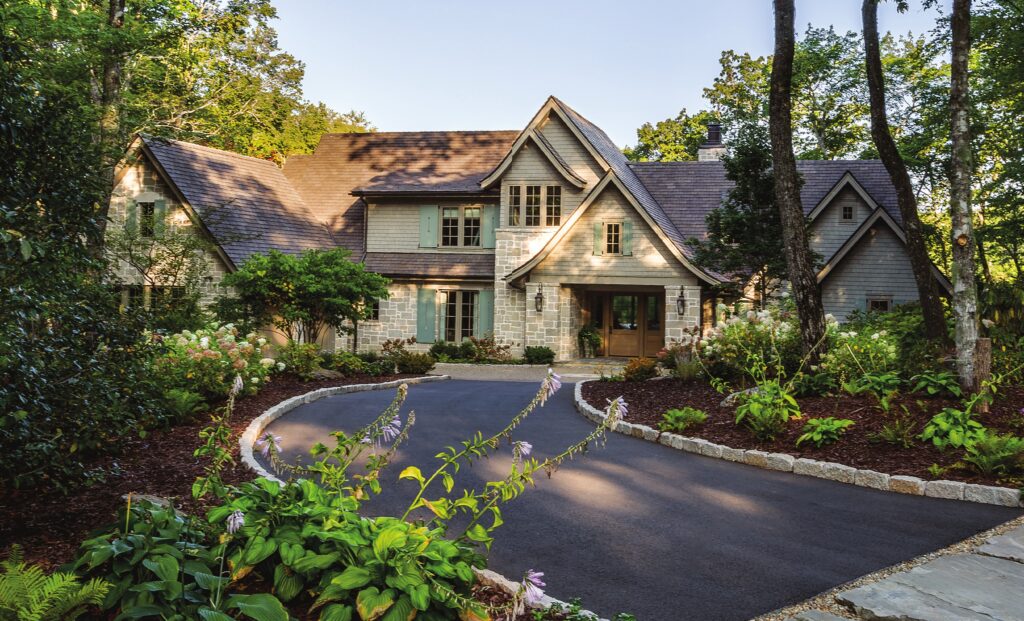
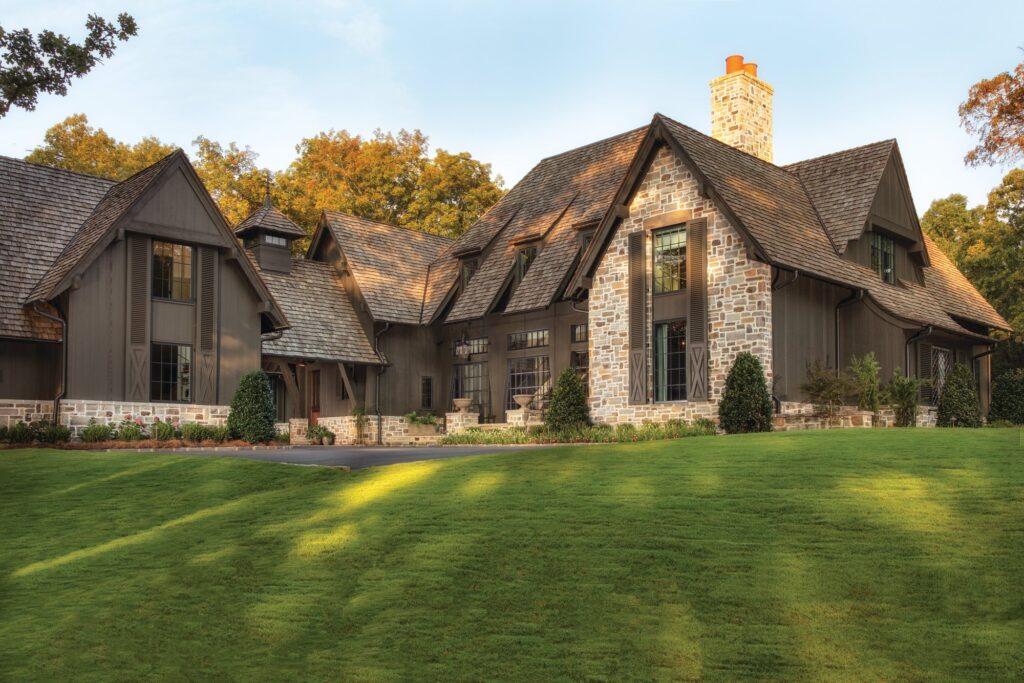
From Atlanta, a swift drive delivers architect and designer John Oetgen and his partner, branding guru John Lineweaver, to their mountain escape in Highlands, North Carolina, a popular getaway for Atlanta’s design community. “This house was built for fun,” says Oetgen. “There’s nothing serious about it.” The three-peaked structure is separated into sections, one for the kitchen and porch, the second for the living room and dining room, and the third for the master suite. “We named the home Maryjack after my parents,” says Oetgen. “We wanted it to be a casual place where we could invite friends we ran into on the hiking trail, their houseguests, and their children. We like to throw open the doors.”

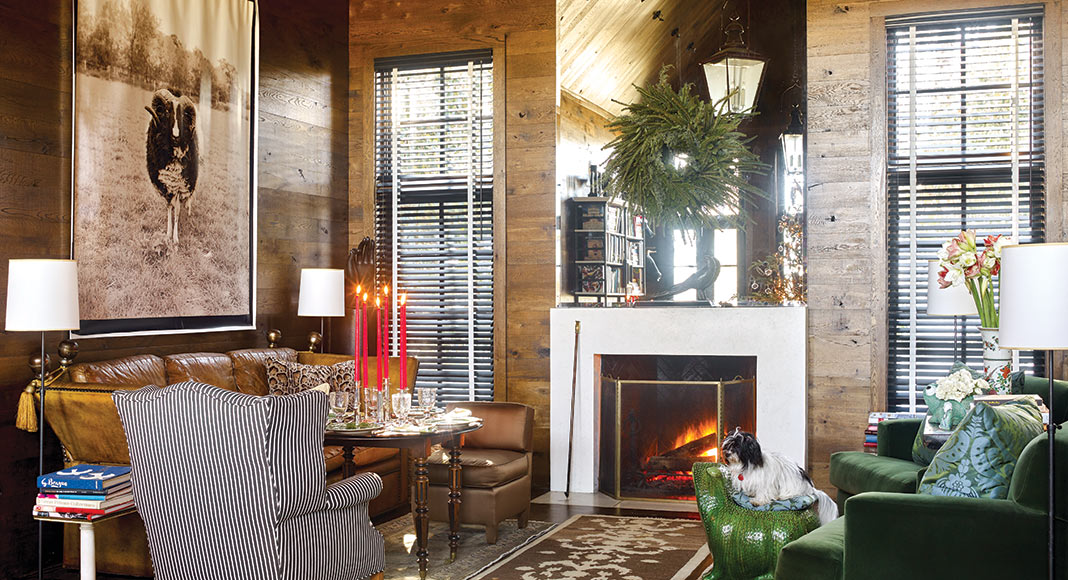
During the summer months, guests gather on the porch overlooking the dramatic views. But in the winter, especially at the holidays, the house beckons with its cozy charms such as the sink-into-me furniture, the glowing wood paneling, and the rich palette. A simple Christmas tree, hung with Oetgen’s vast collection of pinecones, adds even more warmth. Issuing himself a strict no-drywall mandate, Oetgen chose paneling for the entire, evoking the timeless atmosphere of the old mountain cabins original to the region. French oak dresses up the living and dining room, while more casual pine clads the rest of the house.

“When we are here, there’s a lot of cooking and cocktails, friends and dogs.” says Oetgen. In the living room, 20-foot ceilings create a sense of occasion and offer a contrast to the coziness of the seating area. “We often eat dinner in front of the fire,” Oetgen says. Adds Lineweaver, “Wherever you sit in this room, there’s something fantastic that catches your eye.” The kitchen and the porch connect through a wide door to encourage movement between the two. In addition, the kitchen’s tin ceiling carries over to the porch, further marrying the spaces.

When it came to color choices, Oetgen wanted a bolder palette. “The trend is for pale fabrics in these houses, but we wanted rich colors, which are more forgiving,” says the designer. He opted for blues and greens, not only because it’s his favorite color combination, but also because of the hues in the mountain setting. “We are in the treetops, so green is a natural part of the house,” Oetgen says. “Anything else would compete.”

Oetgen and Lineweaver furnished the house with pieces collected over the years, such as the 100-year-old leather sofa Oetgen bought in Paris. Furniture from his mother appears in the dining room. The “grandmother’s suite” is named not for its occupants but for the matriarchs whose possessions adorn it. Artwork by both men, some of it painted in the basement studio, hangs in salon-style arrangements alongside serious pieces, including a Warhol.

The art displayed over the sofa neatly sums up the zeitgeist of the house. “We had just been to Scotland and, of course, sheep are everywhere,” says Oetgen. “We saw this photograph by Hugh Hales-Tooke and just loved it.” The 7-foot-tall, head-on photograph of a sheep is both grand and whimsical. Its scale suggests a royal portrait, but the quizzical subject deflates that pomposity. This piece, along with so many other details throughout the home, speaks to Oetgen’s sophisticated yet unfussy sensibility.
For more inspiration for your cozy winter interiors, check out our November/December issue by clicking the cover below!