
By Margaret Zainey Roux | Photography by Sara Essex Bradley
Call it fate or just good timing. While taking a detour through the Garden District of New Orleans, Poe Carpenter happened upon a banker hanging a foreclosure sign on the rusty iron gate of what could be described as a modern-day haunted mansion. “I stopped my car right then and there and asked if I could go inside,” recalls Poe, a New York native. “I called my husband, Guy, and he quickly ran over to meet me. Despite the home’s deplorable condition, we saw potential and were determined to answer its cry for help.”
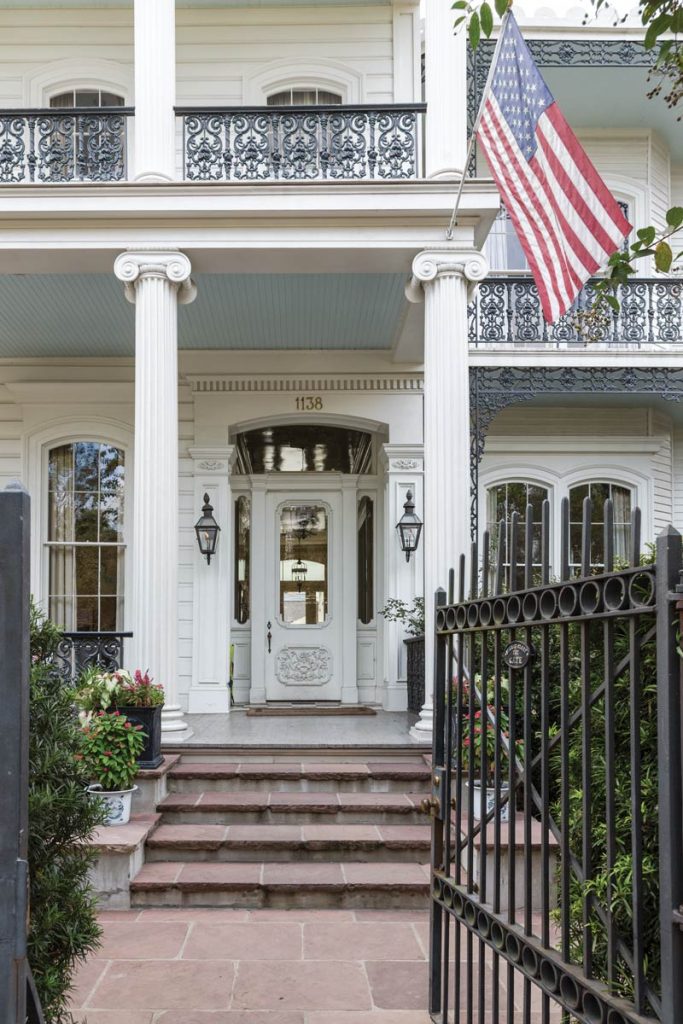
The Italianate manse, built in 1870 by cotton broker Willis Herndon Hogan, seemed destined for hardship. Hogan died shortly after the home was completed, and his family was forced to sell it, along with all its contents. When the new owner could no longer maintain the house, Hogan’s widow reclaimed it and then resold it in 1886. The house changed hands a few more times before the Carpenters purchased it in 2007 and embarked upon a five-year renovation.
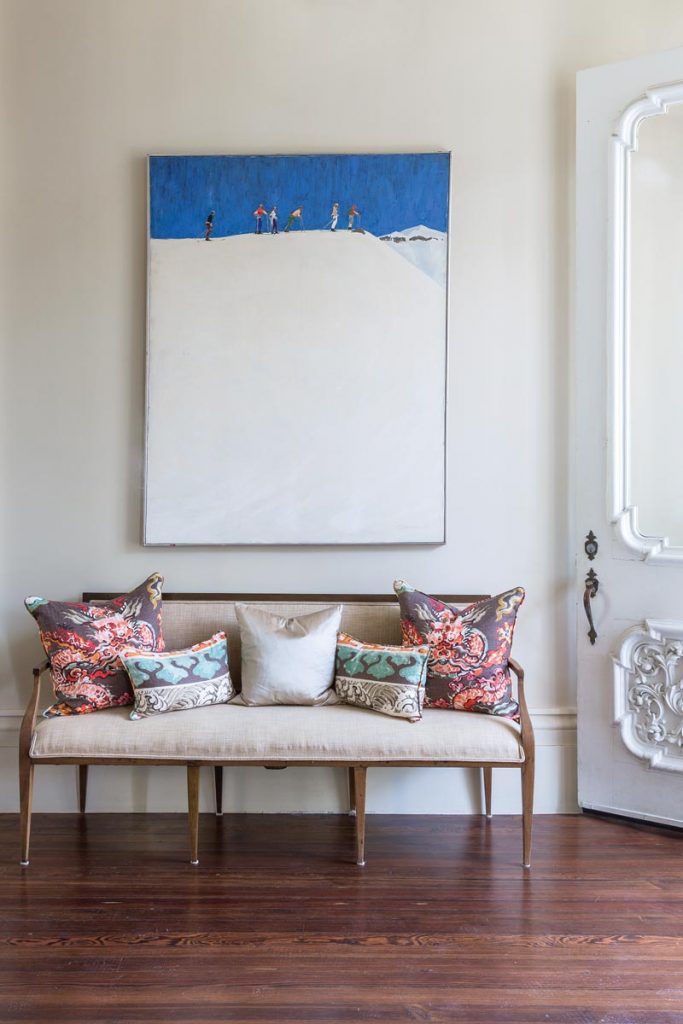
As owner of Supreme Restorations, a construction firm specializing in historic remodels, Guy Carpenter is used to tackling such complex projects. But this wasn’t just any project—this would be his family’s forever home. And this wasn’t just any job—it was a labor of love. As the renovation unfolded, it became clear that hundreds of years of wrongs would need to be made right. Rotting wood and missing doors were just the beginning. Most of the ceiling beams were in disrepair, and there were massive holes in the roof and floor. In addition, aesthetic ills had to be remedied, including the damaged millwork and peeling plaster. Many of the original moldings, cornices, and ceiling medallions had been removed and reset with generic, contractor-grade replacements.
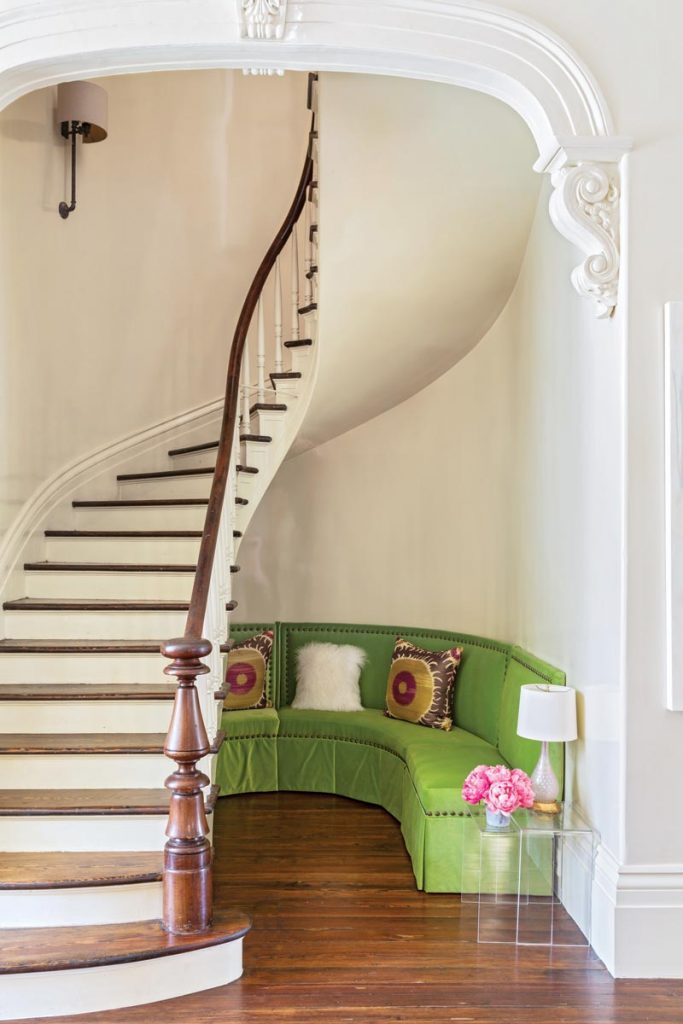
To begin the renovation process, master craftsman Tommy Lachin used a small, original fragment recovered from the parlor to create a prototype from which he handmade new, historically accurate appointments. With these first missing pieces of the puzzle in place, the construction team turned its focus toward devising a palette and a decorative scheme that would reflect the home’s architectural renaissance. Through the main living areas, high-energy hues such as fuchsia, turquoise, and apple green were applied to walls in a lacquer-like finish that Guy himself conceived. The super-slick texture adds a bit of illumination to the rooms and provides easy-to-clean surfaces.

Because the Carpenters have three teenagers and a large Newfoundland, fostering a family-friendly atmosphere was just as important as creating an elegant one. With the help of designer and friend Renee Laborde, Poe selected furnishings and fabrics that would honor the home’s classic details while also lending a contemporary vibe. Gilded pier mirrors, elaborate chandeliers, and rich walnut case pieces are mellowed by streamlined upholstery, clean-lined tables, and abstract artwork by local and regional artists.
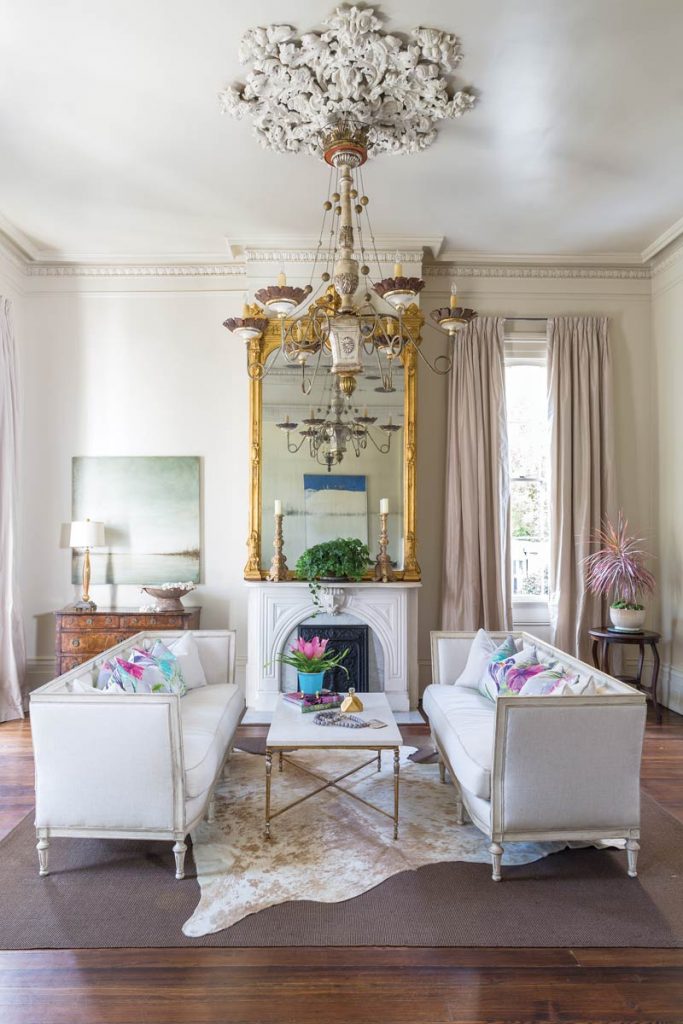
“We would buy one piece that was old or ornate and then work from there,” says Poe.
“A historic home can look stuffy and contrived with too much clutter or too many antiques.
We wanted the inherent beauty of the architecture to remain the focus, so we made ‘less is best’ our motto.” And it was that give-and-take philosophy that added the final layer of creativity and character to a home that was almost forgotten.