
With roots that started in Palm Beach and are now planted in Manhattan, this designer creates interiors that showcase her love for color, personality, and a mix of old and new pieces.
Southern Home (SH): Growing up with a decorating mom [Mimi McMakin, founder of Kemble Interiors], it might seem as if you were destined to follow in her footsteps. But it didn’t start quite that way, did it?
Celerie Kemble (CK): I worked in film production after I graduated from college, but I was always spending my nights and weekends helping friends decorate their houses. I considered that fun, and the film thing was work. But nobody wants to turn into her mom when you’re at that stage in life, right? Ultimately, I realized it was kind of crazy that I was dragging myself out of bed in the morning to go to a job that I wasn’t really passionate about. I was a little slow to turn the lightbulb on. It’s an amazing thing when you’re able to finally flip the switch, and I was really lucky to have the head start in this profession that my mother provided.
(SH): So what was the ‘aha moment’ that finally nudged you toward interior design as a career?
(CK): Decorating our first production office. I was given a tiny budget, but instead of going out and just buying used office furniture, I wanted to give it character. I bought all these enamel-topped desks, as well as some old farm tables that I turned into desks by lacquering the legs. That small amount of money I had to decorate the office was more exciting to me than working with an entire film budget in my production job.
(SH): How would you describe your personal decorating style?
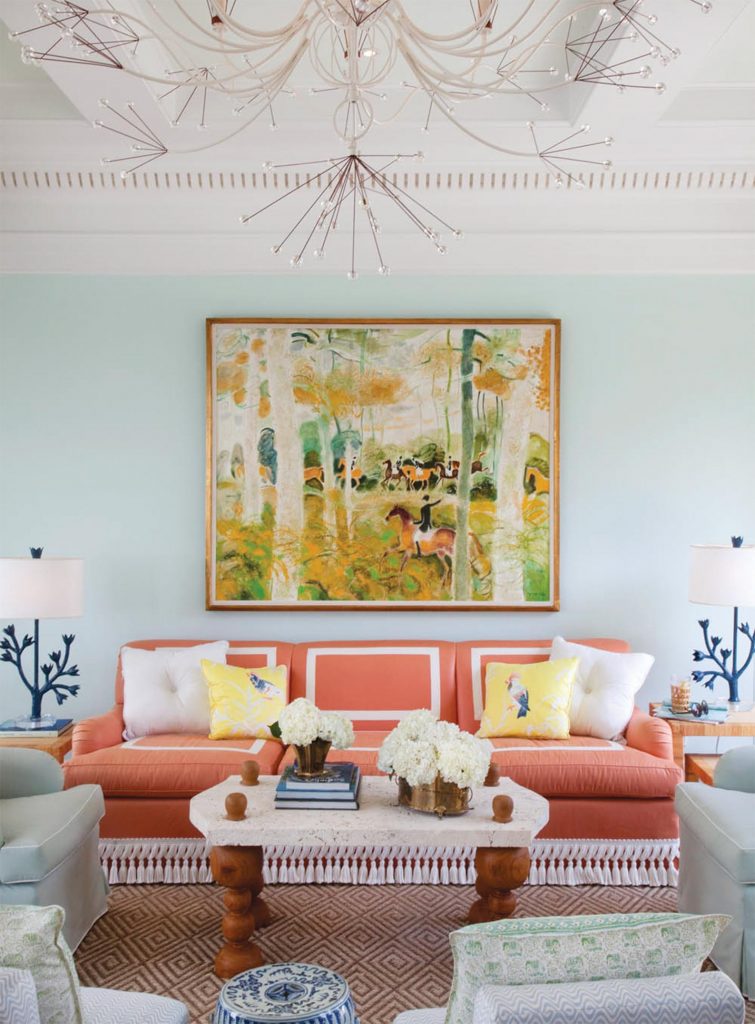
(CK): It’s maximalism but in a more floral-like, indoor/outdoor way—not too shiny or too luxe. I was raised in a rather magical house in Palm Beach. It had been an old church that was defined by its whimsy and had an almost pioneer spirit. There was so much soaring soul, character, and beauty with lots of pergolas and porches. That, along with my mother’s love of collecting and buying distinctive furniture pieces, fostered my appreciation for whimsical, eclectic, feminine design. The possessions we surround ourselves with represent memory and beauty. What excites me is that I can fall in love with a lot of different things and try to bring them together in a way that has its own cohesiveness.
(SH): You often embrace vibrant color, whether it’s in paint, fabrics, or accessories. What was your favorite crayon in the box when you were young, and do you still incorporate that color into your design work today?
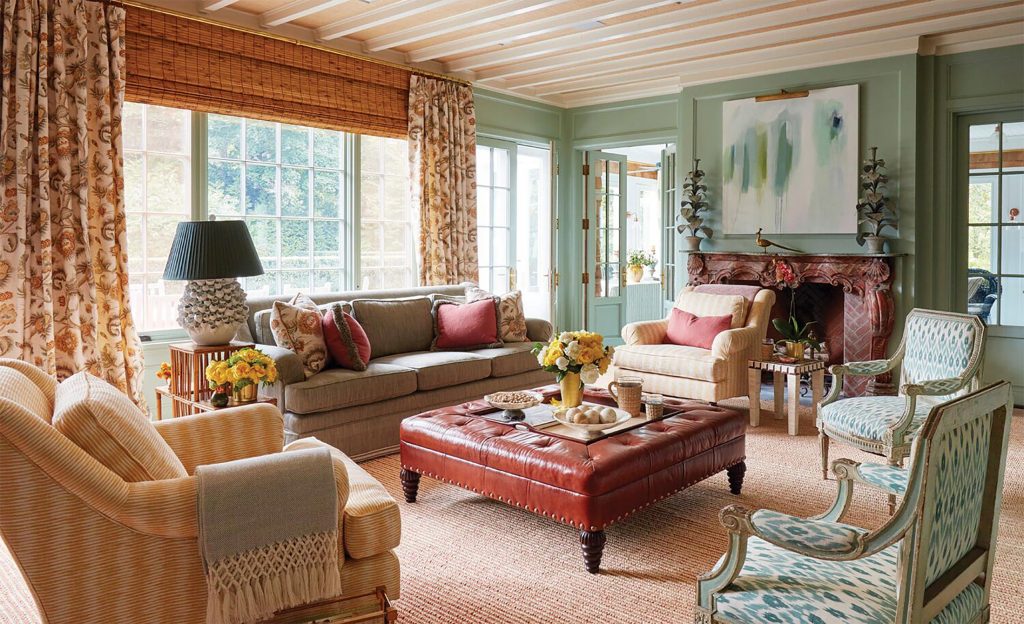
(CK): Cornflower blue. And I do still love it but not as an all-over, everywhere color. I see it more as a “special treat” color. Today, if you were to look and see which crayons of mine are really short and nubby, it would be the greens.
(SH): And now with three young children, we’re guessing you deal with a whole lot of crayons, among other things! We’re curious—what decorating compromises have you had to make with an active family?
(CK): I really don’t think I’ve made many. When it comes to decorating with children, people tend to build closed cabinets everywhere and use fabrics that may better handle wear and tear but aren’t comfortable. And they hide away all their beautiful, delicate things. I believe it’s more about having things in your house that you—and the children—are not afraid of. You teach them to live in your world and to have respect for their surroundings. For me, that means having trays around so the kids can carry their stuff back into their own rooms when they’re done playing with their toys. I also like to have some covered storage where things can be dumped inside, but not so deep that we can’t ever get to it. And I do allow some clutter and spills because those will happen. When you have enough pattern and busyness in a space, though, you don’t notice the little blemishes as you would in a pristine environment. I like old things better than new things, so patina doesn’t frighten me. It’s less a design style than it is an attitude about how to live.

(SH): So if you had to sum up your philosophy about the secret to living and decorating well, what would that be?
(CK): Celebrate beauty when you find it, and allow yourself to design emotionally. It’s a little bit like Marie Kondo’s book about paring down and keeping tidy (although, sometimes what I do is the opposite of paring down). Go through your house, and unless you feel a spark for something or have used it recently, let it go. So many people get caught up in what they think they’re supposed to do or in making it all match. But I believe there’s a very important truth about how you feel about things—a delight or lack of delight—and that should be where you start.
(SH): What is it about a room that makes you feel happiest?
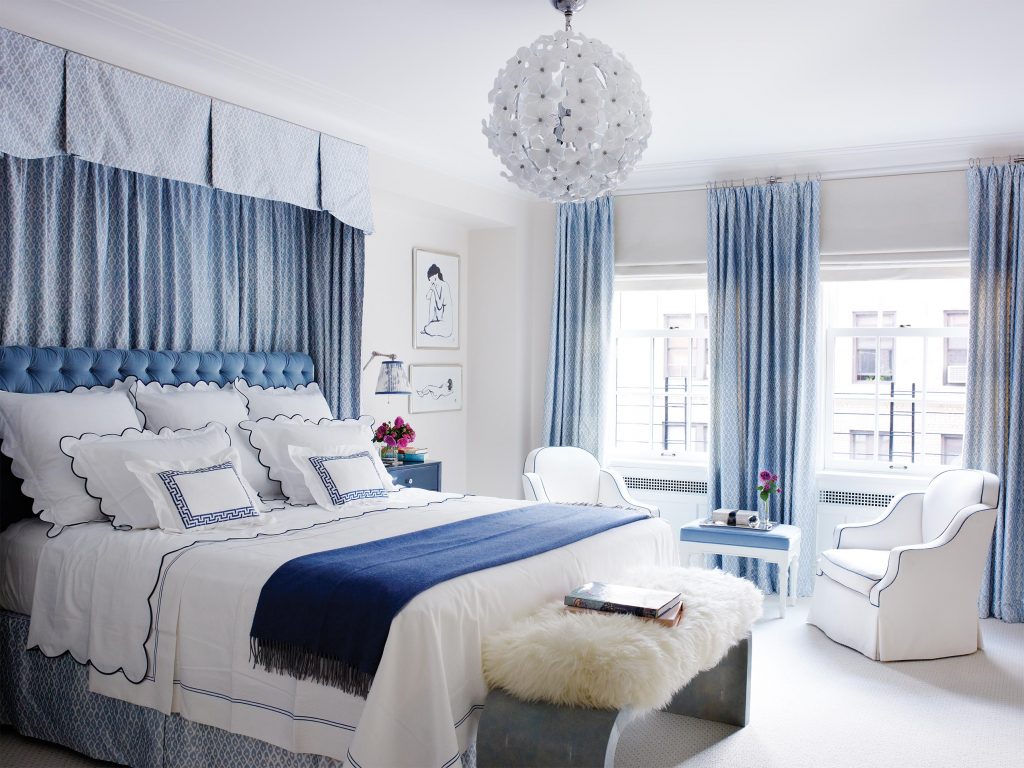
(CK): It’s the management of light—a balance of windows, mirrors, and light at many heights. I could be sitting in an empty room on a beanbag, and if there were good windows and mirrors and the right amount of light, I’d be happy. Beyond that, it would be when I’m surrounded by things that are unique. I like pieces from different time periods that have their own story lines. If I bought everything at once from the same place, it would feel like a model apartment instead of home.
(SH): To expand on your point about the importance of good light, when there’s little natural light in a space, what are some ways to amplify its impact?
(CK): The greater the challenge, the bolder the response needs to be. I’ll always use a mirror across from a window when I can. And I’m never afraid to use reflective surfaces—a glossy wall, a piece of mirrored furniture, or perhaps I’ll line the backs of bookshelves with mirrors. Sometimes it’s thinking about mirrors beyond the utilitarian—as in you’re never going to apply your lipstick there—and using them to serve as little bursts of brightness. This spring, I’m launching a collection for Mirror Image Home. I had the freedom to design mirrors using materials I love such as brass, wood, leather, and nickel.
(SH): When you say feminine sensibility, what does that mean for you?
(CK): I rarely think of it as girly or frilly. I’m speaking of a certain gracefulness—maybe the addition of a design element. I like everything to have a little something extra to make it special. Right now, for instance, I’m loving big, chunky jewelry—nothing too precious. For my mirror line, I’ve designed one that incorporates the idea of faceted mine-cut diamonds that are kind of quirky, but I’ve wrapped them in leather. That’s my idea of responding to fashion and thinking of mirrors as pieces of jewelry.
Want to learn more about Celerie Kemble? Read her entire interview on this edition of Southern Home magazine.