Text Norman Davenport Askins
Photography courtesy of Norman Davenport Askins, Architects
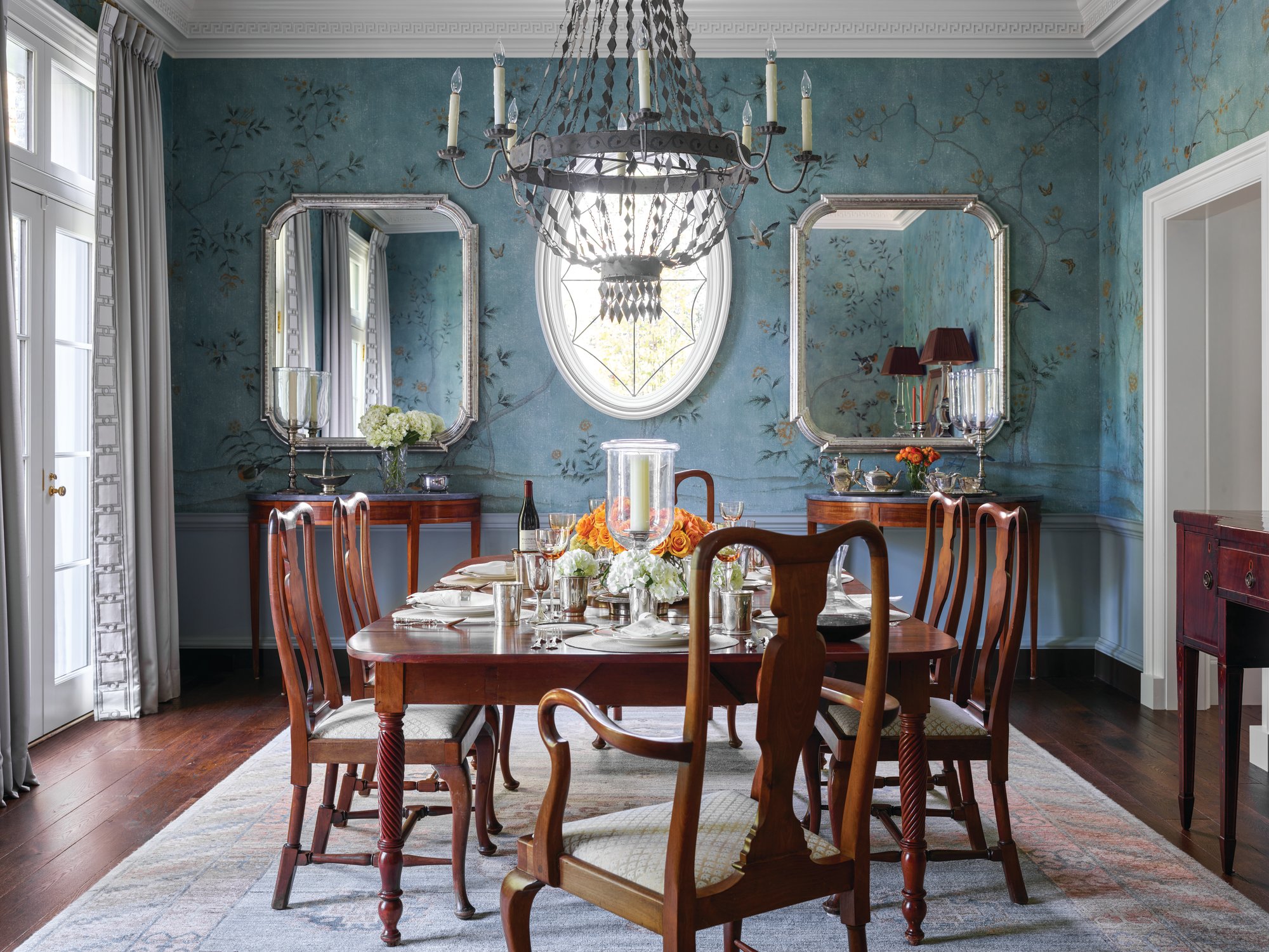
In an age of open floor plans, Atlanta architect Norman Davenport Askins makes the case for the dedicated dining room — and shares the design principles that turn it into a home’s most memorable gathering place.
One of my favorite rooms to design is the dining room. It’s where architecture, interiors, and the rituals of everyday life come together. Some of the happiest moments in a home take place around a dining table, long after the plates have been cleared.
As homes have become increasingly open and informal, the dedicated dining room has quietly fallen out of favor. That’s a loss. A thoughtfully designed dining room invites you to slow down, gather together, and enjoy one another’s company. It creates a sense of occasion that no open floor plan can fully replace.
Proportion Over Grand Scale
Great dining rooms are built on thoughtful proportions rather than overly grand scale. Lower ceilings often create warmth and intimacy, while details such as allowing at least forty-two inches behind each chair ensure guests can move comfortably without disturbing those seated. Good architecture is often invisible because it quietly supports gracious living.
The Elements That Give a Dining Room Life
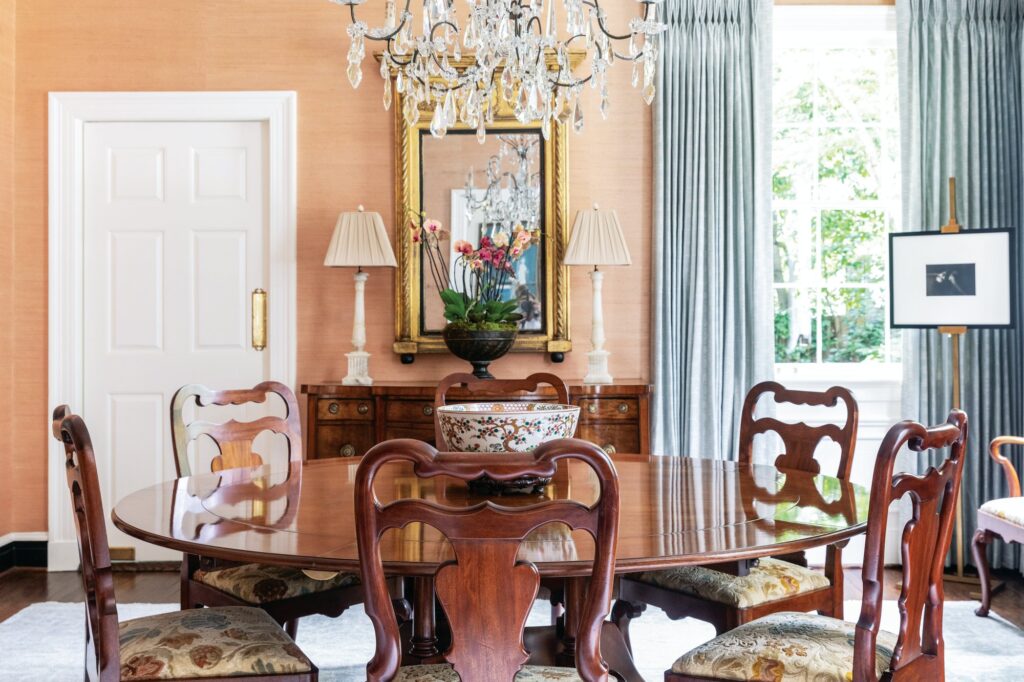
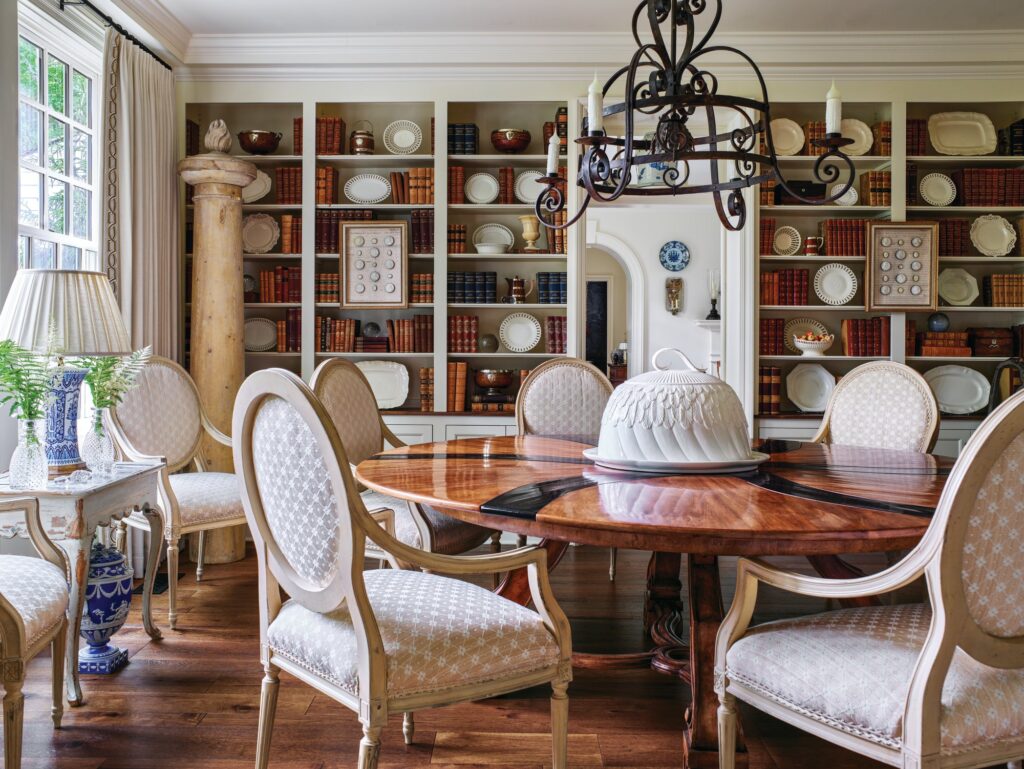
Every architectural decision should enrich the experience of gathering. Architecture doesn’t end with walls, windows, and moldings. The room is completed by elements that give it life, including bookshelves filled with favorites, acquired collections, mirrors, fabric-covered walls, and, of course, flowers. A successful dining room should feel quiet, not only visually but acoustically, allowing conversation to become the evening’s centerpiece.
Lighting: The Room’s Greatest Luxury
Lighting is perhaps the room’s greatest luxury. Candlelight reflected in mirrors, polished silver, cut glass, or high-gloss finishes creates a warmth that electric lighting alone rarely achieves. Layered illumination from sconces, lamps, and chandeliers transforms the room as daylight fades, encouraging guests to linger long after dessert has been served.
A Place to Take Chances
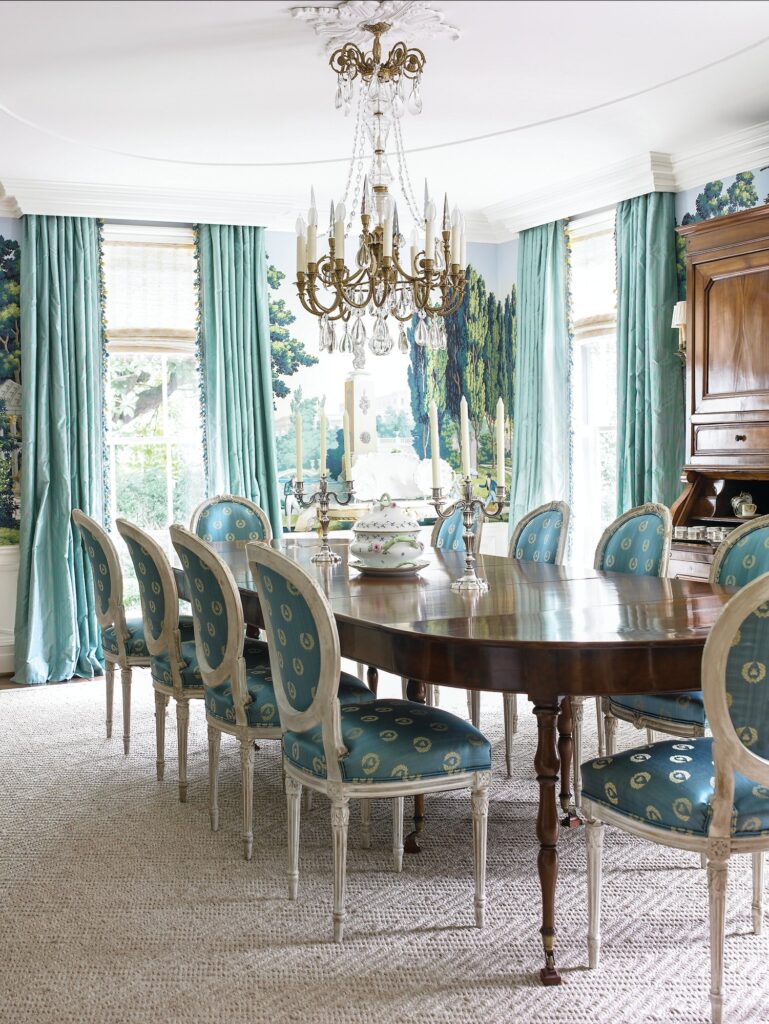
The dining room is also a place to be a bit more adventurous and take chances. Because it is experienced differently than everyday living spaces, it welcomes richer colors, scenic wallpapers, distinctive collections, and details that might feel too bold elsewhere in the house. Octagonal dining rooms are worth admiring for their beautiful symmetry and the natural niches they create for display and storage. Even the choice of table contributes to the room’s character. A skirted table introduces softness while discreetly concealing practical storage beneath, proving that beauty and function need not be separate ideas. Thoughtful storage for china, linens, and silver should also be considered. Beautiful rooms function beautifully.
A Room with Its Own Identity
While open kitchens have transformed the way we live, there’s still something to be said for the sense of occasion created by a dining room with its own identity. The meal, the conversation, and the company remain the focus rather than the activity happening beyond the doorway.
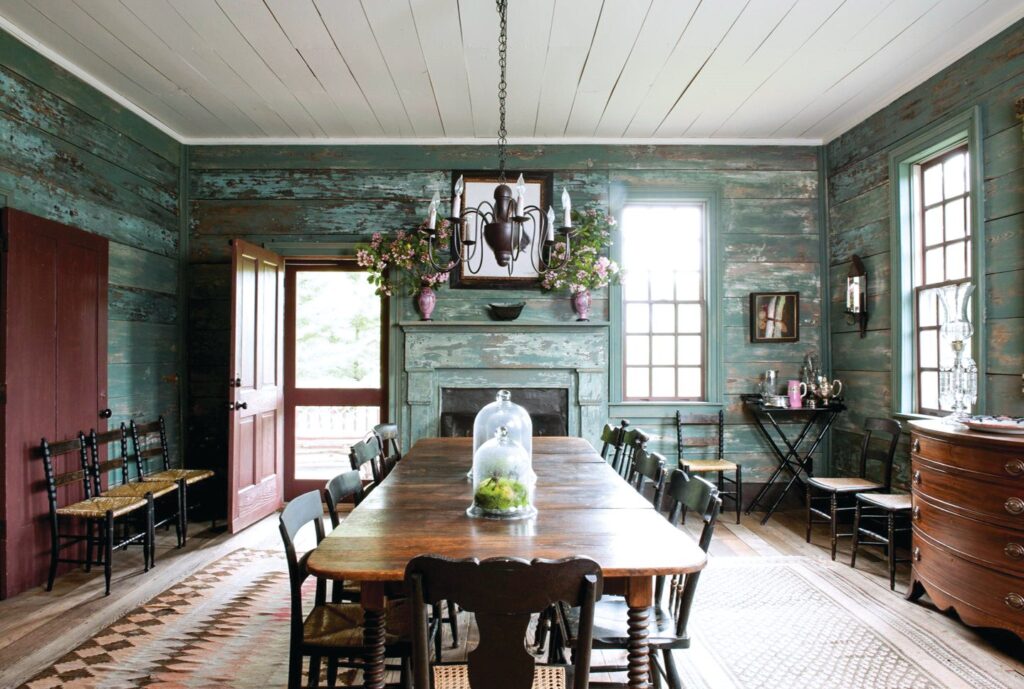
The dining room has never been about formality. It is about creating a place where everyday rituals become lasting memories. When architecture is thoughtfully considered, from proportion and circulation to light, acoustics, and the smallest interior details, it quietly enriches the experience of gathering. That is, perhaps, one of architecture’s greatest gifts.