By Bill Curtis and Russell Windham, Curtis, Windham Architects.
In Houston, where we began our now three-decades-old practice, the weather is both a blessing and a curse. In the height of summer, when the majority of the country is relishing their time out-of-doors, we are miserably hot. In all other seasons, even the depths of winter, we practically live in parks and gardens. That is why, when we approach any new project, the landscape is of equal importance to the building we intend to create. Gardens are rooms for living, never space to be squandered or overlooked.
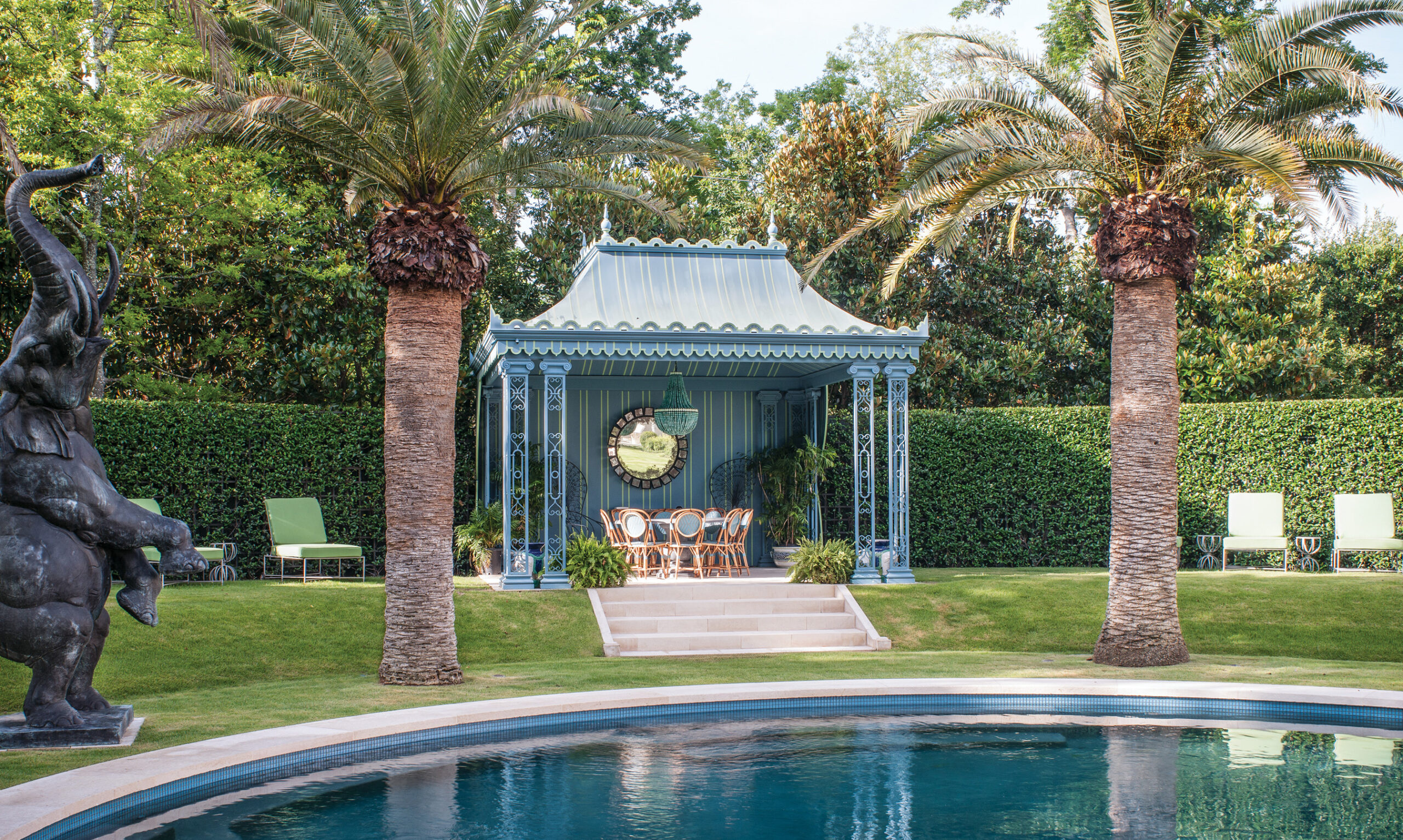
Years ago, we began to design a structure that would become the first of many… a true architectural folly, influenced by the very best of eighteenth-century European garden design. We pulled elements from campaign tents of old, with their lavishly decorated fabric awnings and draping doorways to the elaborately striped guard tents of Versailles and Drottningholm Palace. Knowledge of these and other more ephemeral garden structures joined together to create a trompe l’oeil metal-skinned tent pavilion, with two enclosed changing rooms flanking a shaded longue at the center. This open-air oasis provides a moment of pure and captivating charm in the midst of an otherwise green landscape, a welcome retreat into which we long to settle.
 Tents like these are transcendent in their genuine whimsy, yet the deft handling of their design is what turns that whimsy into a tangible retreat. They are solid and real, deliberately and thoughtfully crafted to endure under the scorching Texas sun.
To design an architectural folly is to encourage delight. Architecture is a timely, measured practice, where detail and order are held in the highest possible esteem. To be given an opportunity to direct that intense focus toward something as joyful and diverting as a garden folly is a highlight of any design project. They provide a near-constant source of cheerful contrast to any residence, no matter the degree of formality.
Since that very first time, we have pursued countless other folly-like additions of varying sizes, shapes, and colors. Some called for more natural materials, some wished to escape into foliage, but all worked to further a sense of charm and vague purpose which is the raison d’être of any folly. We continually look forward to the opportunity to create more elements like this, to transcend the range of usual garden buildings, compelling them to adapt neatly into the modern world.

Three things to think about when designing a folly
• When considering the siting of your folly, we recommend that you place it in the loveliest, most secluded spot on your property, where you can find absolute solitude if you need it.
• When approaching the aesthetic design of your folly, keep in mind that the most effective structures provide a significant contrast to the architecture of the main house. A great deal of their charm comes from their obvious inability to blend into their surroundings.
• Most importantly, keep the design of your folly lighthearted. If you take a folly too seriously, you will smother the joy and levity that make its addition worthwhile.