Text: Jennifer Boles
A libation dating back to ancient times, when the Greek and Roman gods Dionysus and Bacchus were identified with it, wine was a drink enjoyed daily by all classes of society. But beginning in the seventeenth and eighteenth centuries, when winemaking became more sophisticated and the expensive methods of bottling and corking were introduced, the cost of drinking good wine became prohibitive to all but the wealthy. Like tea drinking, the consumption of wine became yet another social custom that set the upper classes apart from everyone else, and it inspired new types of luxurious accessories with which to drink and serve it, including wine coolers, coasters, decanters, and tables designed specifically to enhance the ease and enjoyment of drinking wine and spirits.
Considered the height of elegance and sophistication even by today’s standards, eighteenth-century France saw the dawn of a less-formal, though still gracious, style of living, which emphasized both comfort and privacy, especially from the attentive eyes and ears of domestic servants. In wealthy households, rooms were furnished to be intimate and multifunctional, giving homeowners and their guests the ability to engage in a multitude of activities, sometimes within the same room. Whereas the English upper classes feasted in rooms intended solely for dining, the French were known to take their meals in any number of rooms, thus requiring furniture that would aid in meal service without the hovering presence of servants. Famed French ébéniste Joseph Gengenbach, better known as Canabas, excelled at crafting small, sometimes adjustable, pieces of furniture perfectly suited to this flexible style of living, particularly a petite serving table with which he is still associated today: the rafraîchissoir, a French word meaning “refresher.”
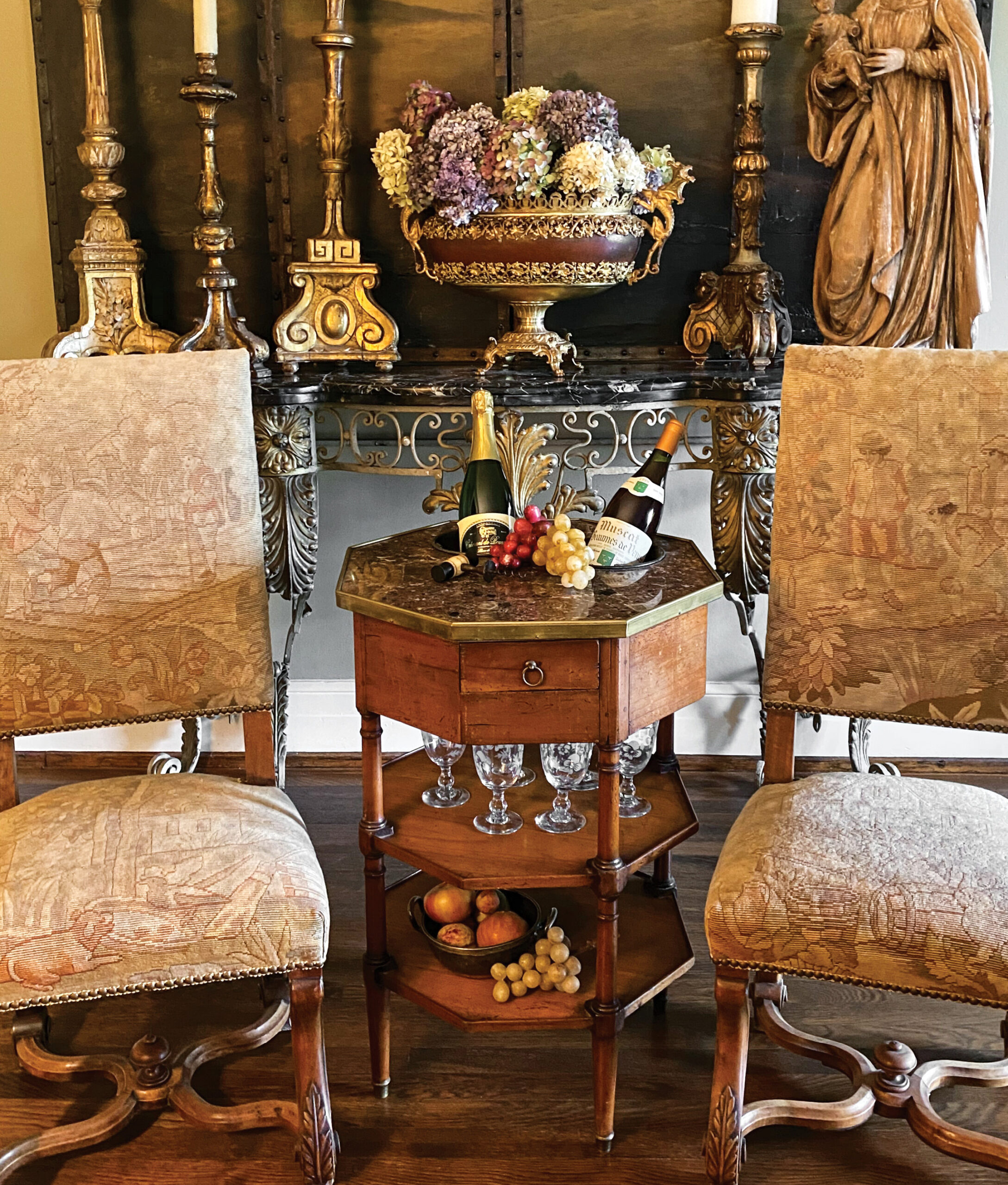
 Designed for easily serving wine and light meals tableside, the rafraîchissoir is recognizable by its marble or wooden top that is fitted with wells, which hold brass or silver-plated liners used to chill bottles of wine. (During the eighteenth century, most wines, even reds, were drunk chilled). The body of the table includes a single drawer, which offers storage for cutlery and other table accessories, as well as one or two shelves that provide space for plates and serving dishes. Relatively lightweight and compact compared to most stationary dining furniture, rafraîchissoirs have the added advantage of being easy to move both within a room and among them, which explains why these tables frequently have handles attached to their sides.
In eighteenth- and nineteenth-century England, where the social custom of wine or port drinking was primarily enjoyed by gentlemen following dinner, cabinetmakers, such as Hepplewhite and Gillows, devised uniquely British versions of the wine table, which tend to be sturdy and masculine-looking when compared to their French counterparts. One notable example is the horseshoe-shaped wine table, which is sometimes referred to as a “gentleman’s social table” or “hunt table,” the latter term owing to the table’s occasional use by riders during hunts. Often made of mahogany, these semicircular wine tables could be positioned in front of a fire, allowing gentlemen to sit fireside while imbibing. In order to provide easy access to wine and port decanters, these tables were also outfitted with rotating brass arms that held decanter coasters; anyone sitting at the table could simply move the arm to bring the decanters closer to him. These tables were sometimes even equipped with a brass curtain rail and curtain, which shielded men from the intense heat of the fire.
A social nicety for some, wine tables were a necessity to others, specifically the tasters working at French vineyards, where the storage and tasting of wine typically occurred in cellars. Usually quite simple in design and sometimes rustic in appearance, nineteenth-century French wooden tasting tables also had tilt-top mechanisms that allowed them to be stored flat against walls when not in use. More often used today as space-saving dining tables, antique tasting tables remain highly sought-after thanks to their versatility and practicality. So, too, with antique rafraîchissoirs, which, despite their occasional use today as plant stands, continue their elegant tradition of serving food and wine.
 need to KNOW
• According to Laurent Gouon, proprietor of Lolo French Antiques et More in Birmingham, rafraîchissoirs were often made of walnut or mahogany. “Mahogany was a very expensive wood at the time and considered one of the best.” While some examples have wood tops, marble, which is less vulnerable to damage from wine spills than wood, was more frequently used. Many tables were also appointed with brass rails, trim, or sabots. The standard feature of all rafraîchissoirs, however, is their sunken, metal-lined chilling wells, which, depending on the piece, might number two or three.
• Rafraîchissoirs were produced in different styles, including Provincial, but those in the classical Louis-XVI style are most desirable at the moment, says Gouon, who also notes that demand for antique tasting tables is surging. “They’re great for wine cellars and tastings, but more and more, people are using them as dining tables in small apartments or homes because they can easily fold and be stored against a wall.”
• For a rafraîchissoir in very good condition, be prepared to pay between $2,000 and $3,000. Missing or damaged details will affect value, so ensure that any brass accents are in good shape. Most important of all, “Make sure the metal liners are in their wells and are not missing,” stresses Gouon.