
Countertop selection is a critical component of a kitchen that can elevate the space. Whether you want a statement-making countertop or prefer something more understated, the options are virtually unlimited. Marble, quartzite, granite, stainless steel, wood, porcelain, and quartz all have unique advantages and disadvantages, but each can be effectively used for a stunning kitchen.
If a kitchen has a simple design with relaxing colors and needs a touch of excitement, a richly veined marble could be the chance to add that pop. The material needs to be selected carefully to keep the overall composition cohesive. If you go too extreme, you can turn the entire design into chaos, not providing a place for the eye to rest and focus. When the space has a bold composition, using vibrant colors and textures in the cabinetry, walls, plumbing, or other surfaces, a countertop selection with soft or muted hues and minimal vein movement could be the key to connecting all materials together.
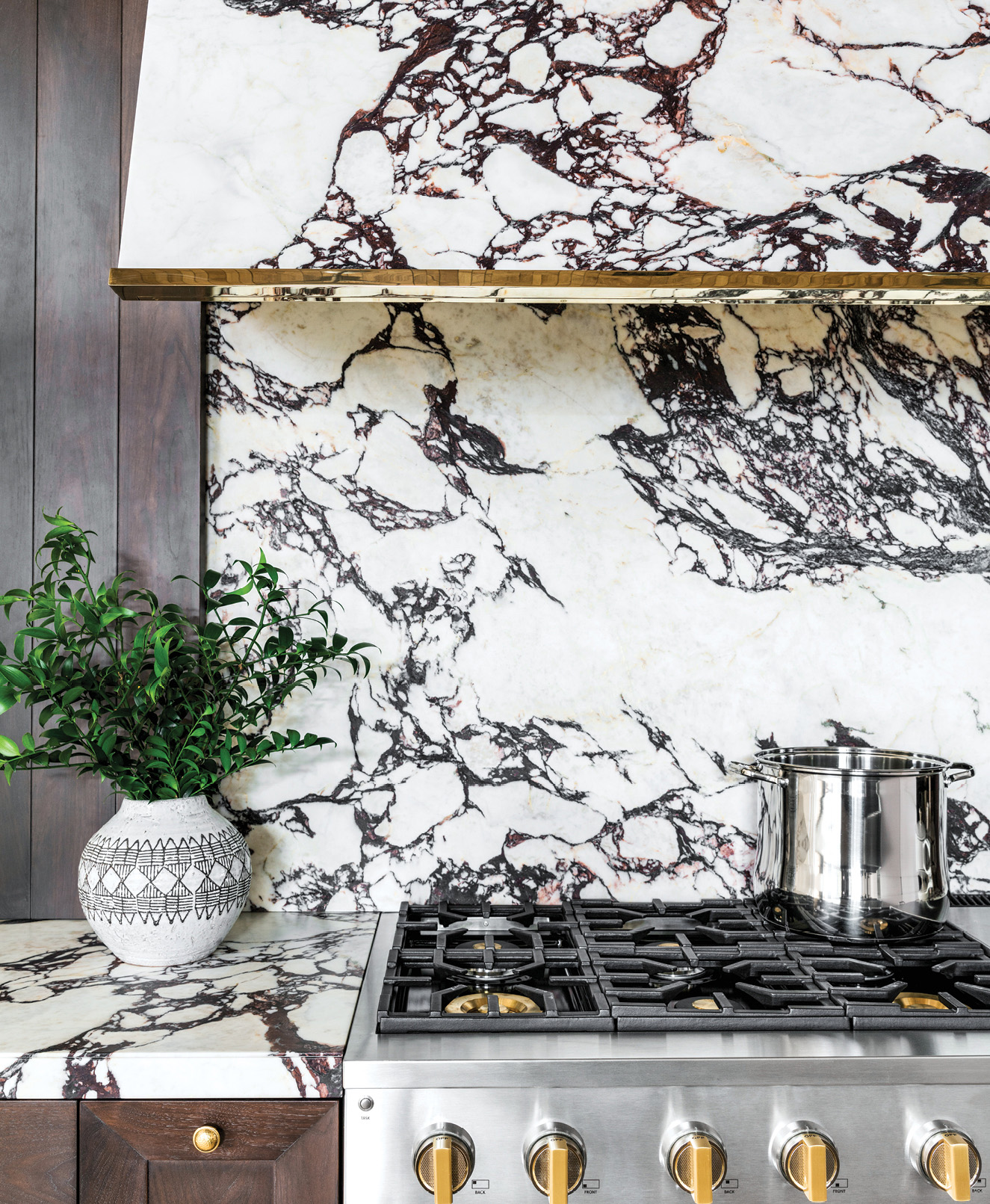 In addition to the material selection, there are several details you can add to the countertops to create movement in the space, add cohesion, enhance the focal point, and aid the habits of the client.
When selecting countertops, it is important to consider the following:
• Other materials in the space
• Lighting—artificial and natural
• Texture—polished, honed, leathered, or brushed
• Composition—natural stone, engineered stone, wood, metal, porcelain, glass
• End use—Does the client cook a lot? Will etching occur often, or will etching be bothersome to the client? What are the ages of the family/users in the space?
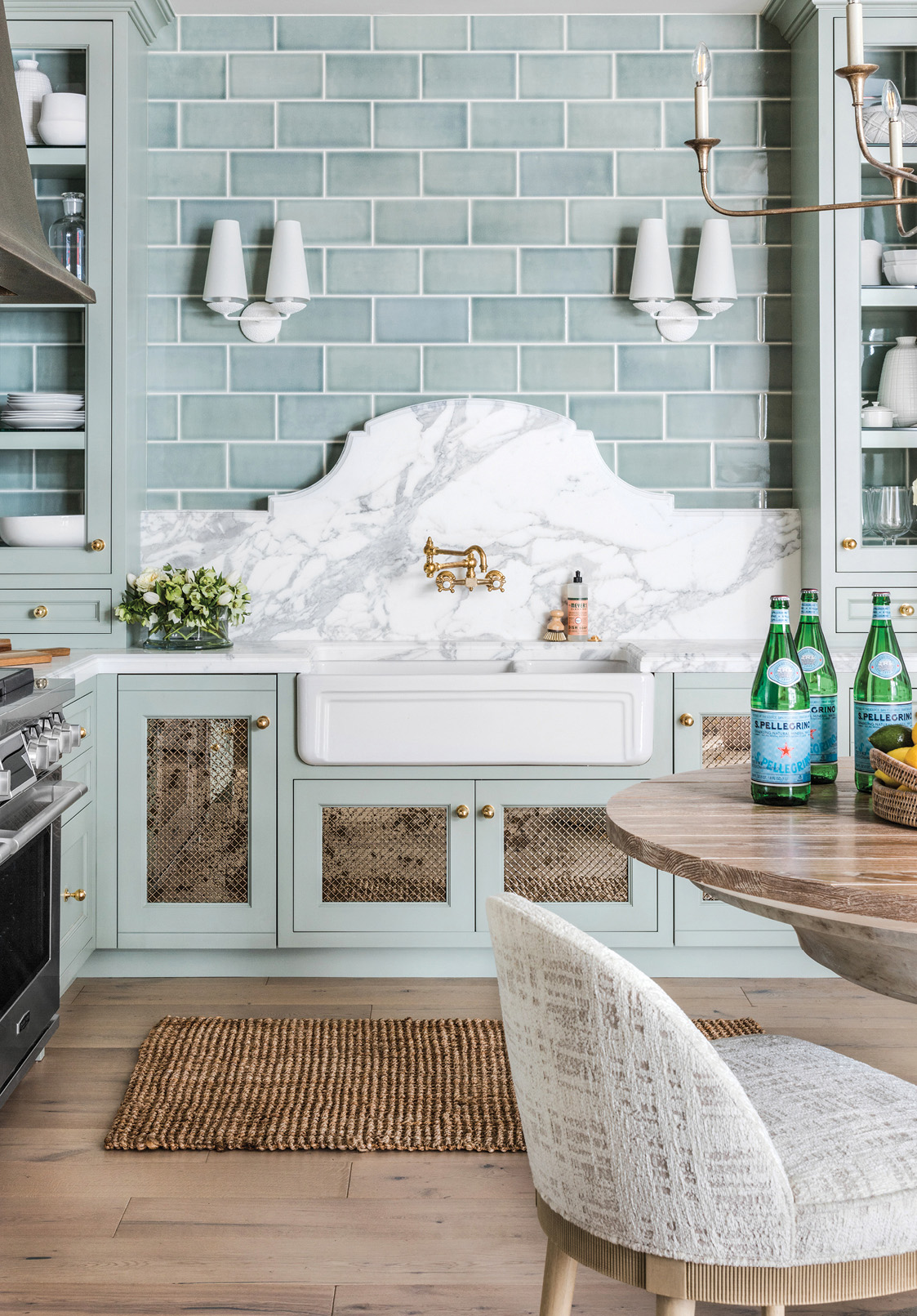 Every countertop material has its advantages and disadvantages. While white marble will always be a classic and certainly the preferred choice for bakers, the homeowner must understand and appreciate that it will etch. There is a strong trend toward natural stones with distinct veining and movement for statement-making kitchens. Designers are also employing multiple countertop materials in the kitchen to add interest and texture. The use of wood countertops, particularly in serving areas, offers a softer material and different texture, while a stainless steel countertop gives a more industrial look. Advances in quartz now offer the look of natural stone without maintenance.
Another important aspect of countertops is edge detail. An eased-edge has been a go-to option for years, but there is a shift to a softer edge. For homeowners wanting a seamless look, a waterfall edge on kitchen islands is an excellent choice. Enhancing the waterfall edge with a decorative wainscot offers a more detailed/transitional look. Fluting or reeded edges are gaining traction as well as mixing the edge details. Edge treatments can achieve a thicker appearance by mitering and layering details around the perimeter of the countertop. Using a decorative profile in one area of the kitchen and a simpler profile in another is a common designer touch. Various countertop thicknesses can also be used to create design hierarchy in the space.
As an artist uses color and texture intentionally, the designer needs to consider the countertops with purpose.
 Currently Trending
• Richly veined countertops that make a statement
• Mixing countertop materials
• Fluted or mitered edges
• Integrated stone sinks or apron sinks that seamlessly transition from the countertop
• Backsplashes—Elevate the design style with the application of a stone backsplash that extends to the ceiling or has a design detail behind the range. Bookmatching slabs create a focal point.
• Adding a shelf of the countertop material above the backsplash if slab size or quantity is limited