Text: Jennifer Boles
Inlay, the art of embellishing an object by setting pieces of wood, metal, or even mother-of-pearl into the surface, has been a prized form of decoration since ancient times. It was the Egyptians who perfected the technique, creating inlaid woodwork of such beauty that the craft was later adopted throughout the Middle East and Asia, where it proved a major influence on the decorative arts. Inlay became a standard feature of Islamic architecture, with intricately inlaid wood and ivory or bone panels and doors often appearing in mosques. The technique was also notably embraced in India, where Western furniture forms, such as chests of drawers, were elaborately inlaid with bits of exotic materials, including ivory, ebony, or mother-of-pearl and became highly sought after in Europe.
A very different style of inlaid furniture struck a chord among European craftsmen: marquetry, which involves assembling cut pieces of wood or other materials and gluing them to a furniture surface to create a smooth decorative veneer.
Although not technically inlay, the effect is similar—and just as dazzling. Once described as “painting in wood,” marquetry became fashionable in the sixteenth and seventeenth centuries, when European furniture makers frequently incorporated naturalistic scenes that bore some resemblance to the Dutch flower paintings that were also becoming popular at the time. By using both natural and artificially colored woods, craftsmen devised intricate designs of flowers, classical motifs, or simply geometric patterns. Furniture makers in Augsburg, Germany, proved to be particularly adept at creating such designs.
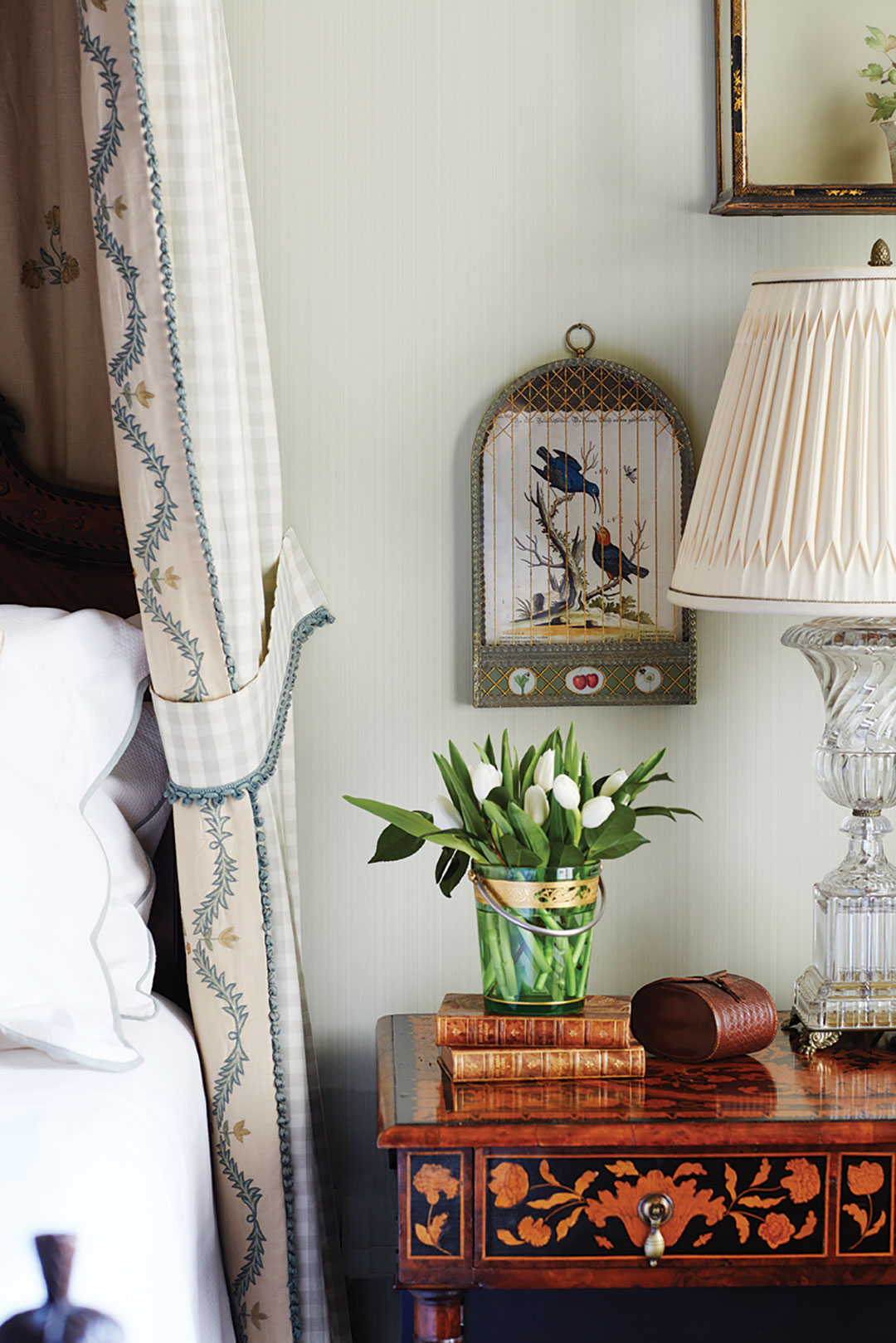
Marquetry was taken to new heights of artistry and sophistication in France during the seventeenth and early-eighteenth centuries. An ideal accompaniment to the lavish furniture being constructed at the time, marquetry veneers adorned the fronts and tops of curvy commodes, desks, and even bedside tables, one of the new furniture forms developed in the eighteenth century. Opulent gilt mounts typically adorned such furniture, playing a dual role: while highly decorative, the mounts also helped to protect the edges of the wood veneers from fraying.
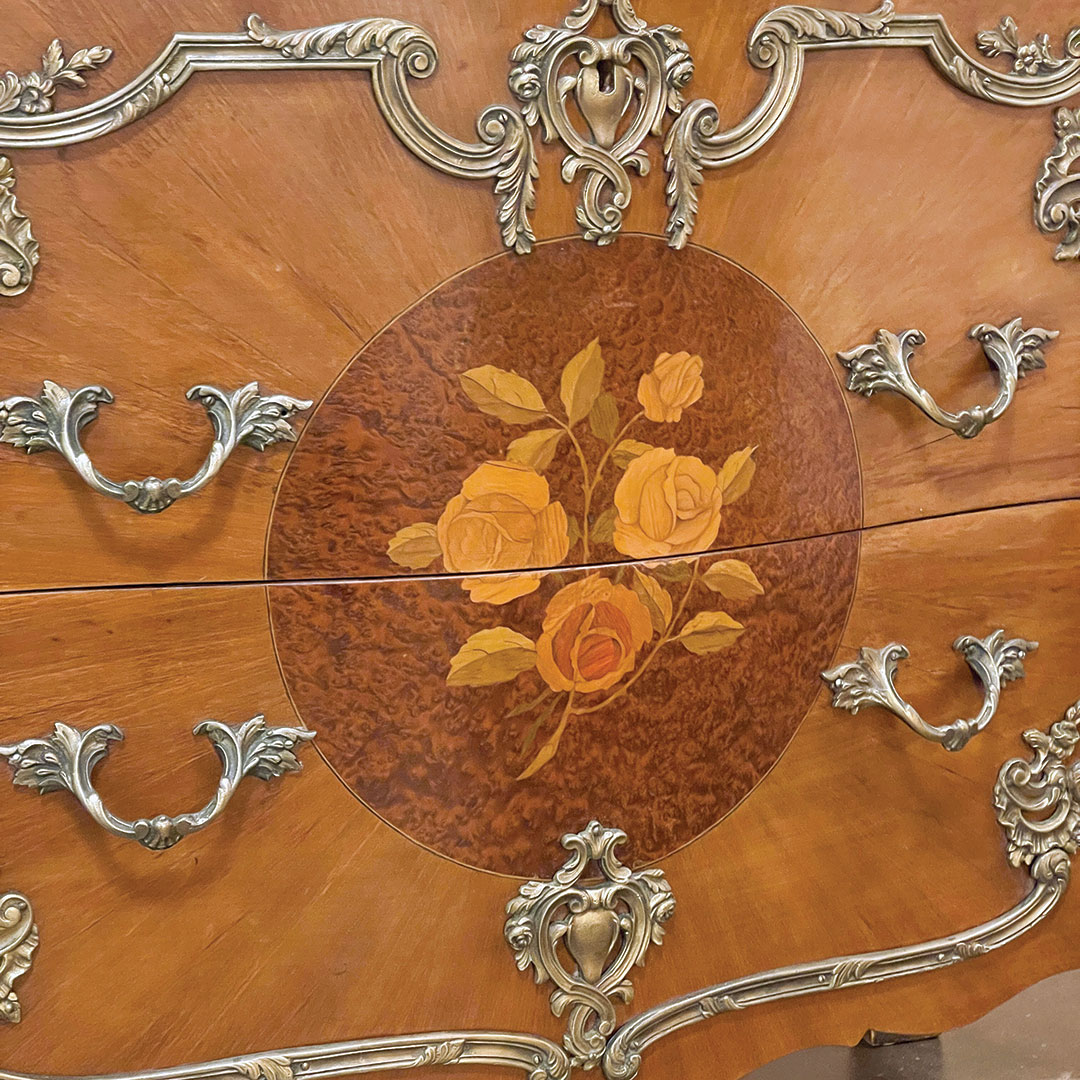 Some of the most famous French furniture makers worked with marquetry. Jean-Henri Riesener, Marie-Antoinette’s favorite cabinet-maker, was a virtuoso of the technique, crafting commodes, tables, and cupboards with marquetry flowers, rosettes, and trelliswork.
But not every cabinetmaker created marquetry entirely of wood. André-Charles Boulle, perhaps the greatest of French furniture makers, mastered a type of marquetry made of tortoiseshell and engraved brass veneers. Known as Boulle work, this uber-luxurious technique is considered by many to be the pinnacle of marquetry craftsmanship. Although no longer fabricated using endangered materials, marquetry furniture continues to be produced today, introducing a new generation of collectors to these sophisticated wood finishes.
 Need to Know
• According to Inessa and John Stewart of Inessa Stewart’s Antiques & Interiors in Dallas and Baton Rouge, marquetry furniture produced prior to the mid-nineteenth century can be difficult to source, particularly those pieces in good condition. “Those items that are in well-preserved condition that date to the eighteenth and early-nineteenth centuries are the hardest to find, as those examples have been coveted and acquired by discriminating collectors for two centuries,” says Inessa.
• Antique marquetry designs vary from what John describes as “natural subjects, usually floral and foliate designs, to more abstract compositions. We have seen such work on every type of antique, from beds to armoires to chairs to commodes.” Many of the marquetry antiques they sell originated in France or Italy.
• When buying antique marquetry pieces, the Stewarts advise checking for physical damage that might include chips along edges, buckling, and color fading. That said, “We would heartily recommend examining museum pieces to serve as a reference benchmark. Usually buyers are amazed at how many signs of wear, age, and obvious repairs are readily visible even on ‘museum-quality’ marquetry pieces.”