 Text: Sherry Moeller
Photo: Gordon Beall
On the hunt for a second home not too far from their Washington, DC, condo, Jeffrey Kramer and Keith Lachapelle spotted a Hollywood, Maryland, house online while on a family trip in the Hamptons. The first stop when they got back to the city was a tour of the Southern Maryland property. The long, tree-lined gravel driveway and the 5.6-acre lot reminded them of where they had just vacationed, which they loved.
Scandinavian Style Meets Chesapeake Charm in a Hollywood, Maryland, Cottage Renovation

Scandinavian Style Meets Chesapeake Charm in a Hollywood, Maryland, Cottage Renovation

Scandinavian Style Meets Chesapeake Charm in a Hollywood, Maryland, Cottage Renovation

Scandinavian Style Meets Chesapeake Charm in a Hollywood, Maryland, Cottage Renovation
“The siting of the house and the bones were also special,” says Kramer, as well as the access to open water on Hickory Landing Creek feeding into the Patuxent River, a tributary of the Chesapeake Bay. “It’s completely private,” adds Lachapelle. “You’ve got a view of the water from every room in the house.” A bonus is the short 90-minute drive from the nation’s capital.
After working with Nestor Santa-Cruz on the design of their DC condo, Kramer, the architect for this renovation, and Lachapelle, who retired from the fashion industry, knew that Santa-Cruz could help them make this 1948 summer cottage their own. “The DC condo project became the foundation of our creative language,” says Santa-Cruz. “It allowed us to move forward with a shared vision for this home.”
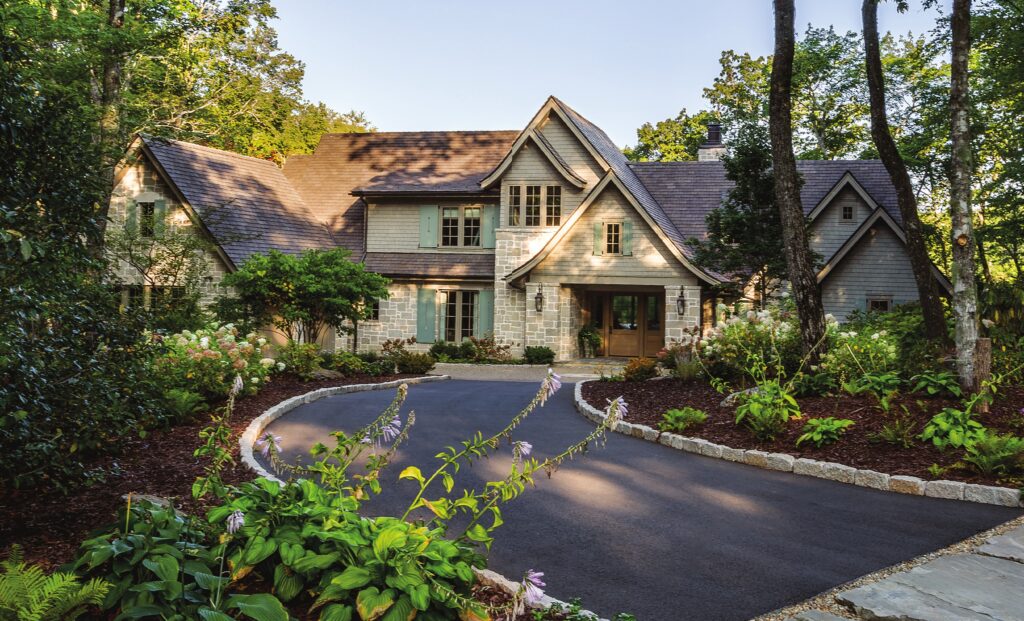
The exterior color changed from yellow to a steely gray for a rich and timeless first impression. Pergolas and some remnants of the previous postmodern renovations that dated the outside were removed, creating a clean, visually appealing exterior. “While the home still held charm, it required a refresh that would blend its history with a more contemporary sensibility,” adds Santa-Cruz.
With a mutual appreciation for how the house works with the land, Santa-Cruz proposed the idea of a softer, American interpretation of a Scandinavian cottage—“something that would resonate with the home’s wooded, water-adjacent setting,” the designer says. The guest suite, which is only accessible from the outside off the front walkway, offers a private getaway space for family and friends. Santa-Cruz infused a playful element into The Beverly, the name given to this separate retreat by the former owners, by adding the same banana leaf wallpaper found at the famed Beverly Hills Hotel in California.
The main house entry, which is at grade level, presents an “arrival moment” with steps down to the living areas and a curved staircase up to the bedrooms. Kramer sketched updates to the layout of most rooms, including the removal of the wall between the kitchen and dining room. “Opening up the kitchen to the dining room was the biggest move inside,” adds Santa-Cruz. In the kitchen, they reconfigured and painted the existing cabinets, reglazed the terra-cotta floors, and added new lighting, fixtures, and appliances.
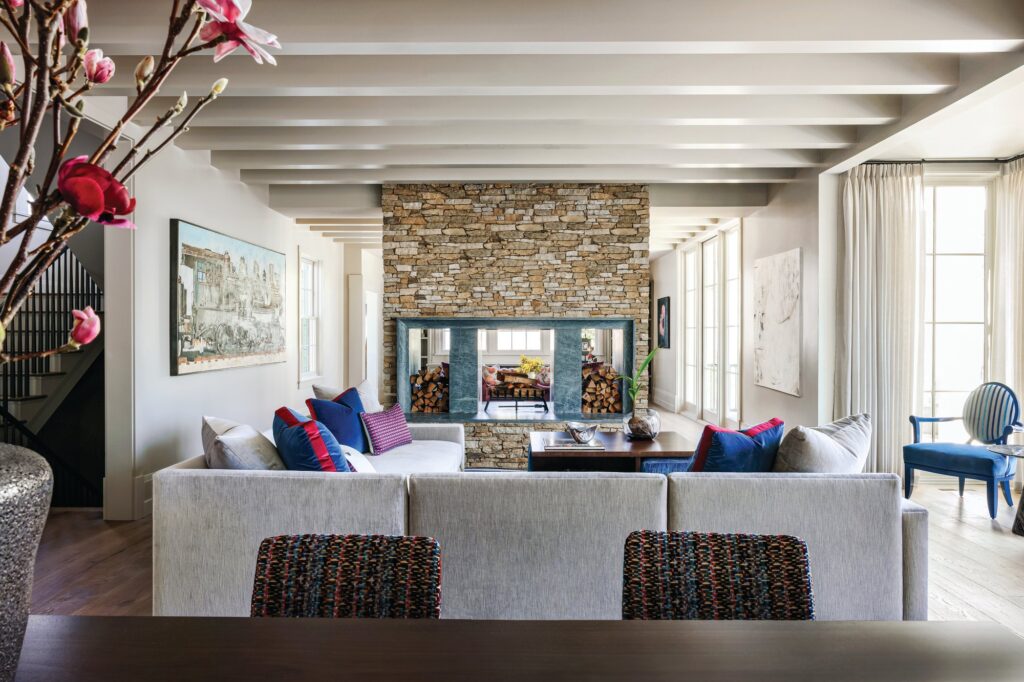
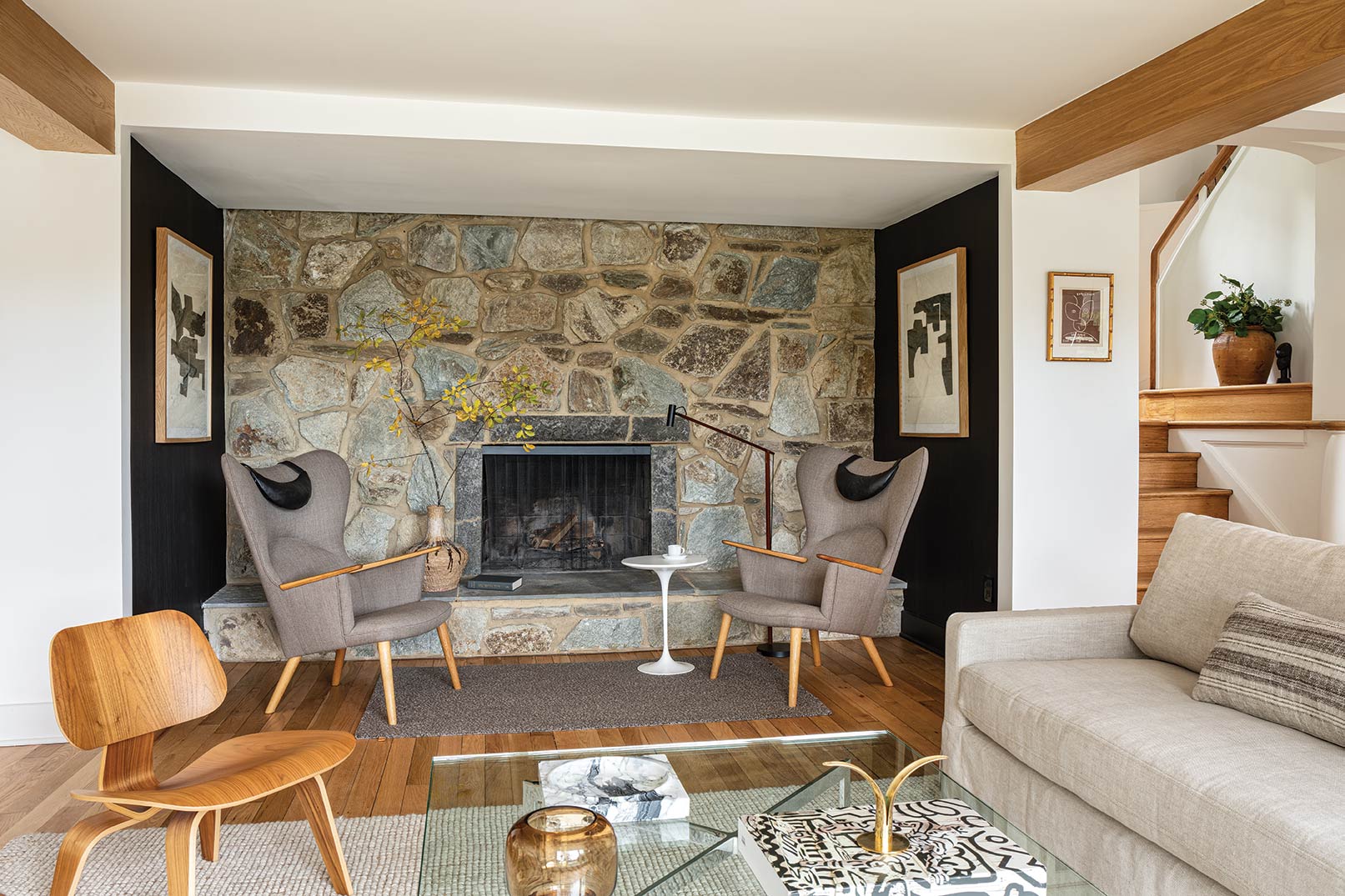
To add height to the living areas, Kramer removed the coffered ceilings and wrapped the steel beams in wood. Where they could, they refinished the vintage oak flooring. The Scandinavian-inspired updates are a mix of contemporary and natural elements, such as warm woods, tactile textiles, and classic pieces. “All were chosen to evoke a sense of quiet elegance,” Santa-Cruz says. “Though inspired by Nordic minimalism, the result feels distinctly American, rooted in place, yet expansively modern.”
When Santa-Cruz suggested to Kramer and Lachapelle that they purchase a pop art diptych by Corita Kent he saw in a pawn shop in Georgetown, the couple was happy they did. As art collectors, the homeowners found the perfect spot for this lucky find—on a living room wall under high windows they had previously contemplated removing.
Lachapelle’s favorite spot is the nook in front of the original stone fireplace, while Kramer favors the detached screened porch nestled in the trees. Each area of the residence was touched and reflects the owners’ and designer’s collective approach to making this a dream second home. “Everything is cohesive in this Hollywood home,” adds Lachapelle.
By thoughtfully editing the existing floor plans and tying in elements that made sense, the whole house has a feeling that it was designed from scratch. “We gave the house a new life—simple, fresh, and open,” Santa-Cruz says. “The house now truly ‘floats’ in the setting, and with the water so close, it seems like the right gesture.”