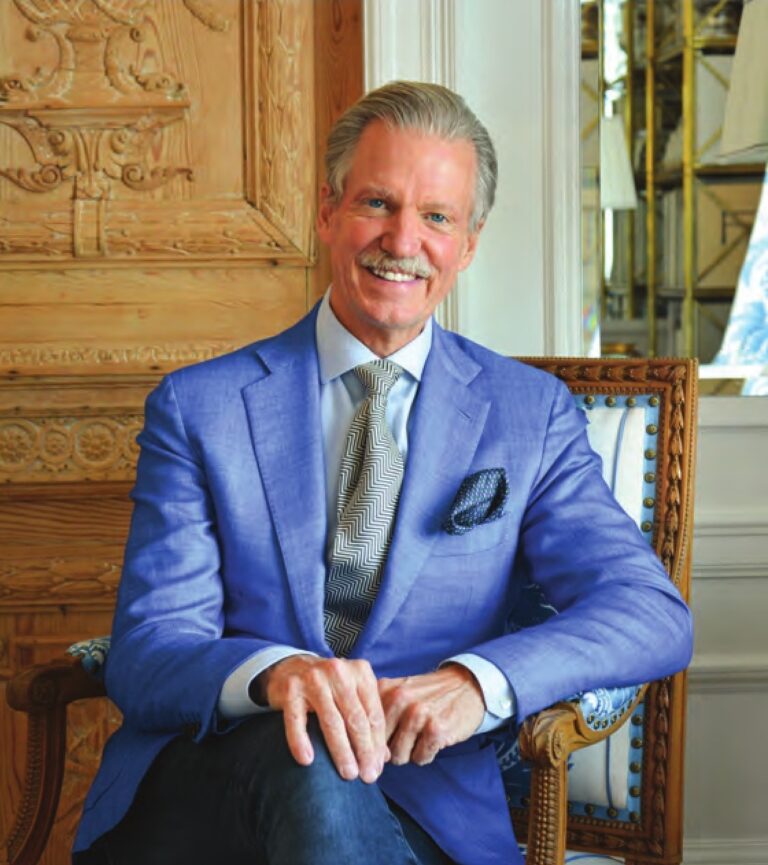
Southern Home (SH): How did you get your start in interior design?
Eric Ross (ER): Professionally, I began my career working in a furniture store, where I worked for four years as a designer. I left there to run a design studio, where I was the lead designer for seven years. Then in 2009, I founded Eric Ross Interiors with my wife, Ruthann.
SH: What are some of your design influences? Historic homes? Legendary decorators?
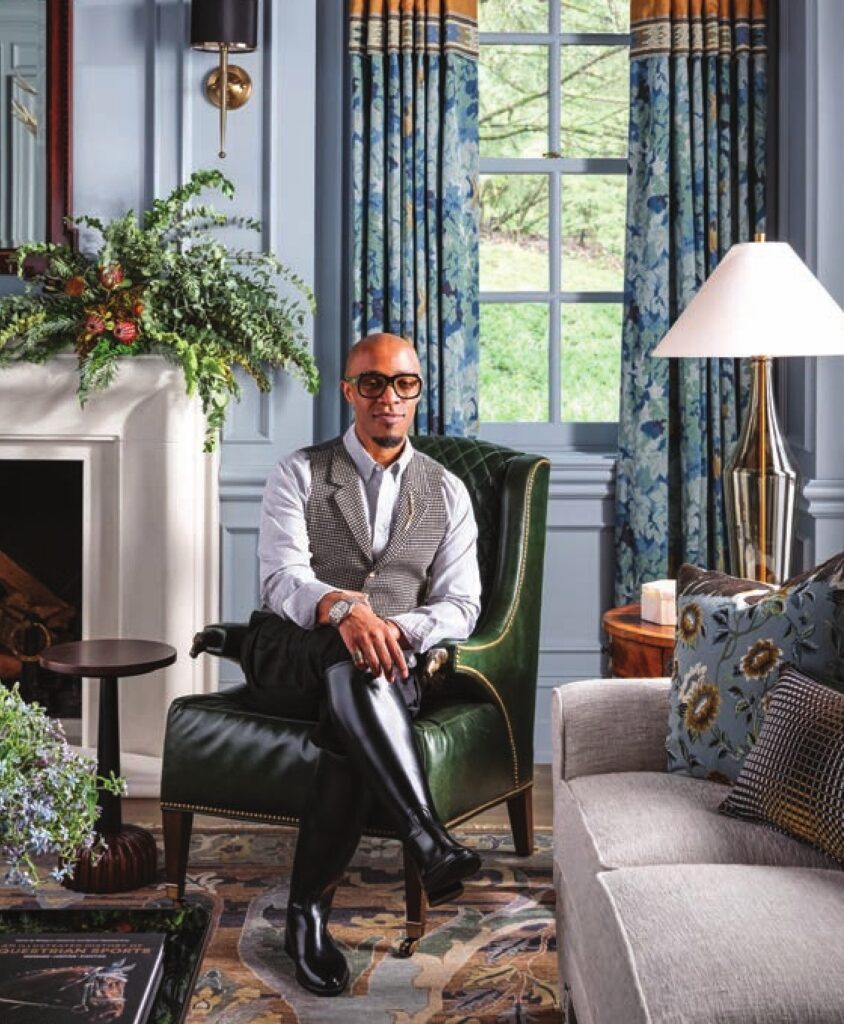
ER: Major influences in my work have been Charles Faudree, Mario Buatta, Mark Hampton, and Dan Carithers. I love using yards and yards of fabric in my rooms with a classic, traditional aesthetic that leans more English than French.
SH: What are some principles for using color that you follow?
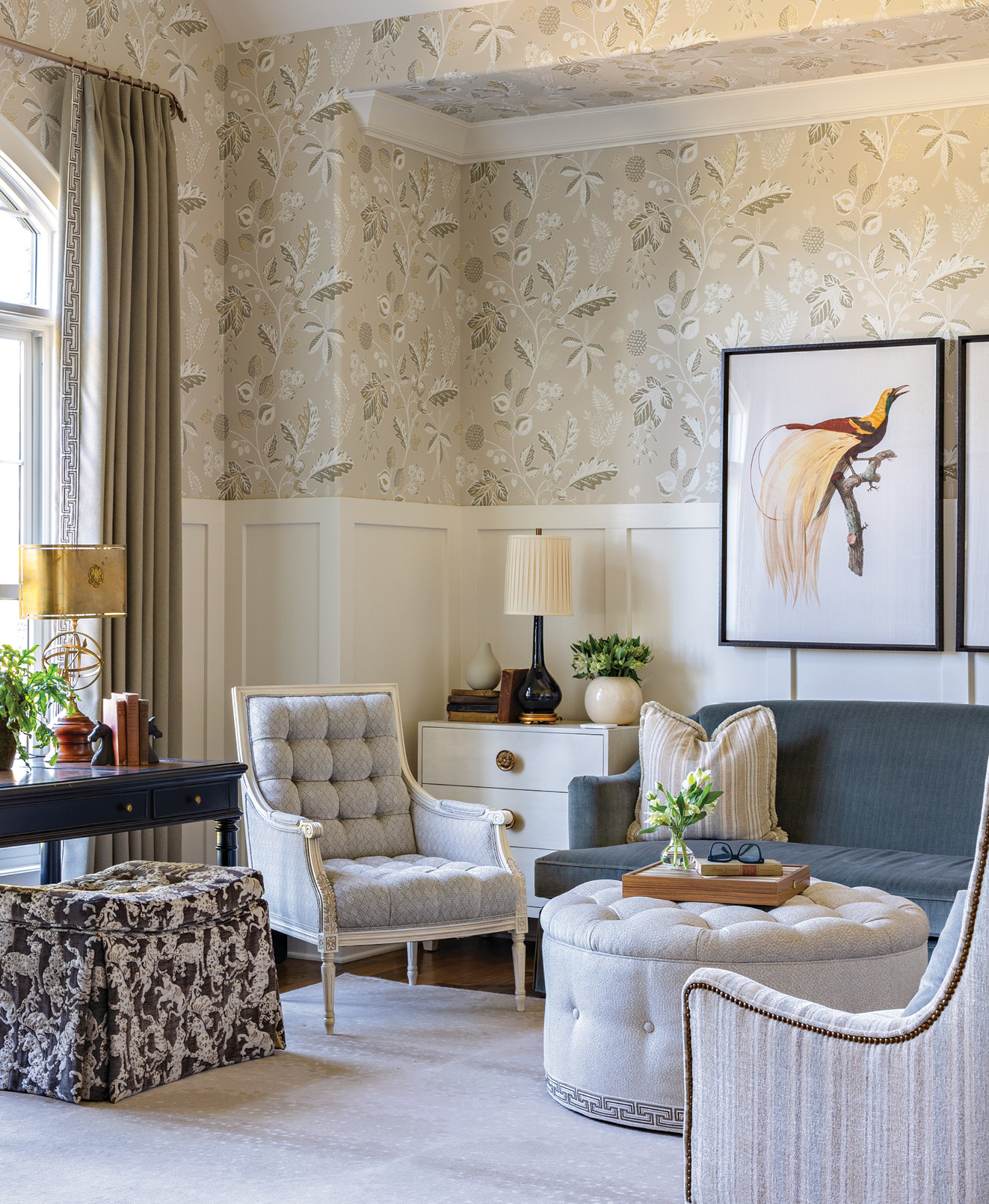
ER: With color, I try to be diplomatic in where and how I use it. The cornerstone of my work is contrast. I like items to pop off their backdrop. I don’t believe in subtlety, but rather dramatic effect. If I have a large room, I try to be more judicious by having a more neutral color on the walls and putting color in the drapery or upholstery.
 SH: You take on a range of projects. What are some constants that appear in all your work?
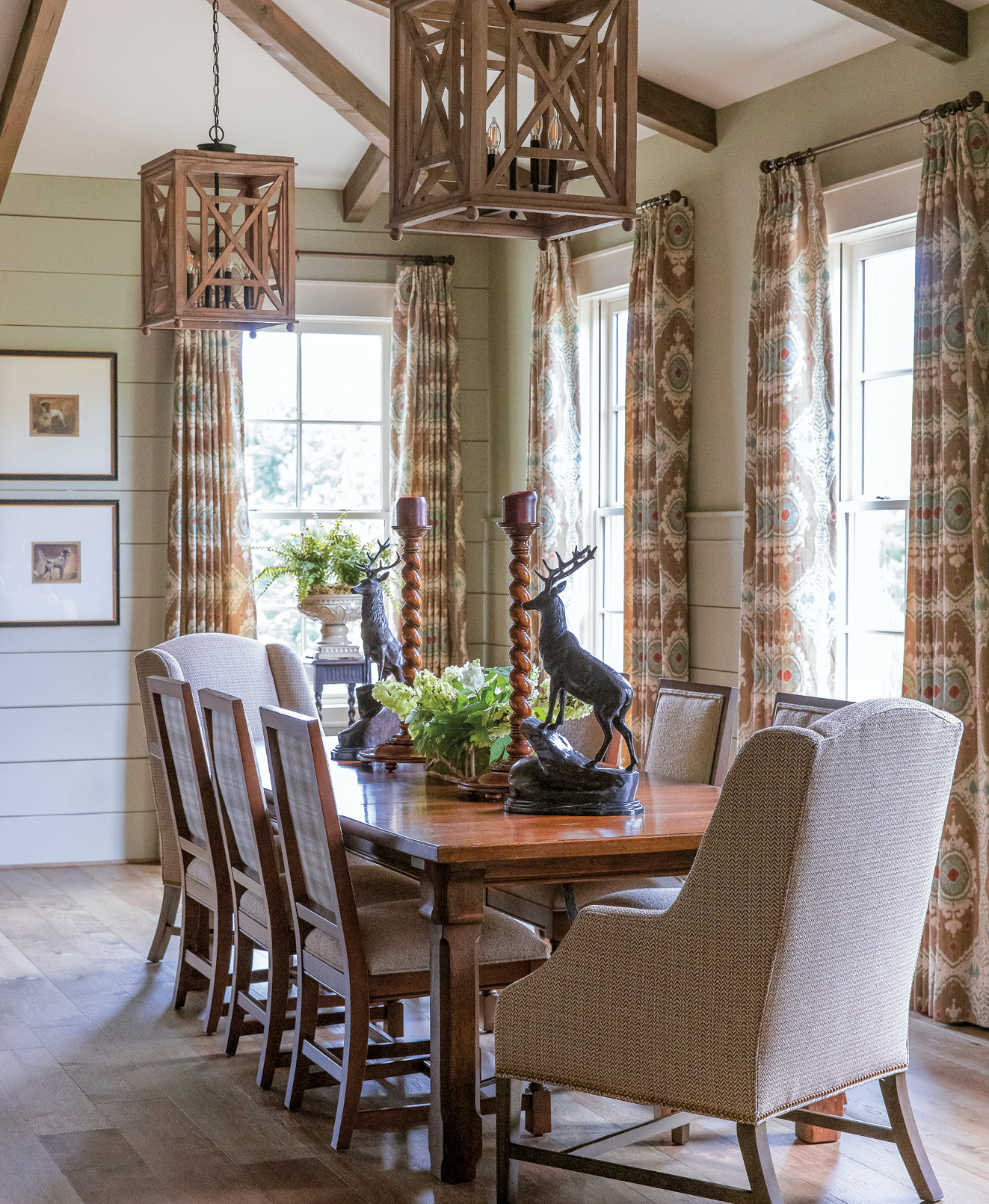
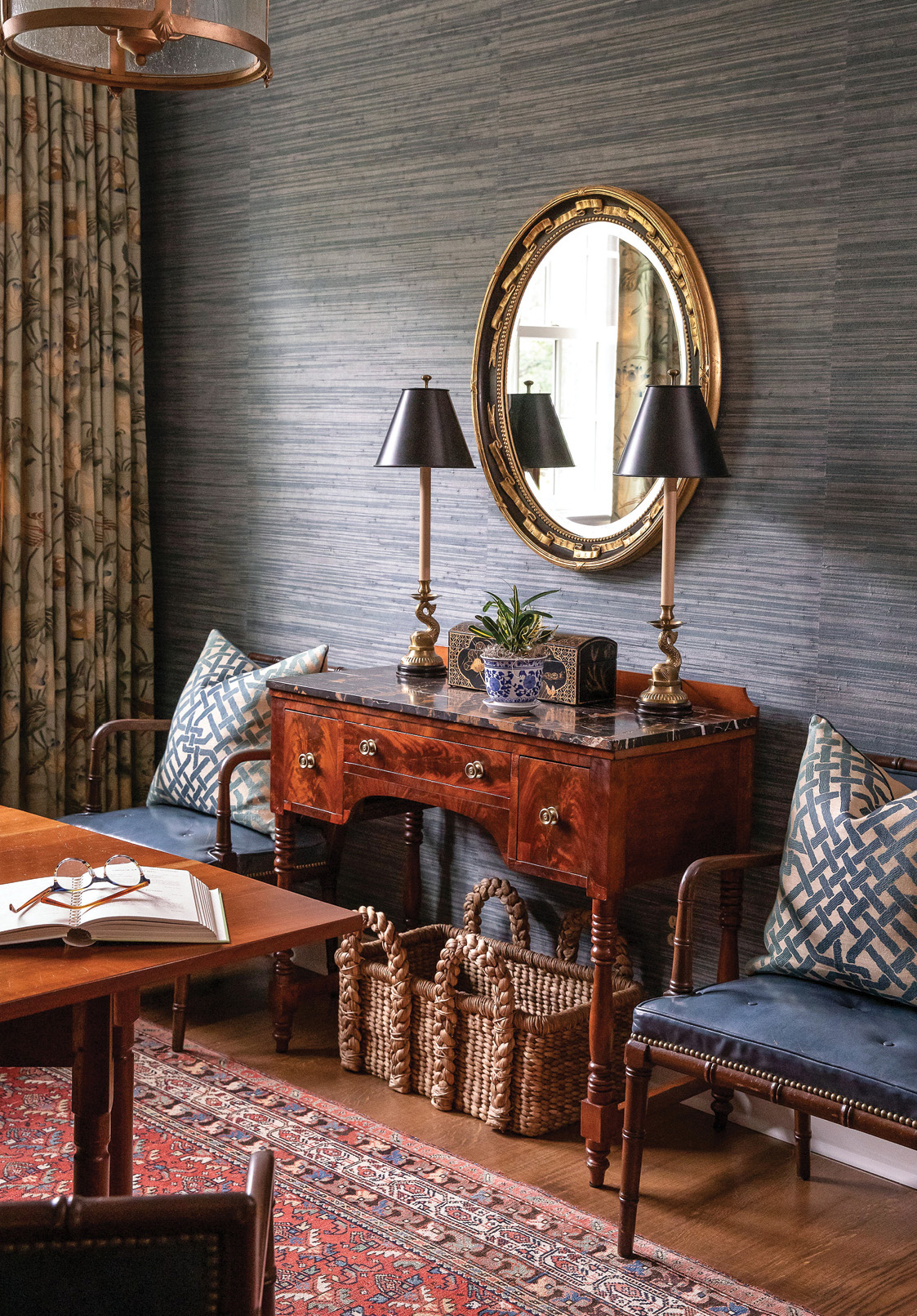
ER: I want my rooms to be luxurious, layered, and approachable and to look like they’ve been here forever. After all, what good is luxury without comfort? I put draperies in every room and usually start with a statement print. I like antiques with new upholstery. Antique upholstered pieces are generally too low to the ground and too shallow to be comfortable. I love antique Persian rugs. They immediately communicate good taste and a sense of history. Persian rugs also wear like iron, so you don’t have to treat them as if they are precious.
SH: Where do you start your projects?
ER: I always start my projects with a statement print, large scale and dramatic. I love to use heavy window treatments, meaning they aren’t really designed as a backdrop but more as the headliner in every room. Some clients don’t have the appetite for those, so I soft pedal and do more solids for them, but always in a color, never in a neutral. I feel it is necessary to wow my clients, and their homes should wow their visitors. Life is too short for a sleepy room.
 SH: Are there any trends that you wish would go away or trends that you see gaining steam.
ER: A trend I wish would go away are gallery walls. I just think they are messy. A trend that I think is gaining steam is a formal, traditional interior. American designers are lucky to be able to blend all the European styles of furniture in our houses and not have to adhere strictly to reproducing historic rooms. I am thankful to have lived and worked long enough to see my style come back around to mainstream. Traditional design involves things that are carried on through time, like a turned leg, a rolled English arm. Tradition is familiarity, it’s things we recognize from our childhood. Clients who like contemporary or modern design, with its implied newness, are responding to familiarity.
SH: With the proliferation of performance fabrics, where do you think the role of luxury fabrics stands at this moment?
ER: Well, performance has never been a driver of my fabric choices, but the quality of indoor/outdoor fabrics has improved so much that I’m using more these days. The seams used to come apart really easily in the early days of performance. But there will always be a market for high-end fabrics, especially for upholstery and window treatments. I recently did a house for a family with three boys, and the living room sofa was covered in a polyester velvet, and the club chairs were in a performance fabric. Cotton is really the most durable fabric, and it retains dyes so well, but that also means it stains really easily. It’s good to have a high-end upholstery cleaner in your city.
 SH: You’ve said that in 26 years, you’ve never had furniture not fit. How do you assure everything is going to fit?
ER: I’m big into floor plans. We first draw in all the furniture that clients already have. Then, as we add new things, we draw the exact dimensions into the floor plan. I like for installations to go as quickly as possible, so we unpack everything new ahead of time and store it in a warehouse. That gives us the chance to check everything for flaws and remedy that before we are on-site.
SH: A lot of times clients can’t really articulate what they want beyond that they want a beautiful room. Are there some questions that help you elicit helpful information?
ER: Well, I do try to listen very carefully. Sometimes the clients just don’t have the right words to use to describe their style. I’ll send them to Pinterest and tell them to find three rooms that they find beautiful, and then I can get to work giving them exactly what they want.
SH: How do you feel about open-plan houses?
ER: I think COVID exposed some flaws with open-plan arrangements—the lack of privacy, the messy kitchen, the multipurpose rooms. I do like doors, and you can still have sight lines into other rooms, but you don’t have all the rooms open to each other. And I like rooms with a purpose, whether it’s a library off the busy rooms for reading and working from home or a caterer’s kitchen for people who entertain often.
 SH: I’m sure your clients entertain a lot, either for book clubs or fundraisers. How do you design a house that has a strong mandate for entertaining?
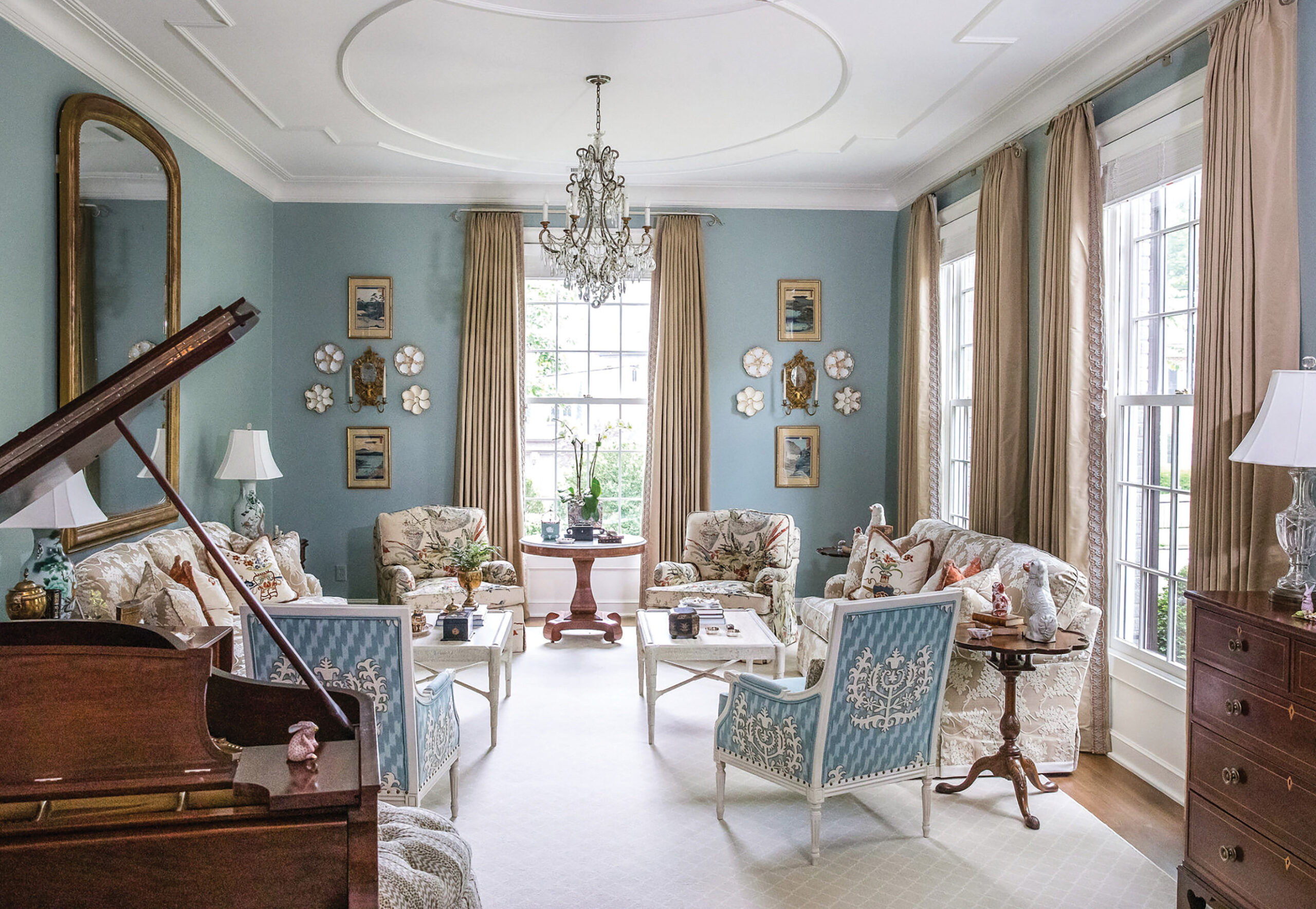
ER: Even for new construction, we think about how the clients entertain. I like to look at the house from a guest’s point of view. How do you put that guest at ease? It’s important for visitors to feel at home. They need a spot to put down a drink within easy reach. If there are beds for eight people living in the house, then your living room needs to seat eight people comfortably. And the same for the dining room. A table that only seats six cannot seat eight. We do a lot of catering kitchens, which are often set up in the garage, but then you have to move the cars when you want to use it. We prefer a space adjacent to the main kitchen. It’s hard work to entertain!
SH: Is there a part of your job that you detest?
ER: Going to High Point Furniture Market. People always say, “That must be so much fun!” It’s not. It’s exhausting, you’re on your feet all day, and you’re overwhelmed with stimulus.
SH: What’s the best part?
ER: A smooth and quick installation, and a happy client.
 Lightning Round: