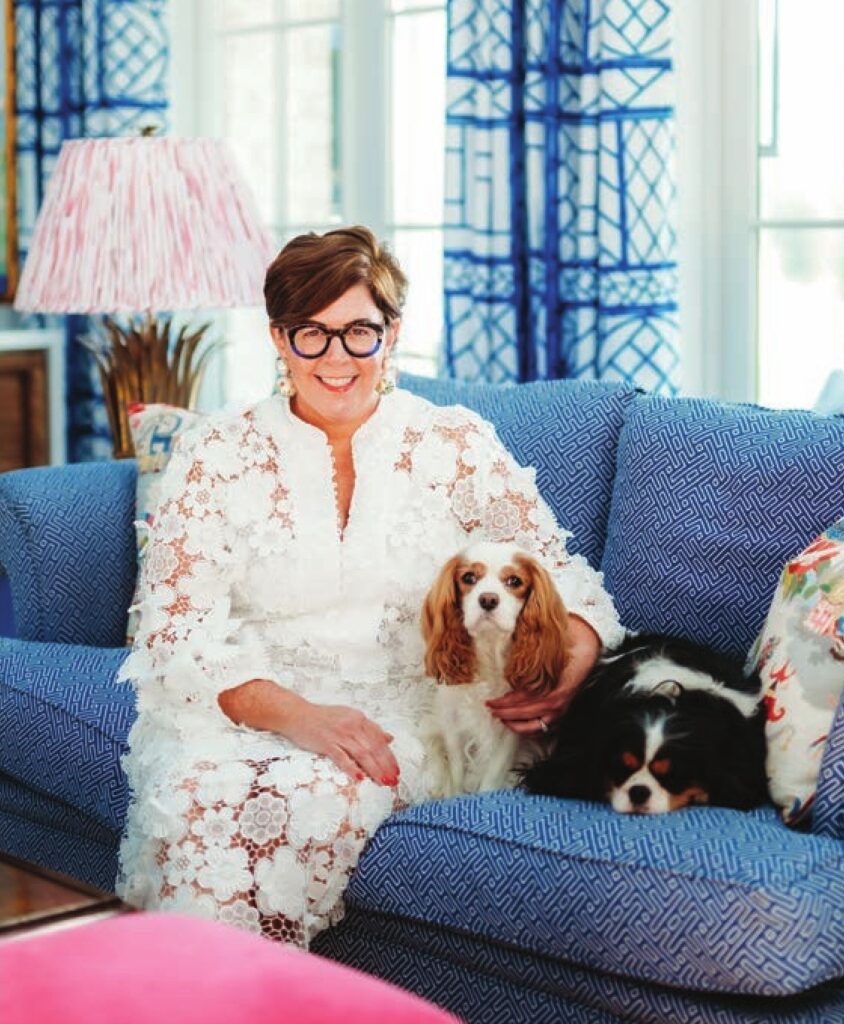
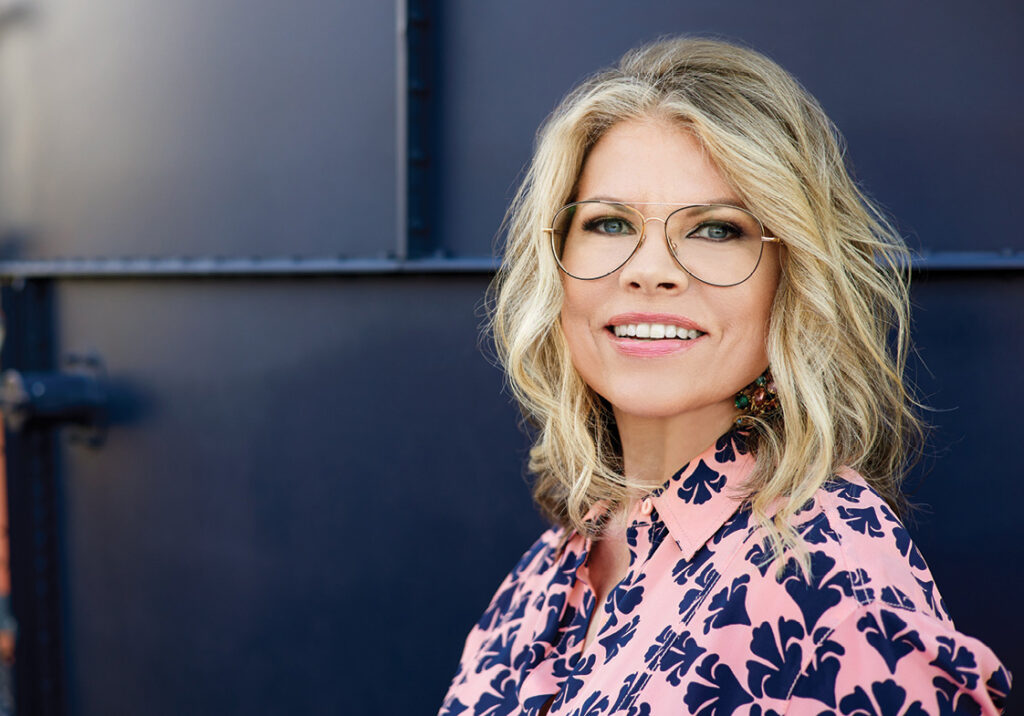
 Southern Home (SH): Denise, you seem to be a quintessential Texas story. You’re designing or installing a stylish house one day and working in the cattle stalls of your ranch the next.
Denise McGaha (DM): That’s true! Working with animals is the best stress relief. I grew up on 350 acres in central Texas, and my grandmother had 200 head of cattle. When I moved to Dallas after college, I didn’t think I’d ever go back to a small-town way of life, where you know everyone and everyone knows your business. But my daughter is the one that really made a lot of this happen. She’s so much like my grandmother, even though they never met. In high school, she showed cattle through the National FFA Organization, and she didn’t want to give up her heifer when she left for college.
My husband and I decided we were going to have to figure this out, and we ended up buying an old dairy farm on 20 acres an hour from Dallas. We named it Flintlock and have been in the midst of one renovation project after another over the last couple of years, and now we’re raising Beefmaster cattle. I have such a love for luxury, beauty, design, and all those fun things, but I didn’t realize what a wealth of creativity being immersed in the land and animals would bring to me.
I tried to run away from all that for a long time, but I’ve realized how much I crave nature, and it inspires so much of my design work. A lot of my new fabric and wallpaper collection for Vervain emanated from our back acreage—things like ferns, berries, thistles, and foxgloves depicted in patterns we’ve created. It’s all come full circle.
 SH: We love that you lead a bit of a “double life.” Let’s circle back to the design side. How would you describe your decorating style?
DM: Definitely layered, not minimalistic. It’s got to be comfortable and welcoming for people of all sizes and shapes—I really make sure there’s a seat for everyone in your life in a room. People say I’m known for color, but I’m a cheerleader for ones not everyone loves. They’re usually a bit muddier and muted, because there aren’t as many clear, bright, bold colors in nature. I often choose one shade down on the paint card from what you’d expect, although ultimately, I can embrace almost any color. More than anything, I hate doing the same thing twice. I was meant for waking up to a new challenge or opportunity. That probably comes from growing up on a ranch where every day is a new day—there’s a sick animal, a piece of machinery broken, or a fence down. It bred a confidence that I hope comes through in my decorating.
SH: You say you’re often the champion for colors others might not love, but is there a color you’ve had to learn to love because the homeowner insisted on it?
DM: I can immediately think of the project. Wonderful clients and the husband was on the first TCU football team, so purple was the color of the day. That’s one I don’t particularly care for, but I did my homework, researched a lot of options, and came to the table with ideas they loved and that I could also be proud of. It stretched me in ways that have made me a much better designer since then.
 SH: Although we understand you give each project its own identity and character, are there certain design elements that repeatedly speak to you?
DM: I do find myself returning to things that have very similar characteristics even if they may have very different colors, finishes, or manufacturers. I love soft, luxurious fabrics, but there also has to be durability. Something like a silk velvet is usually a no-no for me, but I use a lot of cotton and linen velvets or mohair. I never met a swivel chair I don’t love, and I find them even more necessary if I’m working with an open floor plan. And I’m partial to a really large cocktail table, the bigger the better—I’m talking four to six feet in size. I’ll put a couple of small dog beds underneath to help convince the pet family members they don’t need to be on the furniture as much as they think they do. It also gives plenty of surface to showcase my styling skills on top.
SH: We’d love to know your tricks for styling that large cocktail table.
DM: I start with books and fill in with a big urn, vase, or candelabra, so there’s either floral or fire somewhere on the table. And then it’s a great place for a collection. My own always changes—it could be a collection of brass boxes or a lot of blue-and-white pots with ivy and succulents. Whatever is on the table should provide a view into who lives there and be a conversation piece. If I see one that’s too bare, I’m almost itching to make it interesting.
SH: Where do you like to start when designing a room?
DM: It’s important to get the envelope right and think through what role building materials and finishes will play in making the room feel the way it should in the end. When it comes to the decorating part, it’s a bit like baking a cake, and I have a recipe when I’m looking at a space and the ingredients. I always start with a rug. If I’m going to do a stronger pattern, then the furniture gets to be solid and quiet; if the rug is a natural texture or neutral, I punch up the color and pattern in upholstery or window treatments. There has to be a percentage of risk and a percentage of safety, but I also believe there’s a lot to be said for tension in a room. I want there to be some element of imperfection, and I’ll take the balance out with something a little off scale or unexpected.
 SH: Do you rely on antiques to help communicate that imperfection or something unexpected?
DM: They’re huge for me. It’s like a good dinner party where you invite that interesting person who has a completely different viewpoint than everyone else. Even when a client says they want all new furniture—which does occasionally happen—I always find a way to introduce pieces that feel like they have some soul and character. If I can’t get an antique chest or table into the mix, then I’m going to bring a vintage chandelier or some fabulous midcentury painting. There has to be something that feels like it’s lived a little while. It makes the room more approachable.
SH: Finally, dare we suggest that “Think practically; design beautifully” could be your design mantra? Your work certainly embodies it.
DM: Well, I’m definitely not into fussy interiors! I’ve designed a few, but even those still have to be comfortable and inviting. It’s just my nature to envision the rooms I decorate with people in them—not only the ones who live there but also extended family, the business colleagues they’re going to have over, and the parties and holiday gatherings they’ll host. I love when clients send me their party photos. I want to see who chose to sit where and how things got moved around. Doesn’t every living room need what I call a mother-in-law chair, one with arms and not too close to the ground, so someone doesn’t have to do the “1, 2, 3, rock” to get out of it? I enjoy thinking through all those kinds of things. So, it’s going to be functional, but yes, it’s absolutely going to be beautiful.
 10 Things About Denise McGaha
If not a designer, I’d be: No surprise, a cattle breeder.
No Southern home should be without: Champagne coupes in the china cabinet. We should always be ready to pop the cork on a bottle of Champagne to celebrate something.
Design trend I avoid: I don’t like trends in general, but scalloped anything.
My favorite little indulgence: A candle burning in every room—I’ve concocted my own scent, which is a mix of tobacco and vanilla. And a bathtub with bubbles.
Style icons: For fashion, Ann Mashburn, a personal friend who has the best stores and clothing line. In decorating, Steven Gambrel’s sophisticated way with color is off the charts.
Design books currently on my cocktail table: Any book that goes on it has to have been read, because I want to have a conversation about it when people come over. They rotate in and out, but currently, it’s Ralph Lauren’s latest book [Ralph Lauren A Way of Living: Home, Design, Inspiration; Rizzoli, 2023] and the new one on Mario Buatta [Mario Buatta: Anatomy of a Decorator, Rizzoli, 2023].
I’m always on the hunt for: Odd chairs, handmade pottery, or anything reminiscent of an area where I’m traveling. If it’s South Carolina, I want baskets or wicker; in Palm Beach, it might be shell-encrusted things. Then I’m going to throw it all in the same room. I’m a rebel, so I like to combine things that don’t naturally seem to go together and make them work.
A favorite Instagram follow: @markmaggiori, a French artist who paints these amazing landscapes and the cowboys of the American West. He has an eye I so appreciate, and I feel like I understand the dichotomy of who he is, although we’ve never met.
My uniform: I’m not in heels as much as I used to be—it’s usually cowboy boots or a sassy pair of tennis shoes or flats. I wear a lot of Ann Mashburn tops and tunics; the tailoring fits me well. There’s always a bangle or six on my right arm, and I’m known for a scarf or bandana rather than a necklace.
If I could live in a movie or television set: It’d be on the Four Sixes Ranch in the Texas Panhandle. It’s where a lot of Yellowstone and its spin-offs are filmed. I’ll always live in Texas, end of story.