TEXT Karen Carroll
PHOTOGRAPHY Emily Followill
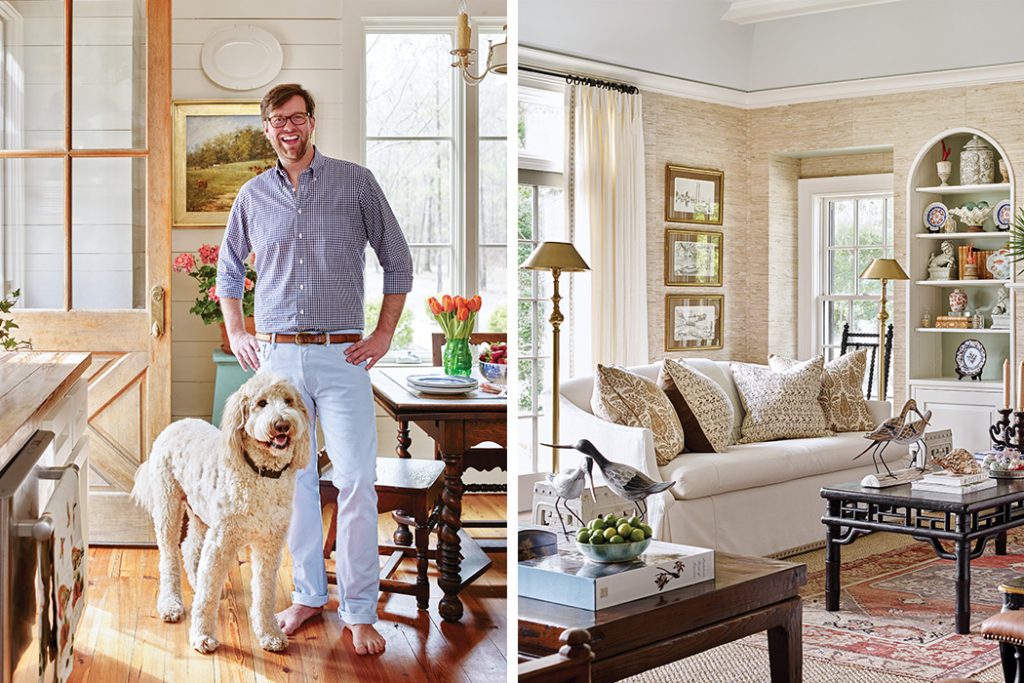
Although he travels far and wide decorating houses, this designer and author always returns—unapologetically—to his Southern roots and home base in Perry, Georgia.

Southern Home (SH): Who or what first inspired your pursuit of design and beauty?
James Farmer (JF): When I was growing up in Perry, Georgia, my parents had some house plans drawn by Frank McCall, a well-known architect from Moultrie, Georgia. Even as a child, I knew architects drew squares on a piece of paper that would become a room, but McCall and his team taught me that it was about so much more. They talked about window treatments, silver patterns, where to line the drive with oak trees, and they wanted to know how we entertained, whether it was a Ducks Unlimited banquet or a bridge club. He interpreted a lifestyle through his designs and shaped the way the family lived. I always go back to that as inspiration. But the biggest influence was my grandmother, Mimi. She taught me how to set a table, how to cook, that we eat with our eyes first, and to feed people body and soul when they’re at our table.
SH: We consider you a Renaissance man—you decorate, garden, cook, entertain, and have written eight books, all while still only in your 30s. How did that come about?
JF: Well, I believe I was born loving design and our Southern lifestyle, and I wanted to pursue that as a career. I double-majored in art history and landscape design in college so that I could get the history of the aesthetics…the roots of design, if you will. My freshman year at Auburn, I’d fry chicken in the dorm kitchen. Let me tell you, that makes you a lot of friends! What hit me immediately was my generation needed a voice, someone to say here’s how you grow it, how to cook it, and where the fork and spoon go on the table. I started talking about writing my first book back then with a goal to publish before I was 30. I was fortunate to beat that benchmark by a year, and the ideas kept coming.
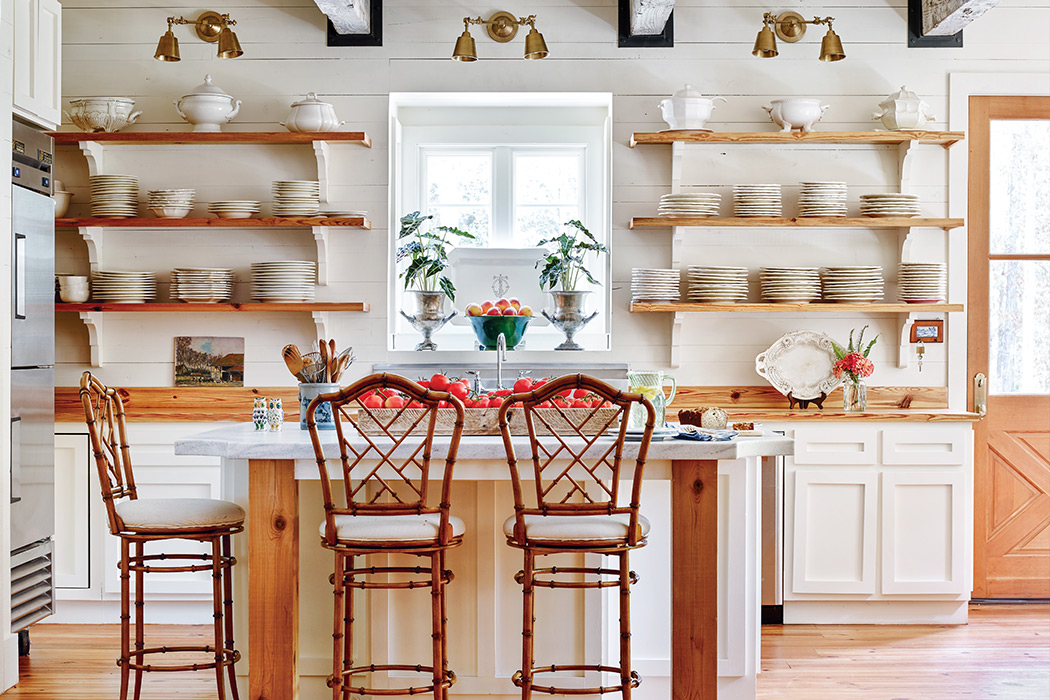
SH: How do you define Southern style?
JF: Unapologetic. We never say we’re sorry for mixing grandmother’s mahogany breakfront with majolica from a flea market and setting the table with antique Limoges and flatware found at Target. It’s styles, decades, and generations coming together.
SH: Please share three words that define your own aesthetic.
JF: In addition to the previously mentioned unapologetic, I’d add layered and collected.

SH: How do you layer?
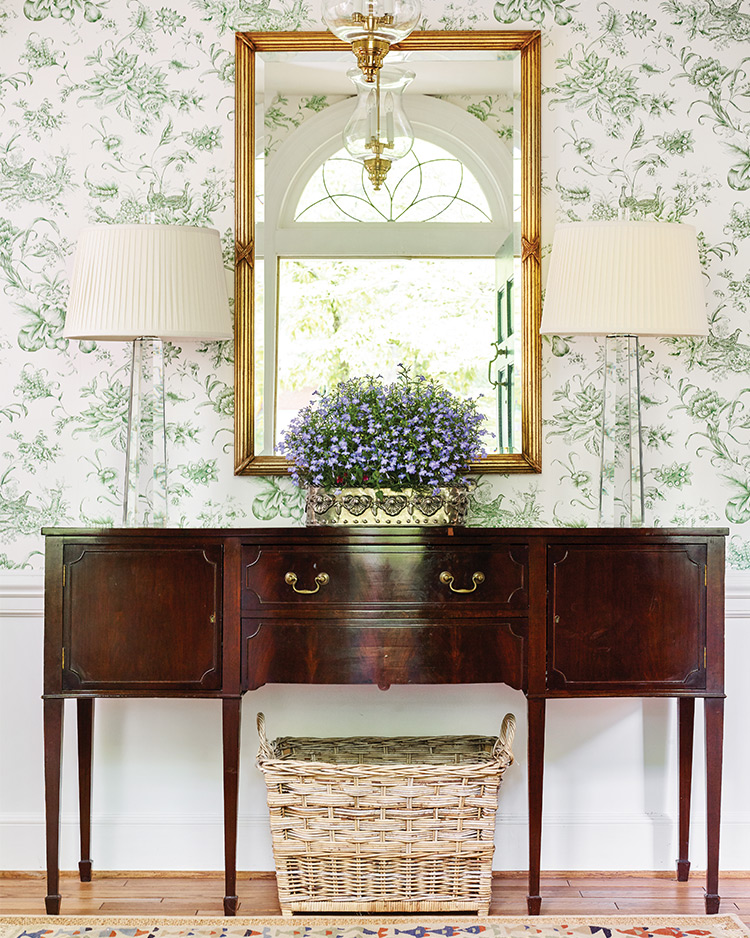
JF: You can put a seagrass rug down and then have smaller Oushak or Heriz rugs under the coffee table or at the door, and that adds a physical layer, but it appeals because it creates what I call the stack. The stack tells the story. A Southern home is rarely just the table with one lamp and a jar on the right side—it’s the table with the lamp with the books underneath it, and the tassel hanging from the key. It’s the jar on the right filled with magnolia and a collection of julep cups scattered around it. Some people call it cluttered, but I call it collected.
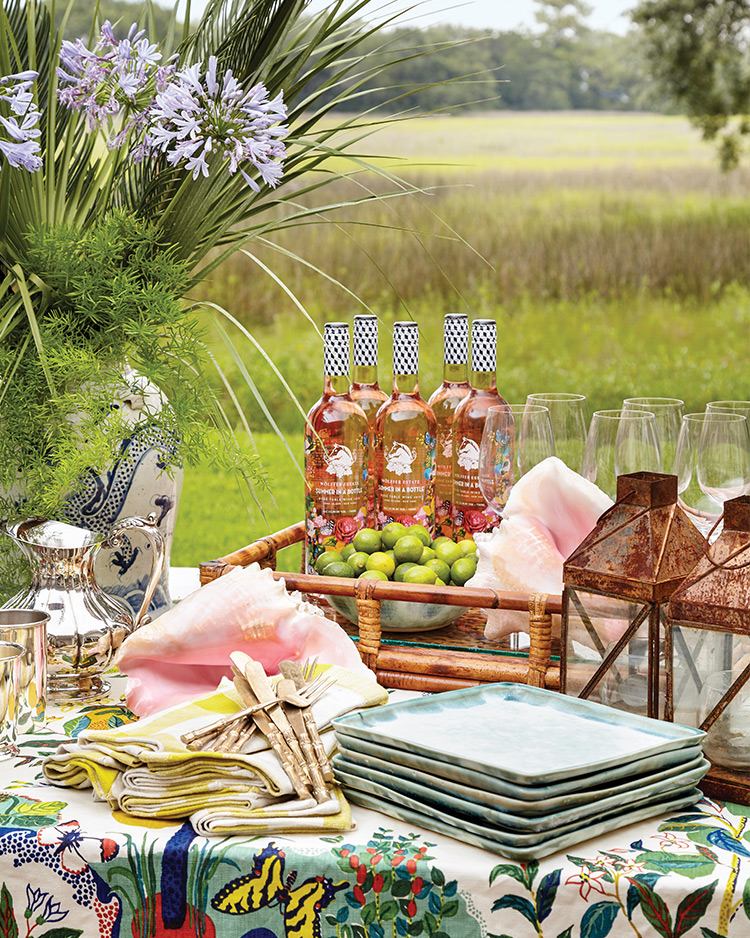
SH: What do you collect? We spot a lot of blue-and-white porcelain throughout your rooms.
JF: Well that doesn’t make me special, does it? A lot of people love it, but did they save their allowance to buy a blue-and-white plate at an antique mall in Byron, Georgia, when they were six like I did? Some Southern men get up early in the morning, put on camo, and want to shoot a duck or deer. I get up at the crack of dawn to go to Scott Antique Markets in Atlanta. I love finding things that immediately tell a story—particularly odds-and-ends silver, such as ice cream forks and tomato spoons; things to add to my family’s heirlooms. My assistant, Margaret, gave me a sterling potato-chip server for Christmas. I mean, that thrills my soul right there. Even though we don’t set our tables these days like the Victorians, I always go back to this: I’m a family-oriented guy who lost both my mother and grandmother at an early age. When I can hold my grandmother’s silver while I’m eating soup or spreading butter, that’s a tactile reminder of her.
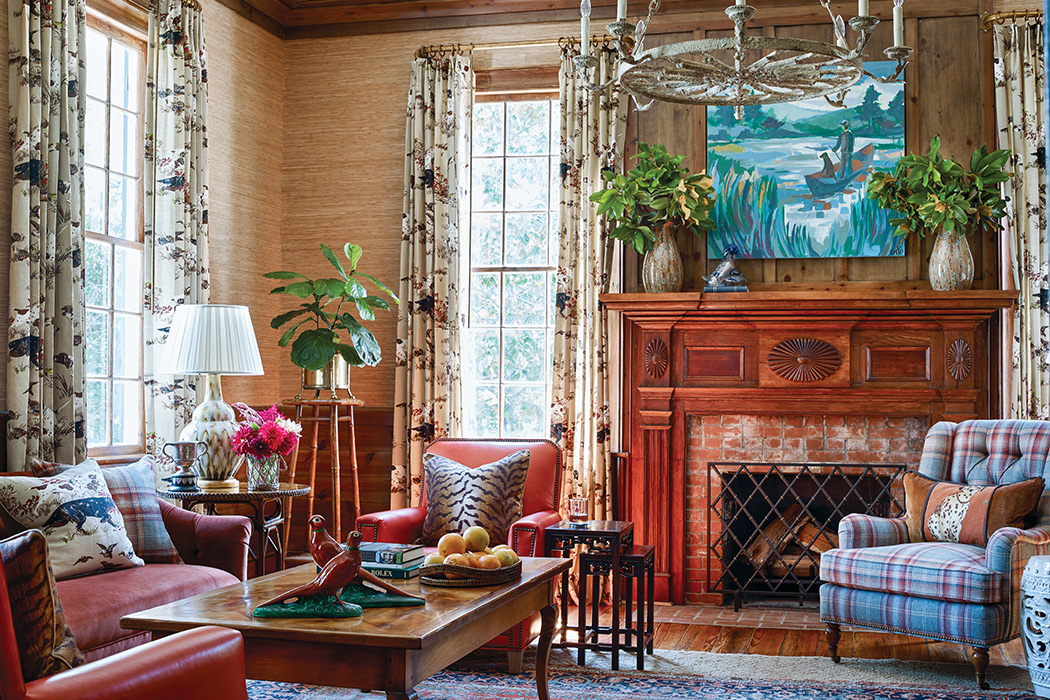
SH: We’d call your decorating style anything but beige, but we do notice your walls are often neutral, tone-on-tone pattern, or textured.
JF: That’s very intentional. Rarely am I going to paint a wall red. However, I love red in a tribal rug, or if you look closely at the grass cloth on the wall, it might be woven with a thread of red in it that creates a glow. I love mixing patterns, and I’ll joke that some of my favorite colors are plaid and trellis, but when you have a neutral background, it allows the more important things, like great artwork or a beautiful antique, to really stand out.
SH: Besides the functional necessities, what makes a room really work for you?
JF: When all the senses are engaged. I’m 6’4″, so I want something I can plop down in and not worry about it holding me up. Just because it’s a formal living room doesn’t mean you can’t take a nap in there. When you sit down, what’s the hand of that velvet—is it a linen, cotton, or silk? It’s important how things feel. I’m big on fragrance; not scented candles, but the smell of clean, of wood burning in the fireplace, or a gardenia or a clipping of tea olive in a bud vase. It’s seeing a stack of books on the coffee table and realizing the person is interested in Williamsburg, Thomas Jefferson, and yet there’s a Jackson Pollock book that kind of throws you for a loop. Decorating should be like eating potato chips with M&Ms, a combination that’s sweet and salty, a crunch with a fun pop.
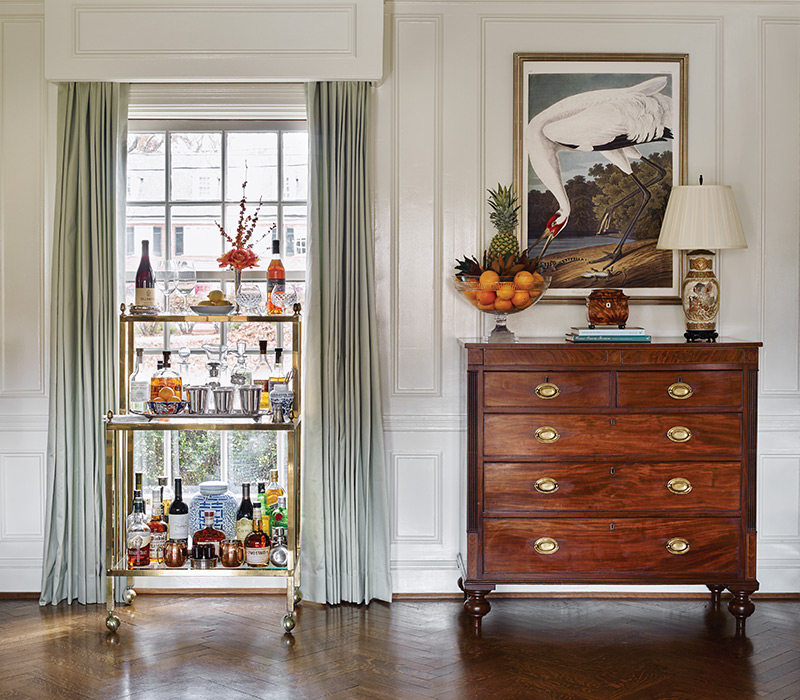
SH: And what brings down an otherwise beautiful room?
JF: The ceiling is so often the forgotten fifth wall. I don’t know what international law was passed that proclaimed every ceiling had to be flat-white drywall. Lacquer them so they reflect light; use wood or paint the beadboard a color in a satin finish. Provide a point of interest when you look up!
SH: What are some of your favorite natural materials to use?
JF: Whatever’s right outside. I’m a lazy gardener, because I plant what works and then let the plants do the work for me. . . . For a dinner party, I’ll pull out my silver punch bowl and fill it with roses and greenery or a pile of citrus and sprigs of boxwood. I also like to use unexpected color. . . . There’s a rose I love named ‘Free Spirit,’ and its peachy-orange combined with red ilex berries, and the brown back of magnolia is simply fantastic.
Learn more about James Farmer Designs at jamesfarmer.com.