 Text: Lynn Lee Terry
Southern Home (SH): I love your story that you knocked on 779 doors to find your first client in Detroit, which is a testament to your perseverance. How did that journey impact you and your design business today?
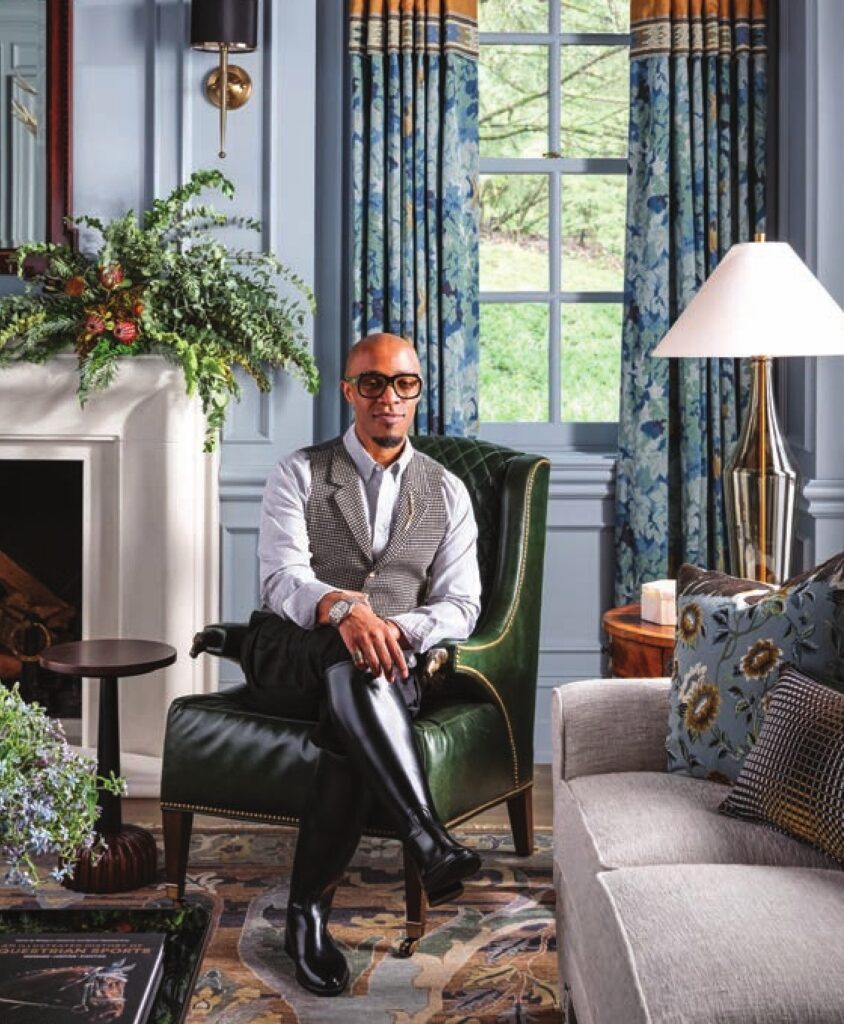
Corey Damen Jenkins (CDJ): The 779 door-knocking venture underscored for me just how much I truly wanted to be an interior designer. It was a hard-fought campaign to find my firm’s first client during the Great Recession. There were many rejections and false starts that were admittedly very tough to endure. But looking back in retrospective now, I am grateful that the experience strengthened my perseverance.
SH: You’re known for fearless color and pattern. Where does that confidence come from?
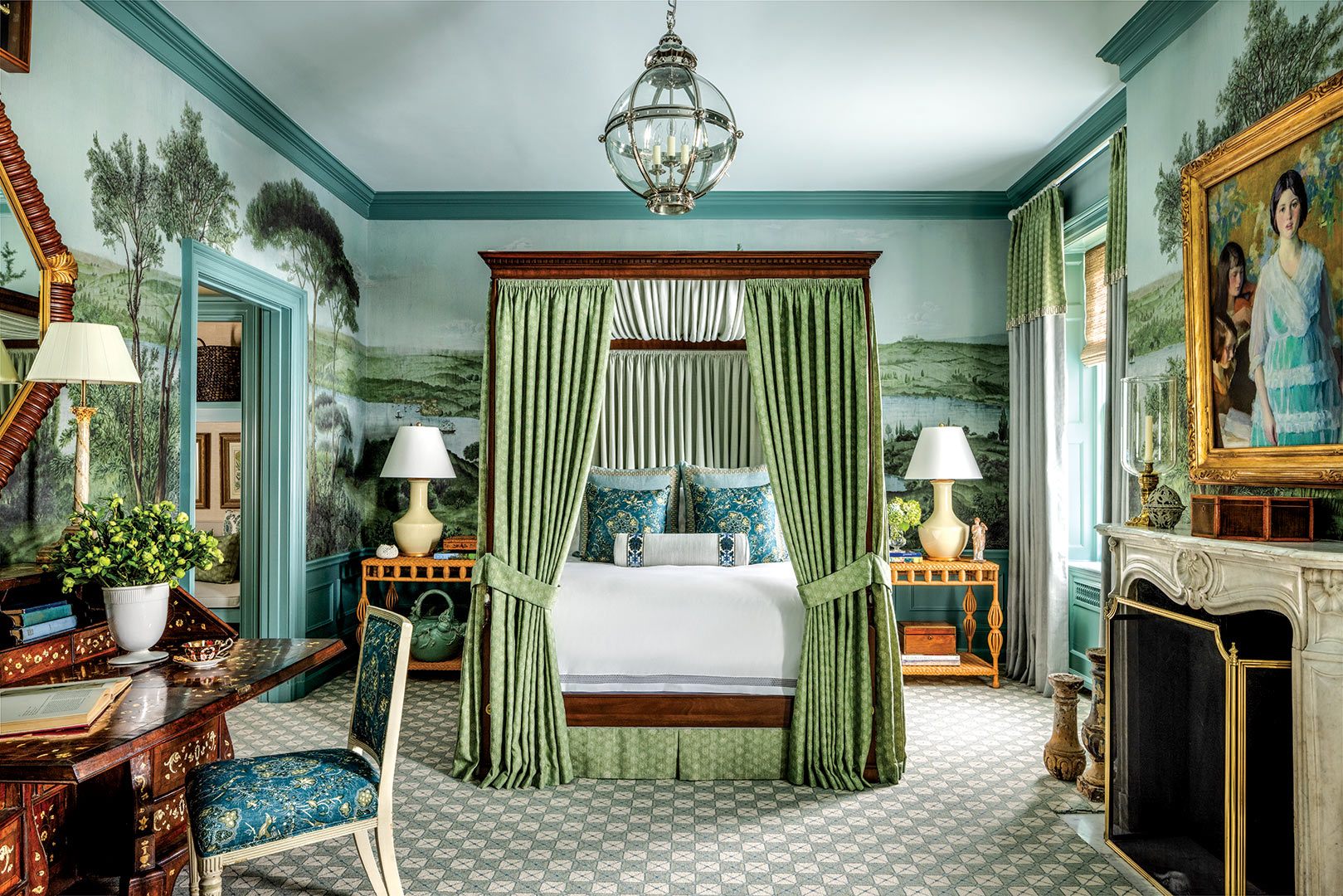
CDJ: Both of my grandmothers loved haute couture fashion and lived in homes that were unapologetically expressive. I distinctly remember the interiors of my maternal grandmother’s Detroit home: shades of blush pink, fuchsia, chocolate, and gold, while my paternal grandmother’s Chicago home was decorated in tones of spicy persimmon, chocolate, apricot, saffron, and white. Both homes were equally bold, unforgettable, and thoroughly decorated—lots of Louis XVI–styled furniture and salon wall groupings of gilt-framed art.
As children, we were forbidden to play in their formal living rooms: All the sofas were enclosed in very tailored, clear plastic covers—it was a thing at the time. But my grandmothers’ attention to decorating details and hospitality made a huge impression on me: I learned that a person’s home—like their wardrobe—should express individuality with confidence and joy.
 SH: What inspires your color palettes in your projects?
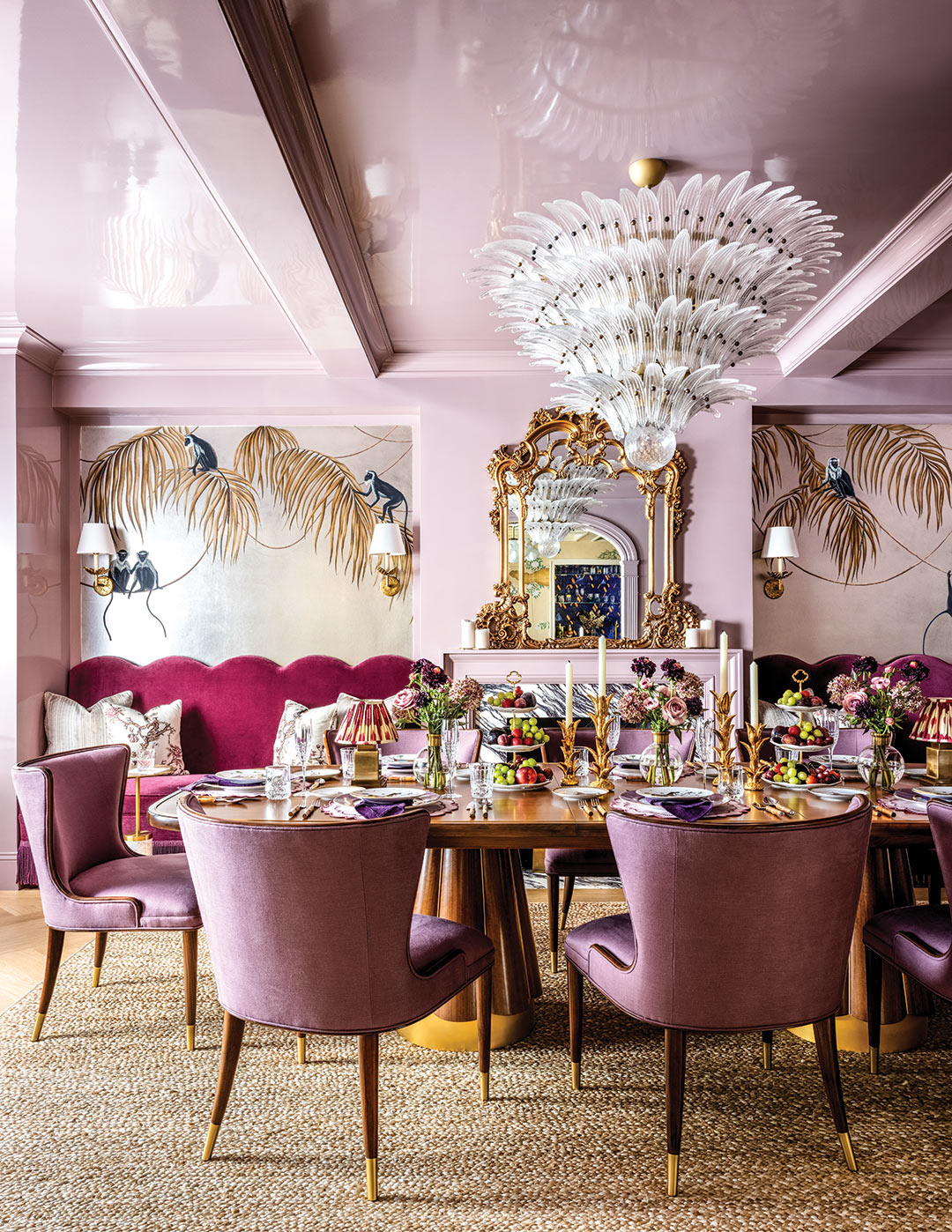
CDJ: I often begin developing color palettes from an unexpected vantage point: my clients’ wardrobes. We talk about how wearing certain pieces of attire makes them feel. There is usually a distinct fashionable element—a gown, a necktie, a wide-brimmed hat—that makes them feel extraordinary. Those emotions become my starting point for producing their interiors. I also study the haute couture fashion runway, where texture and colorful hues often mirror the language of interiors. Visiting conservatories and flower markets are another source of inspiration for me. The color combinations found in flowers and plants are fearless, yet effortlessly harmonious. I’ve found that if a combination flourishes in Earth’s nature, that color scheme will work equally well in a home.
SH: I have a feeling that while you love color and make bold choices feel seamless that you would make a beige room feel equally luxurious and elevated.
CDJ: We encourage our clients to strive for bespoke individuality. I do not chase trends…I set them. A trend is directed to mass appeal, and I want our clients to always feel like their home uniquely reflects their personality, how they live, and unquestionably reflects their personality.
 SH: In your latest book, Design Reimagined, all the homes are renovations. How does a home renovation differ from new construction?
CDJ: What I love about new construction is that you’re given a blank canvas—your imagination is without limits—you can create where the support beams and HVAC ductwork need to go to support a new vision. With renovations, you are limited by the constraints of existing structures. There will always be an unforeseen design challenge hiding behind the wall or above the ceiling.
That calls for thinking outside the box to come up with solutions. I always want to enhance the original structure in a way that honors the history of the home while also incorporating twenty-first-century elements to make it functional for modern families. I do like the intimacy of defined rooms, which are standard in older homes. Those configurations allow bolder design choices, but the rooms still need to harmonize from the same songbook so the entire home feels cohesive.
SH: You emphasize the importance of the designer being a diplomat. Do you have any rules for advancing a project when the homeowners are not aligned?
CDJ: I am a big proponent of what I call design democracy: Every person gets a vote. I try to discern what elements are most important to the clients and ensure that neither homeowner feels disenfranchised during the process. Navigating and mediating disparate viewpoints is not always easy—but it’s an essential part of the process. When everyone feels heard in the design process, the result is immensely more satisfying.
 SH: Antiques and found objects play a major supporting role in your work. Tell me about how you incorporate them.
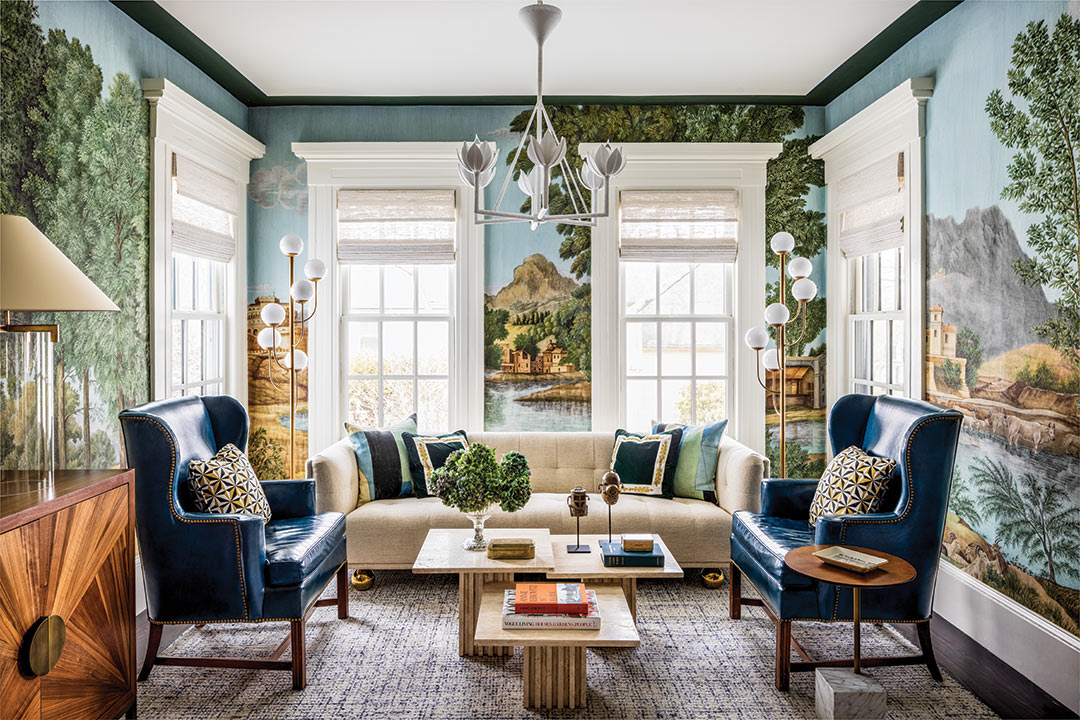
CDJ: Antiques carry historic energies; you simply can’t replicate that with reproductions. Vintage pieces bring soul and provenance to any space. I love juxtaposing periods, like taking an antique Louis XVI chair and upholstering it in a modern print or tiger velvet. That tension between old and new keeps a room from feeling predictable. Reframing art is another powerful tool. A thoughtfully chosen frame can instantly elevate a piece, giving it presence and intentionality. Often, it’s these collected elements—antiques, found objects, and inherited pieces—that ground a space and make the design feel thoughtfully considered and layered rather than microwaved all at once.
SH: What is your process when a client has a treasure trove of inherited pieces that may or may not work in your design scheme?
CDJ: I often ask clients to rate their pieces from 1 to 10 based on emotional value. If something is a 10, then it’s essential, and my job is to make it work beautifully within the design. I love reimagining inherited pieces in fresh ways, so they continue to tell the homeowner’s story. For one of our repeat clients, we are dipping a set of antique mahogany Chippendale dining chairs in white lacquer to furnish her new Coral Gables estate. This transformation will honor her family’s history while also giving those heirlooms a chance to evolve in a new setting.
SH: I love your lines with Hancock & Moore, Maitland-Smith, Kravet, and Eichholtz. How do you develop the collections?
CDJ: For Maitland-Smith, I love discovering long-gone antiques that are interesting and can be reimagined and introduced to consumers today. With Kravet, Hancock & Moore, and Eichholtz, it’s about taking note of what’s missing in the marketplace right now and then creating fresh, new concepts to resonate with interior designers and homeowners.
SH: Color can be intimidating to even the most adventurous clients. How do you persuade clients to get outside their comfort zone and take a risk?
CDJ: Embracing bold color means high risk, high reward. I often take clients back through history and remind them of how color has historically been used since ancient times, particularly by royalty. Emperors, kings, and queens had access to dyes and wore rich jewel tones to denote their importance and station. Meanwhile, their servants—who were living in disadvantaged communities—wore beige and white.
SH: How do you keep maximalism from being overwhelming?
CDJ: I believe every room should be carefully curated. Contrary to what some might believe, maximalism is actually governed by restraint and judicious editing.
SH: What is one thing that homeowners can easily do to make their own home feel more special?
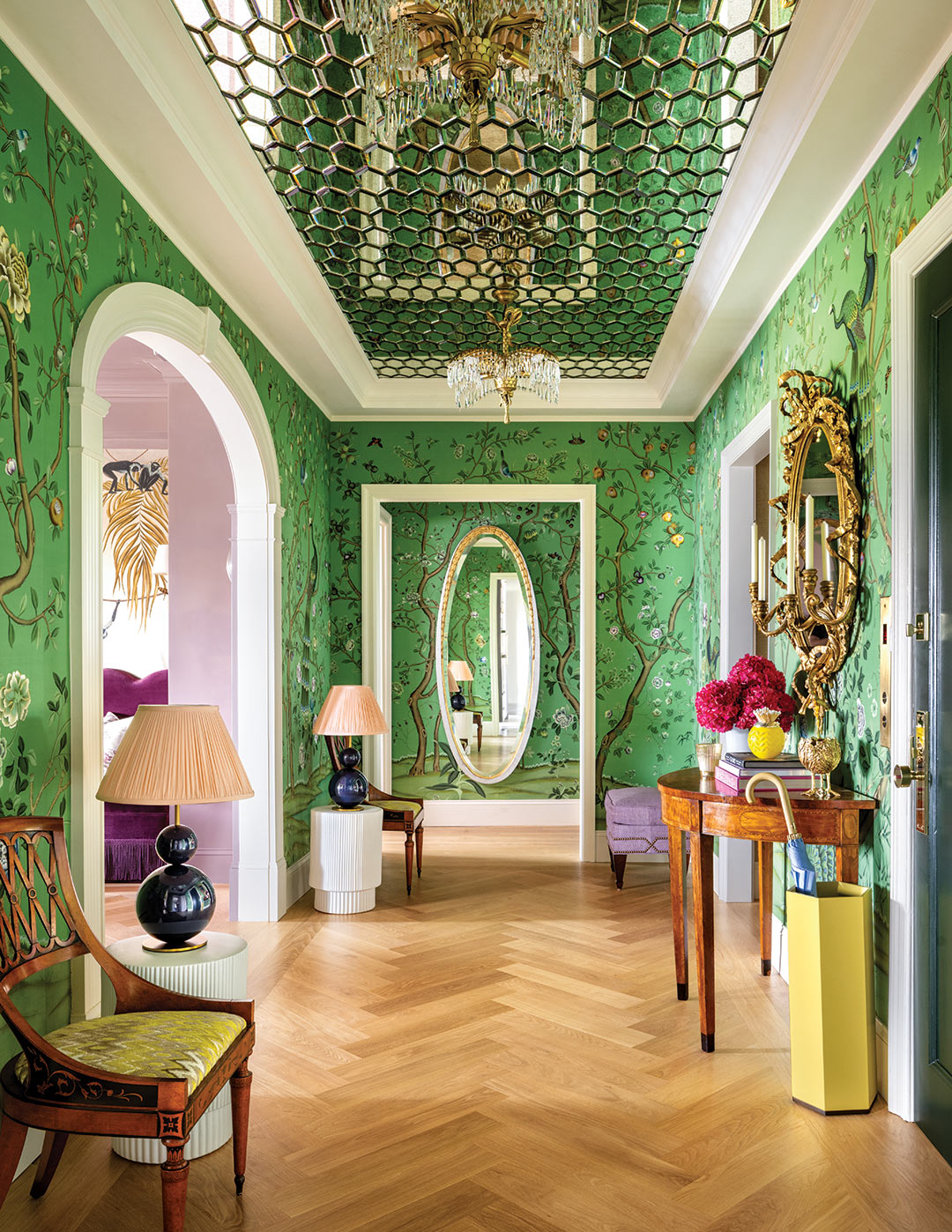
CDJ: From a design standpoint, I’d recommend lacquering or wallpapering the ceiling. Such details can truly elevate a room. Also, people need to find joy in the little things, such as using their fine china or crystal daily. Don’t save the good stuff only for the holidays.
SH: Many young designers look up to you. What advice would you give to them?
CDJ: Don’t compare yourself to others and only surround yourself with allies who “get” you. Remove toxic people in your life that are chipping away at your emotional enamel. Also, if your current career plans aren’t what you hoped for, it’s okay to change course. Never pursue other people’s goals. Finally, remember that broken crayons still color and delays do not mean denials.
SH: What do you want Corey Damen Jenkins to be remembered for?
CDJ: Ah, that’s the toughest question yet! I hope people remember my firm’s interiors as permission structures for immense joy and living fully here and now. I also hope my unconventional career path will encourage others to reach higher, further, and faster for their dreams.
SH: Every Southern home should have:
CDJ: Hospitality-driven gathering spaces brimming with gorgeous color, textures, heirlooms, and antiquity. Oh, and absolutely spectacular drapes!
 Coreyisms:
· Broken crayons still color.
· Ships don’t sail in a straight line; it’s okay to change course.
· As designers, we need to be humble.
· Generosity costs nothing.
· Respect my boundaries: I’m a human, not a help desk.
· None of us rise to the top without support.
· Delays do not mean denial.
· It will be greater later (good design should not be rushed).
· More is more and less is a bore.