 Text: Tiffany Adams
Photography: Carmel Brantley
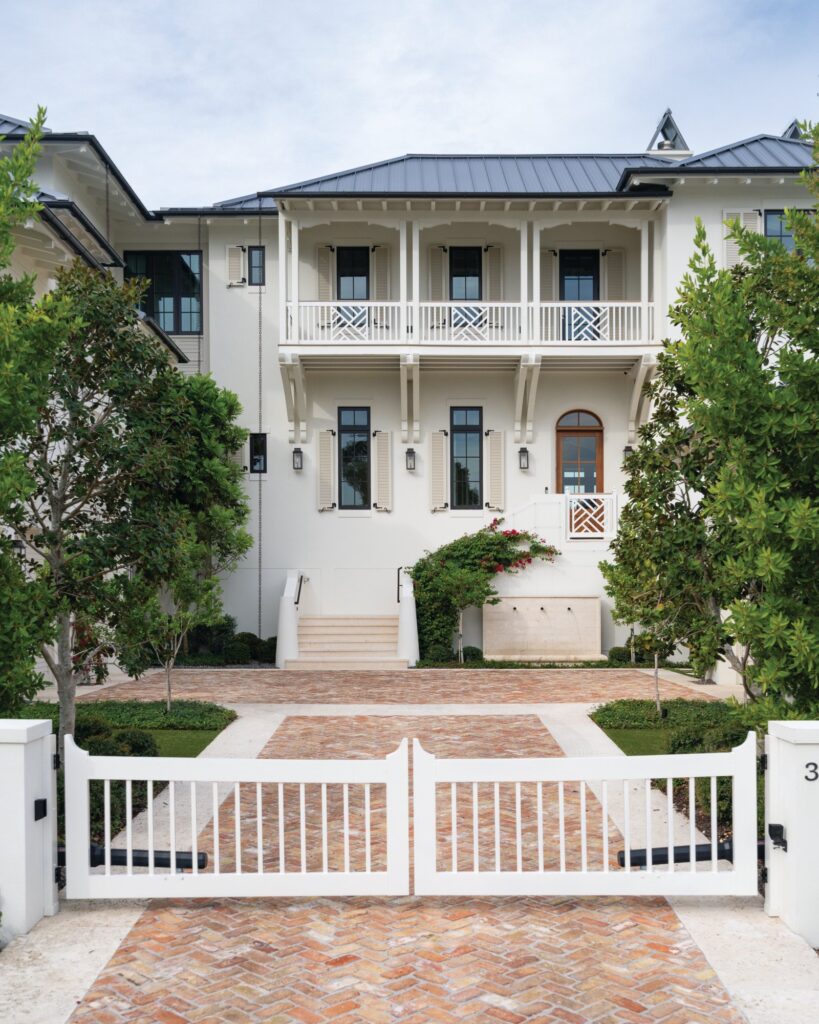
A tale of his and hers unfolded as Louise Brooks and her colleagues at Brooks & Falotico architecture firm learned of their clients’ wish to renovate a seasonal beachside home in Florida. “His style leans contemporary, and hers is more traditional,” Brooks explains. “They were working on two projects at the same time, so she took the lead on this one, and he put his spin on the other.”
Matching her bent for classic style, the client also fully embraced locally inspired design, from a natural yet cheerful palette to the seamless transition between indoor and outdoor living. To accomplish this, she partnered with designer Lauren McCauley and assistant designer Peyton Urbanek of Kemble Interiors, a firm well known for their timeless, Palm Beach aesthetic. “They wanted this house to be lived-in; a place where nothing is too precious for kids or dogs or parties. But it also had to be intimate enough for just the two of them,” Urbanek says.
A Timeless Palm Beach Retreat Designed for Family and Entertaining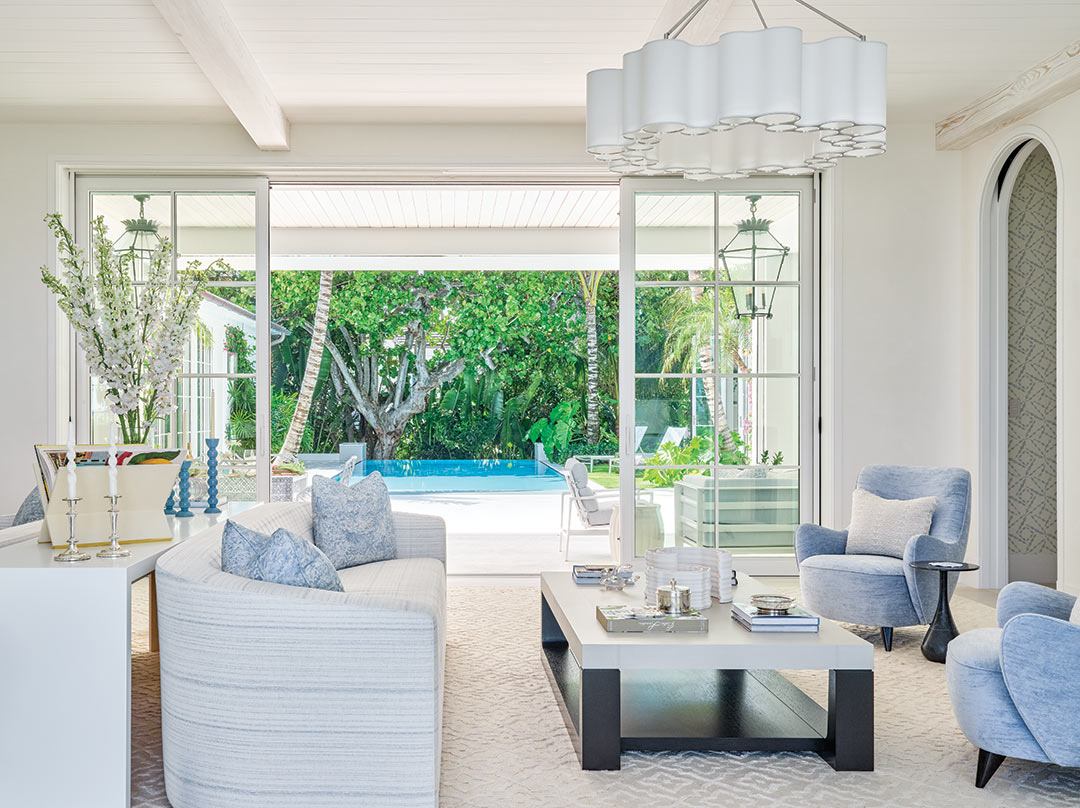
A Timeless Palm Beach Retreat Designed for Family and Entertaining
A Timeless Palm Beach Retreat Designed for Family and Entertaining
A Timeless Palm Beach Retreat Designed for Family and Entertaining
A Timeless Palm Beach Retreat Designed for Family and Entertaining
A Timeless Palm Beach Retreat Designed for Family and Entertaining
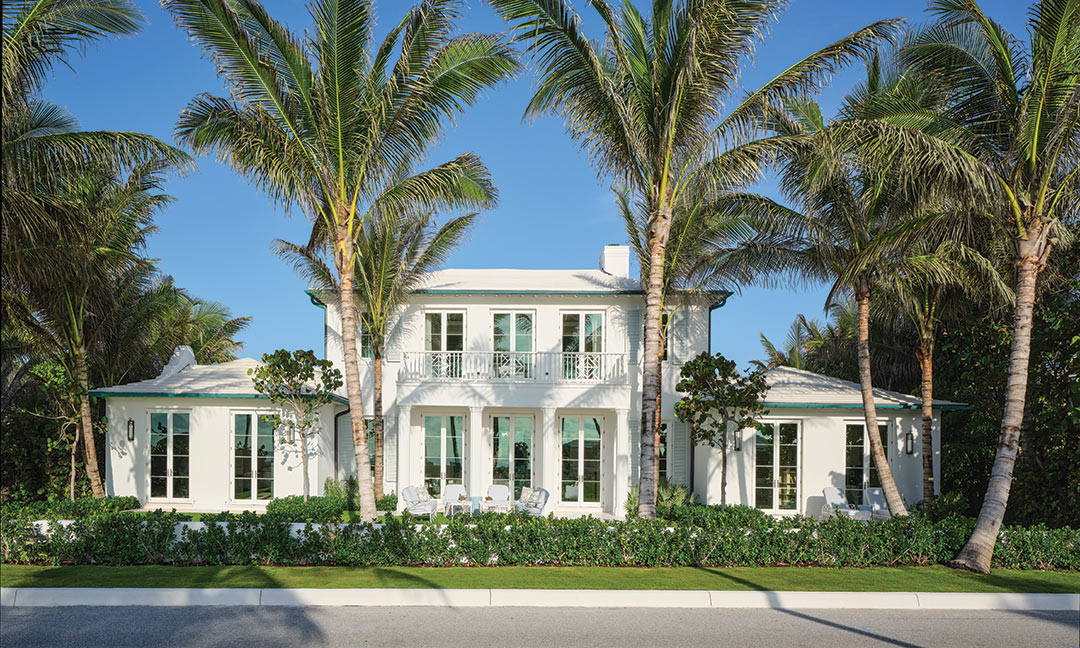
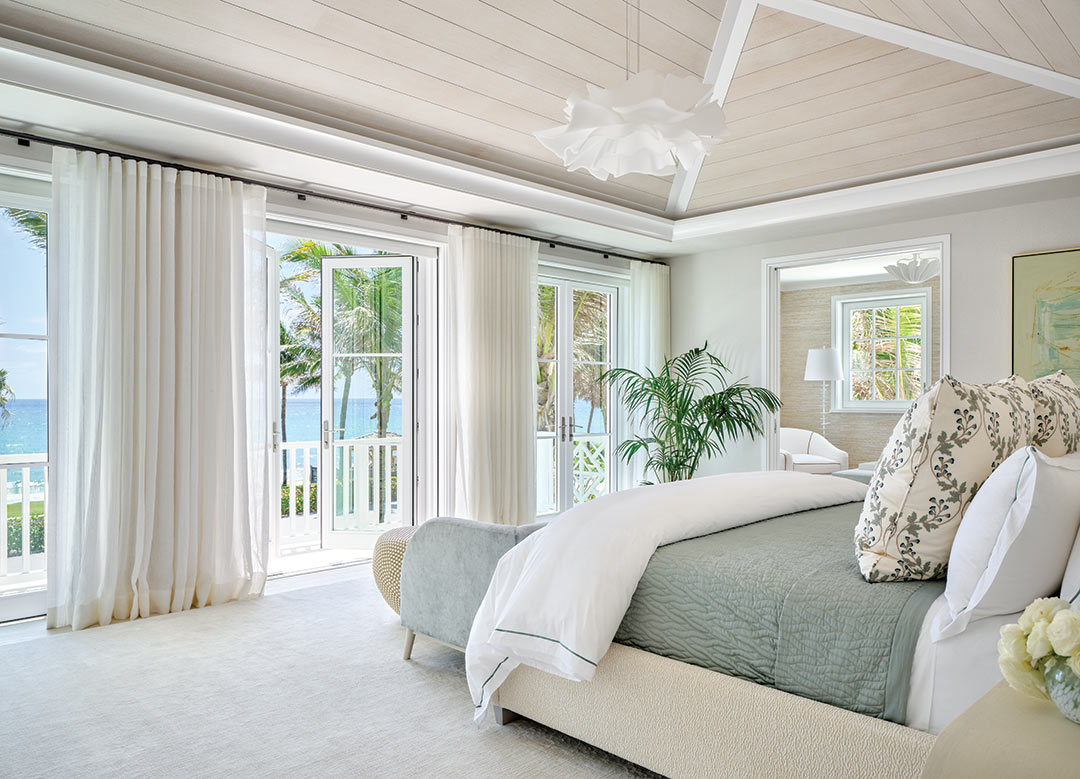
Having previously worked with the client, the team at Brooks & Falotico, which included managing partner Chuck Willette and project manager Kelsey Brennan along with Brooks, understood the assignment from their vantage point and began to home in on key aesthetics and characteristics to update the late 1990s abode. “We wanted to capture the ocean view and enlarge it wherever possible,” Brooks says. “The view of the ocean drove every decision, because you can’t compete with it,” McCauley adds. “There would be times when we went upstairs to work in the primary suite and would find ourselves just staring out at the ocean because the view is just so amazing,” she says.
Two of the biggest changes came in reorienting the entry and curb appeal of the property and reinventing the entire second floor as the primary suite to frame a bird’s-eye view from the bedroom and bath. Accounting for privacy and the fact that the vacation home would often host guests downstairs, the bedroom is flanked by two smaller spaces—her office and a lounge area with a hidden television where the couple can start the day with a morning show before heading downstairs.
The adjoining bath is anchored by a Parsons ledge and stone tub (one of the first selections for the project, which was made with the help of the architects) set against a picture window where, again, the view is also the main focus. McCauley notes the blues of the landscape change daily, if not hourly, so the team wanted to pull a variety of them into the suite’s palette to play off the scene outdoors.
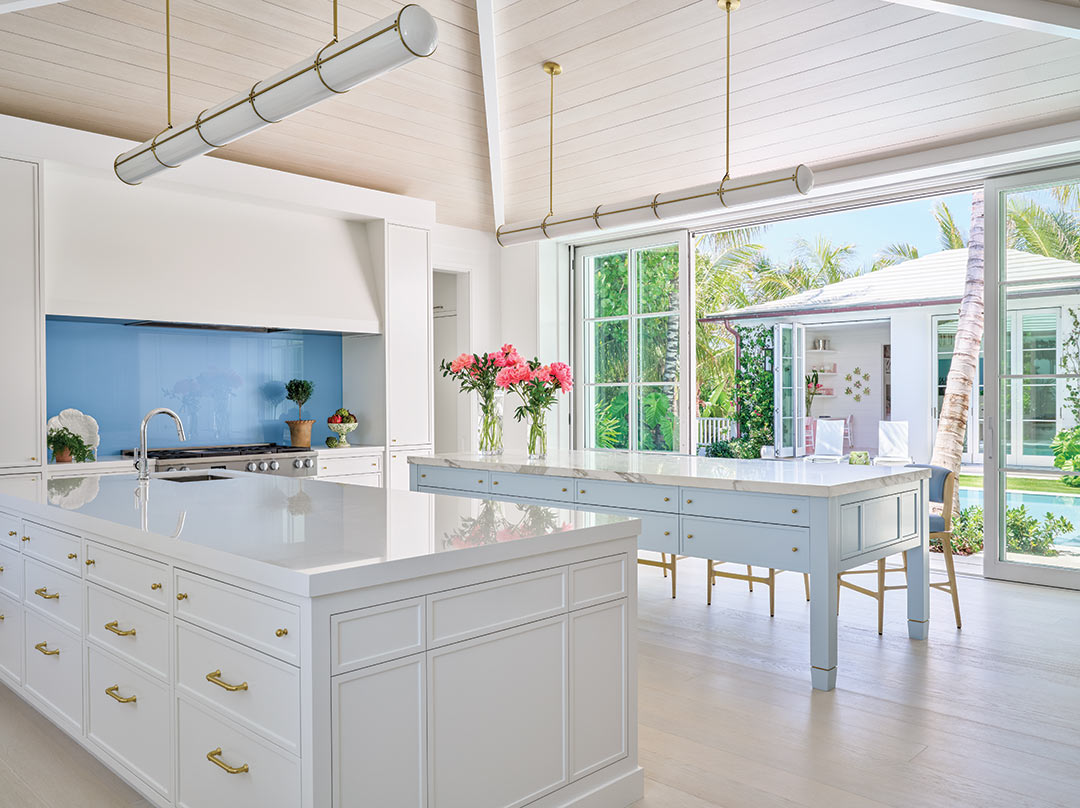
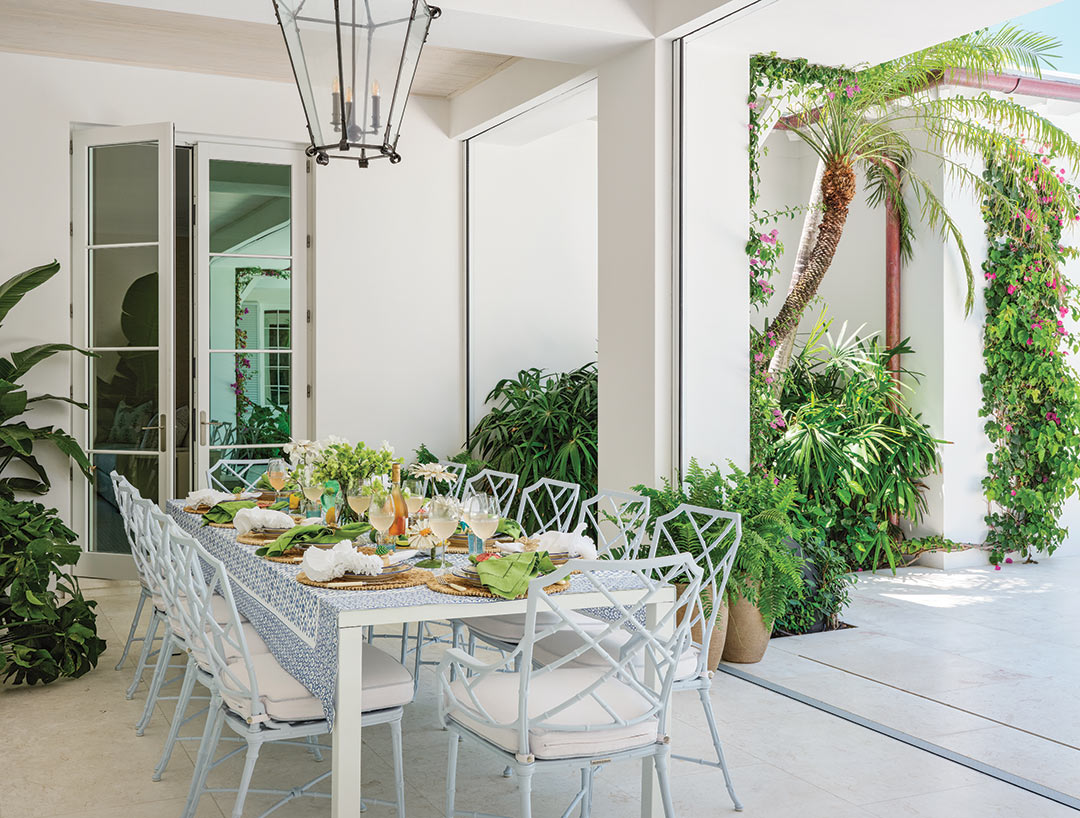
While the outdoors are taken in from behind the glass upstairs, it’s more interactive downstairs. Doors slide open to connect the kitchen and living room to the outdoor living area and pool. “She wanted to be able to cook and to entertain, but also for everything to be pretty,” McCauley says. Two islands—one of which has the look of a furniture piece—offer an abundance of space for food prep and service as well as dining. The pool’s blue hue is reflected on the island and the back-painted glass that is used as a backsplash behind the range.
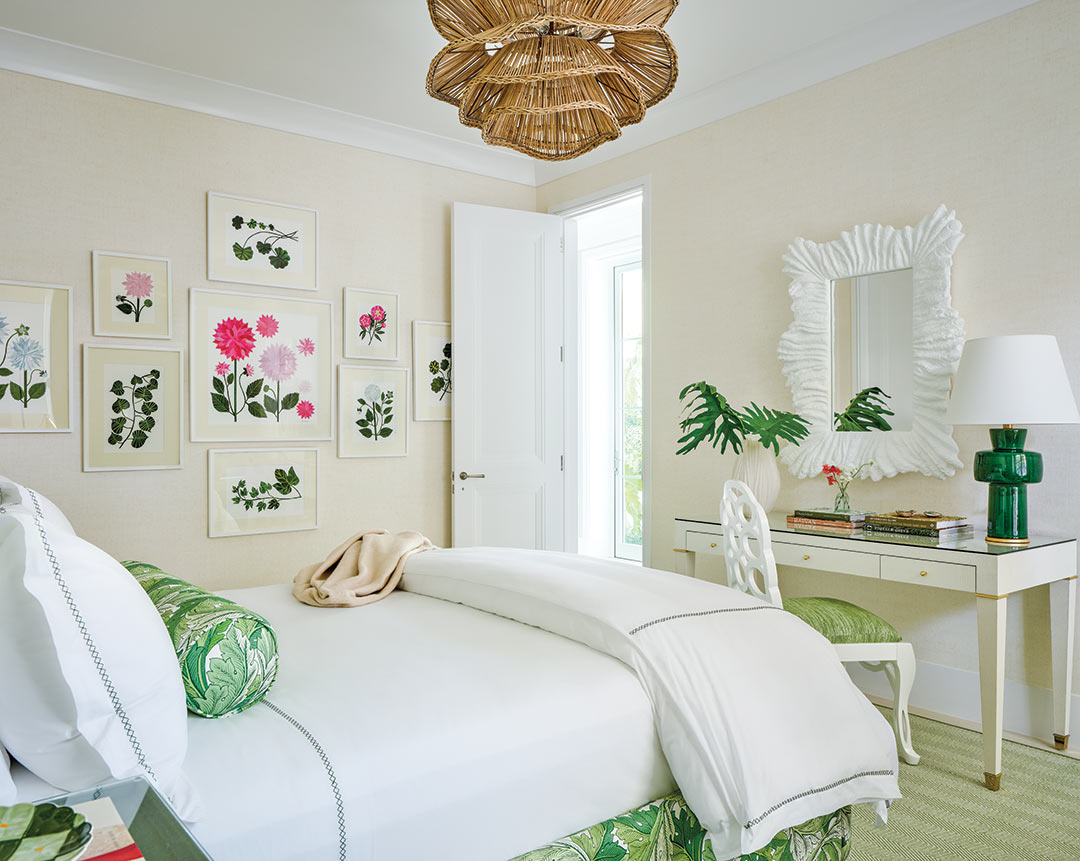
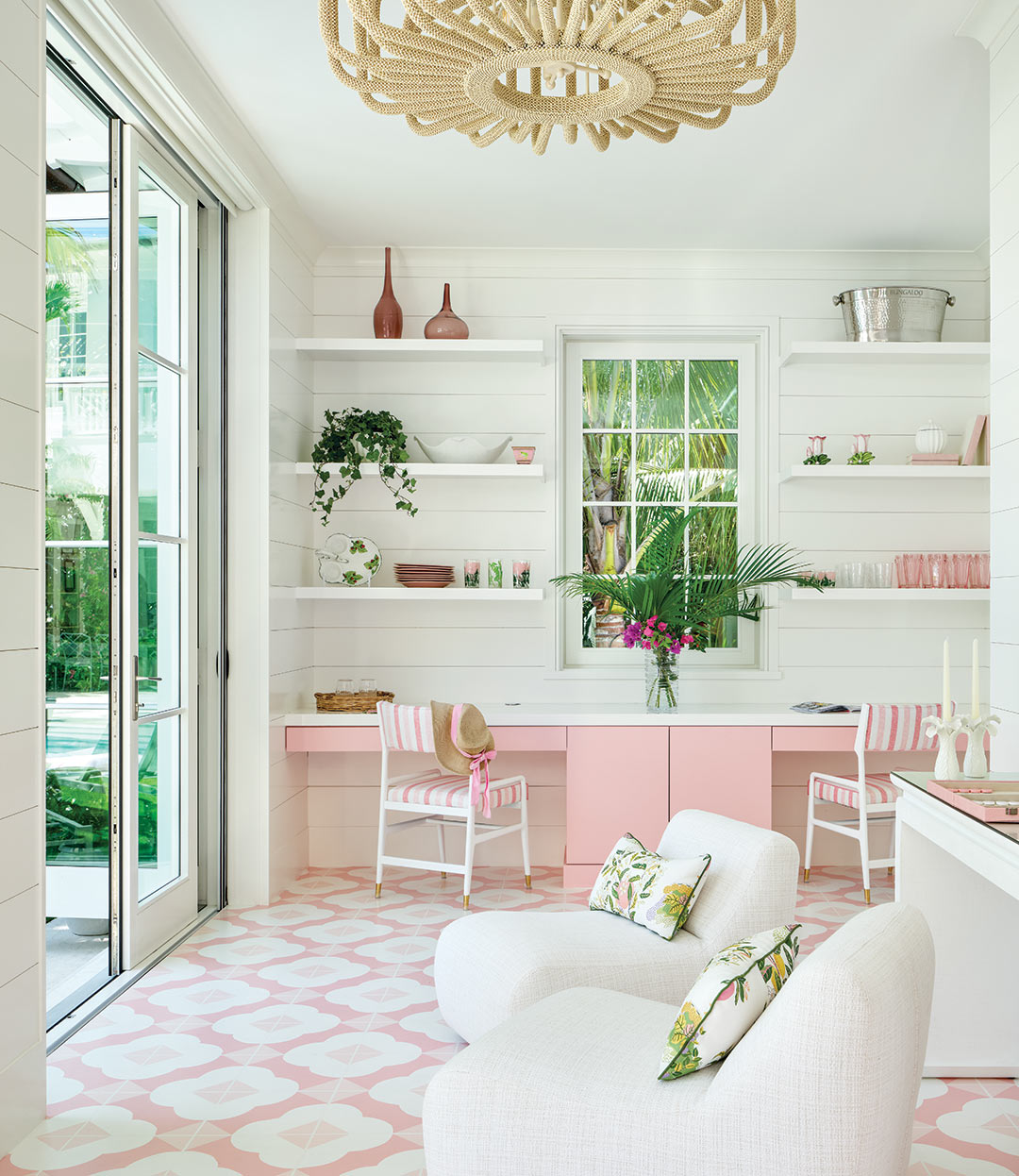
Nearby, two guest rooms play heavily into the home’s location in both their palette and frond patterns. “The pink-and-green guest rooms are quintessential Palm Beach,” McCauley notes. This look carries into the poolside cabana, where pink painted floors and cabinetry lead into a whimsical bunkroom that seems to wordlessly signal the fact that when you’re here, you’re on vacation.
Because the doors are frequently open and sea air blows inside, the design also had to be durable and livable. “We were in constant communication; they were very forward-thinking and considered durability and longevity from the start,” McCauley says. “When you have a four-year project, you have to think, Am I going to love this in ten or twenty years?” she adds.
To this point, the furnishings are meant to handle wet swimsuits as well as red wine spills, all while presenting a relaxed, timeless look. “We took something that was very traditional and rebooted it by getting rid of the fussy details and bringing in clean lines,” Brooks says of the end result. “But then the furnishings ground it back in traditional style.”