Text: Jennifer Boles
Although alcoholic beverages have been a celebratory custom passed down through the ages, cocktails as we know them are a more recent contrivance dating back to the mid-19th century. Before then, mixed libations were often simplistically crafted and rarely made to order. But as America prospered and became more sophisticated during the first half of the 19th century, so, too, did its drinks of choice.
Bartenders at saloons and inns began to experiment with a variety of spirits and ingredients, creating a new style of mixed drinks which eventually became known as “cocktails.” The 1870s was a particularly inventive time for mixology, with now-classic drinks such as the martini and Manhattan purportedly making their debuts. It was also the decade that popularized a useful tool for properly mixing spirits: the cocktail shaker.
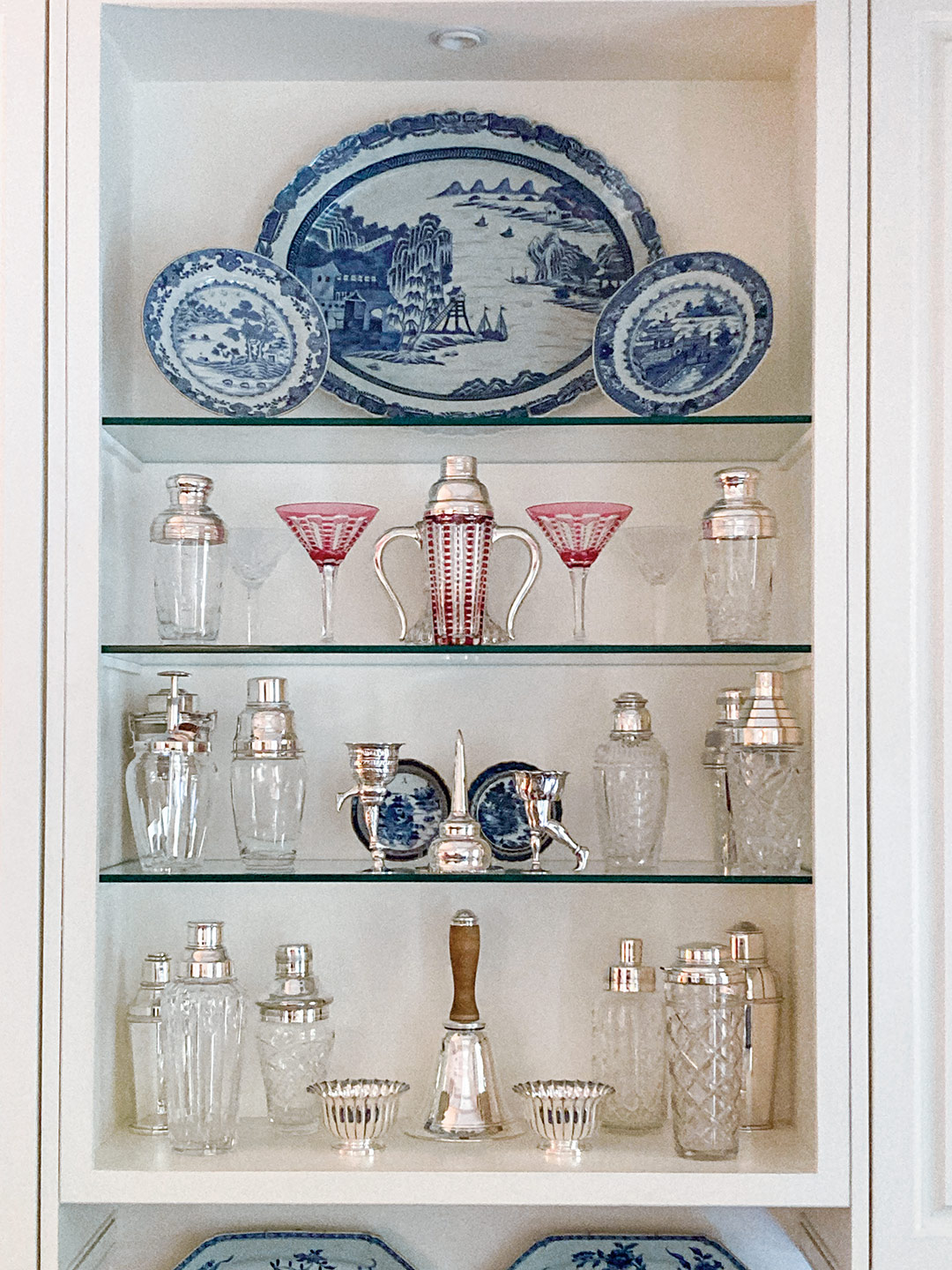
Before the advent of the shaker, drinks that required mixing were usually prepared by pouring the liquid contents back and forth between two cups. In time, bartenders devised a more effective way of mixing cocktails using two cups of slightly different sizes. By turning the smaller cup upside down and fitting it within the opening of a larger cup, they could shake the drink’s ingredients within an enclosed container, creating a better mixed, and sometimes frothier, drink. Known as a Boston shaker, the form is still favored by many.
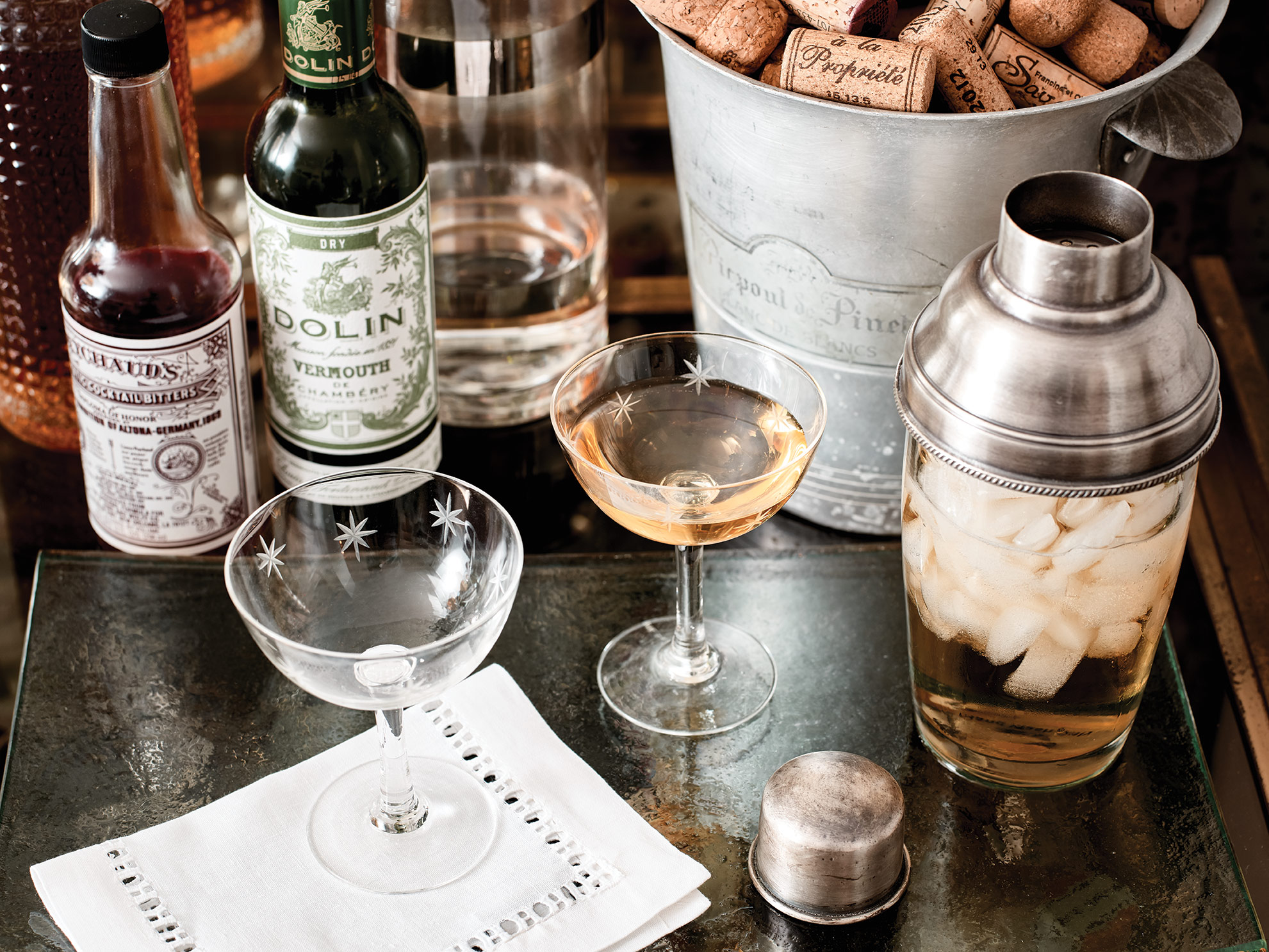
The more familiar shaker, however, is one which is comprised of a tall metal or glass cup and removable lid with an integrated strainer enclosed by a small cap, a design dating back to the 1880s. While the metal used in these early shakers was usually tin, those produced for a wealthy clientele were frequently made of sterling silver.
It was during the Jazz Age that cocktail shakers became fashionable must-haves, along with flapper dresses and glamorous smoking accessories. They also became something of a necessity during Prohibition, particularly for those mixing drinks in the privacy of their homes. Because bootleg liquor tended to be of inferior quality, people gravitated to making cocktails to help mask their liquor’s sometimes unpleasant taste. Mixing them in fanciful cocktail shakers further enhanced the experience.
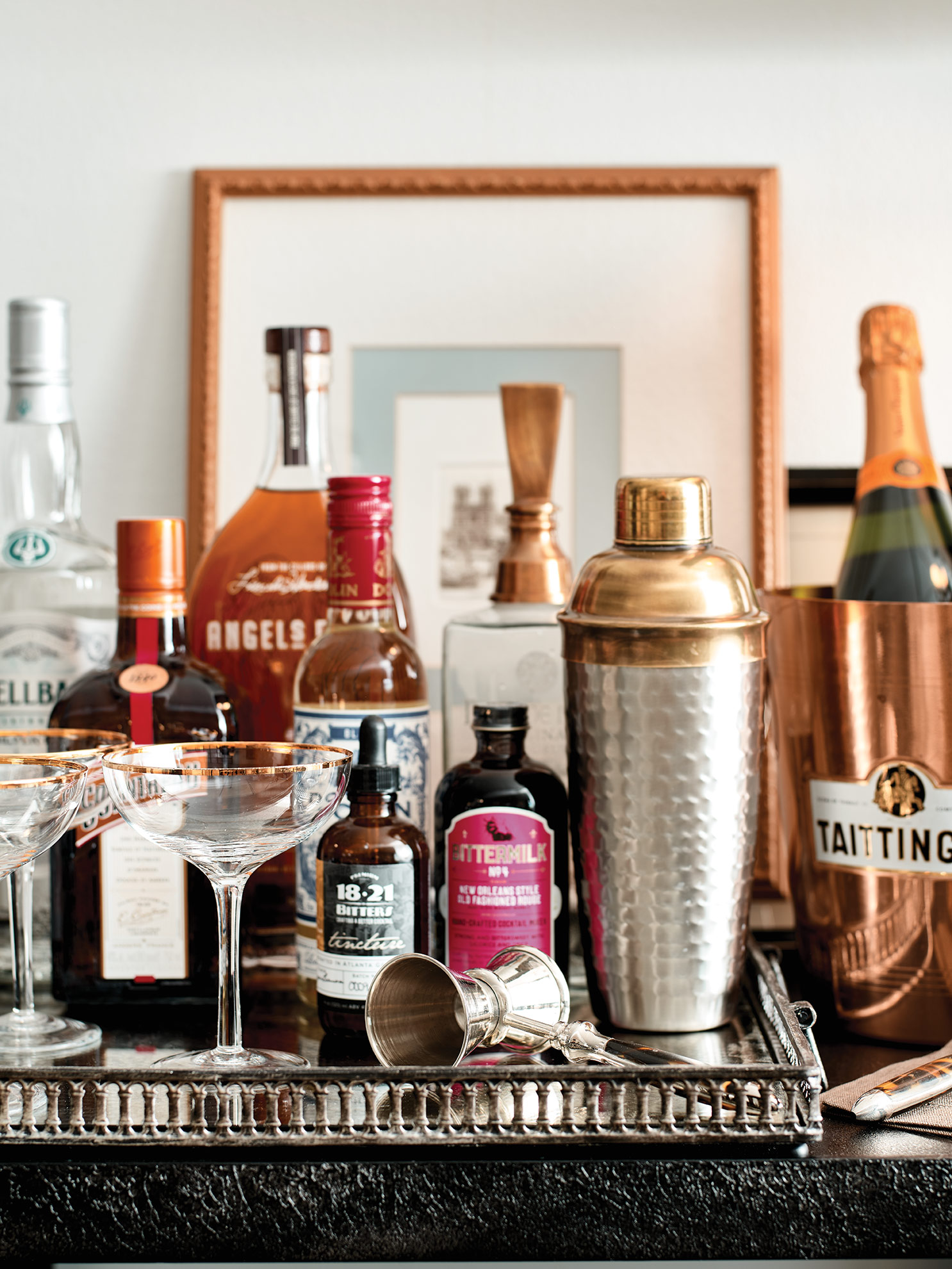
Novelty designs such as airplanes, lighthouses, and handbells proved popular, as did shakers fashioned from some of that decade’s favorite materials: Bakelite, chrome, and aluminum. There were even models designed to look like skyscrapers.
Cocktail shaker production remained robust throughout the 1930s, only to be curtailed by World War II. With wartime manufacturing requiring vast amounts of materials, the metals once used for shakers were temporarily restricted. Even though the post–World War II era spawned renewed enthusiasm for martinis and Manhattans, the insouciant shakers that once mixed them were replaced by newly simplified designs.
Although stylish shakers are still made today, antique and vintage models, particularly those that are lively looking, are relished by collectors, who rarely seem to stop after just one. As the old saying goes, the more, the merrier.
need to KNOW
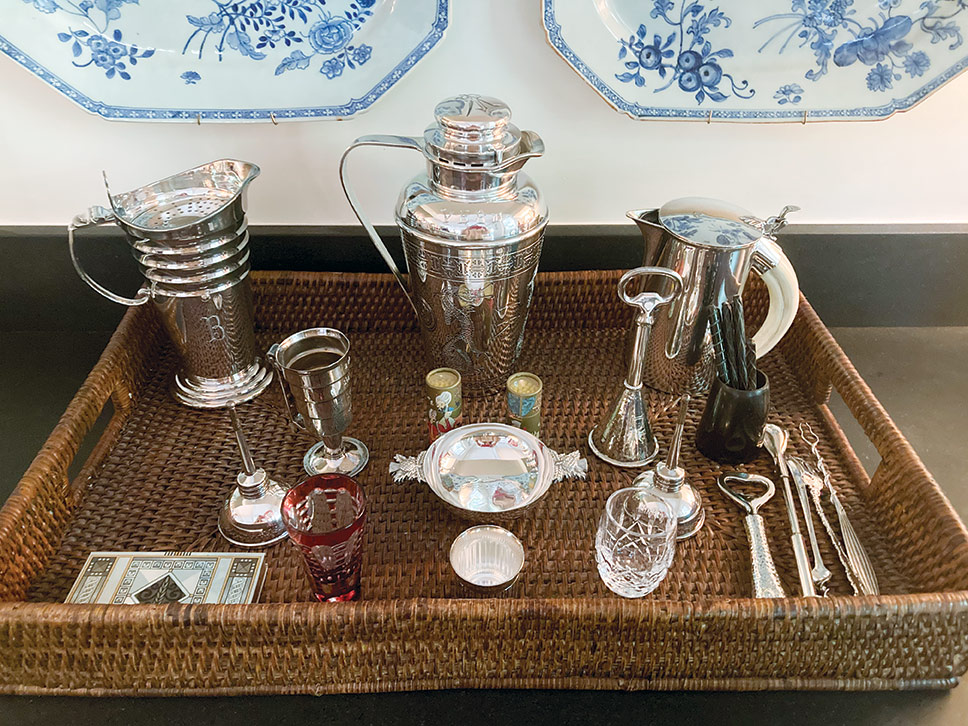
• Atlanta designer Judy Bentley, owner of Interior Views, has been collecting antique and vintage cocktail shakers for decades. “I started buying them as Christmas and anniversary presents for my late husband. Every time we traveled, I would purchase one that was unique,” she says.
• The range of materials used to make shakers is as diverse as the variety of designs. “The two forms I most often encounter are cut glass patterns and those made of silver with Asian-patterned engraving,” Bentley says. “If I’m going to buy a silver shaker, I want one that is distinctive.”
• The price of antique and vintage cocktail shakers depends on condition, naturally, but also rarity and craftsmanship, according to Bentley. “Shakers tend to start at around $500 and go up into the thousands for those with character and true beauty,” she says.